Description
Myrianthus arboreus — a giant golden African fruit with remarkably sweet pineapple-like flavor
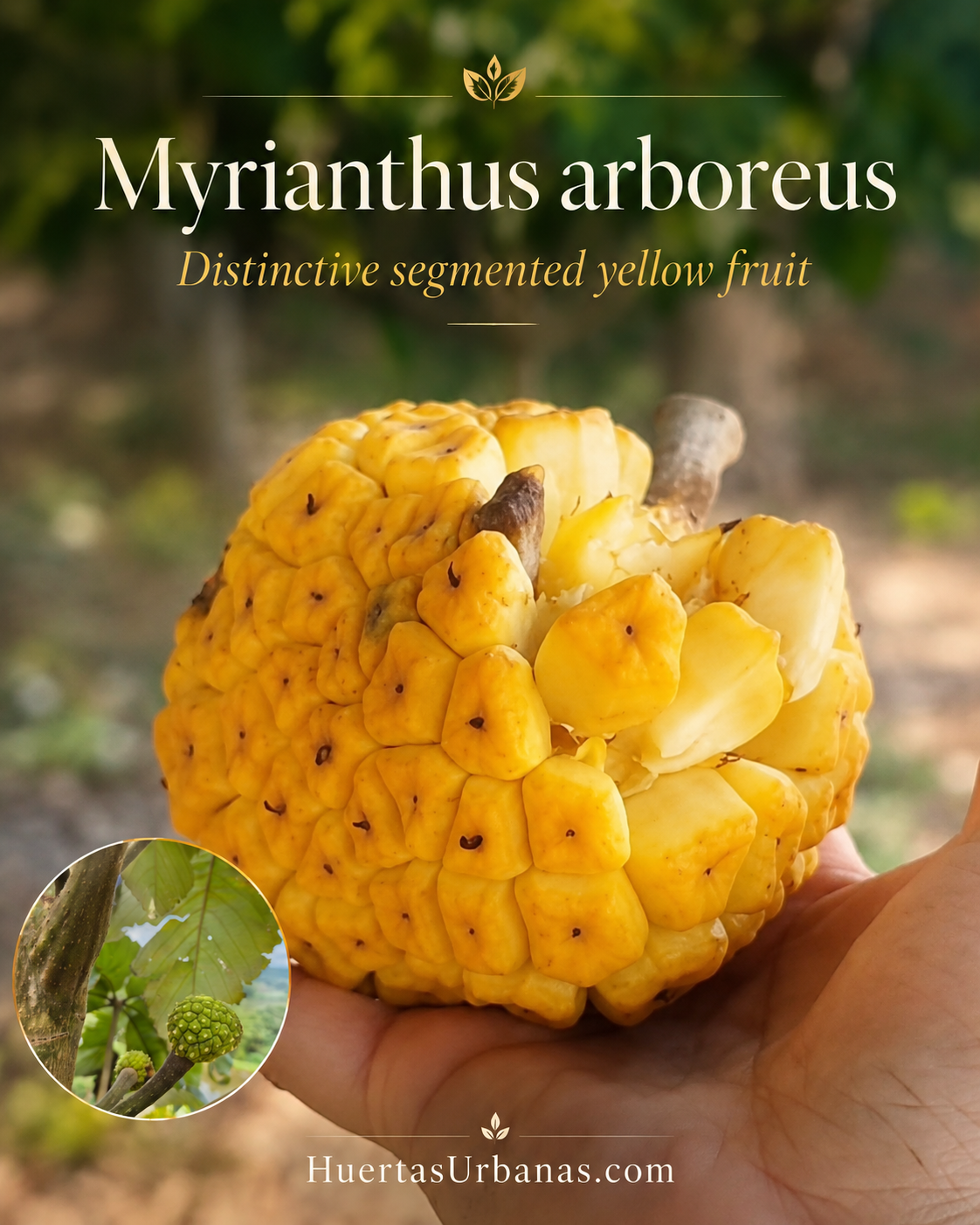
Myrianthus arboreus is one of the most visually spectacular edible fruit trees of tropical Africa.
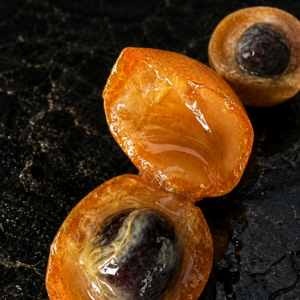
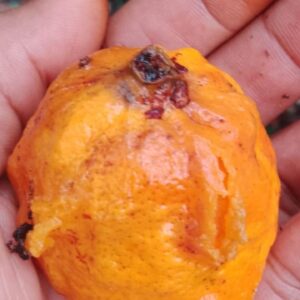
It produces enormous compound fruits formed by numerous golden-yellow fleshy segments arranged around a central core. Each individual section can be separated and eaten, creating an appearance and eating experience unlike that of almost any commonly cultivated fruit.
The present seed lot comes from a mature and highly productive fruiting accession cultivated in Brazil.
According to our Brazilian network of collectors, growers and field contacts, the fully ripe fruit is exceptionally sweet, with a flavor strongly reminiscent of sweet ripe pineapple.
The combination of giant fruit, abundant edible flesh, strong sweetness and unusual appearance gives this species considerable potential not only for collectors, but also for future orchard trials, nursery production and specialty tropical-fruit markets.
A spectacular giant fruit
The mature fruit is composed of many individual fleshy sections packed together into a large rounded structure.
When ripe, these segments develop an intense golden-yellow color and soften around the central core.
The edible portions can be removed individually, giving the fruit a remarkable presentation that has inspired common names such as:
- Giant Yellow Mulberry.
- African Mulberry.
- Monkey Fruit.
- Monkey Pineapple.
Despite the mulberry-related common names, this is not an ordinary mulberry. It is a much larger tropical African fruit with a completely different scale, structure and visual impact.
Fruit characteristics
- Fruit type: Very large compound fruit formed by numerous individual fleshy segments.
- Ripe color: Bright golden yellow.
- Edible portion: Multiple soft and fleshy sections arranged around a central core.
- Reported flavor: Exceptionally sweet and strongly reminiscent of ripe pineapple.
- Productivity: The cultivated Brazilian source accession is described as highly productive.
- Seed source: Mature fruiting material cultivated in Brazil.
Why this Brazilian-grown accession is especially interesting
Our collector network describes the source material as not only productive, but also relatively low-growing or more compact than the large tree form usually associated with the species.
This is an important horticultural observation.
A giant-fruited tropical species with a potentially more manageable growth habit could be much easier to maintain in:
- Tropical and subtropical home orchards.
- Commercial specialty-fruit collections.
- Large greenhouses.
- Container culture during the early years.
- Nursery and breeding programs focused on unusual edible fruits.
This observation refers specifically to the source accession cultivated in Brazil. It should not be interpreted as a guarantee that every seed-grown plant will remain small.
Final plant size may vary according to genetics, soil, climate, nutrition, pruning and growing conditions.
Nevertheless, the reported combination of high productivity, giant fruit and relatively compact source plants gives this seed lot unusually strong horticultural potential.
Flavor and commercial potential
The reported flavor is one of the most compelling characteristics of this accession.
Rather than being described merely as mildly sweet or pleasant, the ripe fruit is compared directly with sweet, fully mature pineapple.
This suggests a fruit with:
- Strong tropical sweetness.
- A bright and recognizable pineapple-like character.
- A highly attractive golden color.
- An unusual segmented presentation.
- Excellent potential as a specialty or conversation fruit.
Very large fruits are not automatically valuable if their flavor is mediocre. In this case, however, the combination of extraordinary size and strong reported eating quality makes Myrianthus arboreus especially promising.
Because the fruit naturally separates into many individual edible sections, it may also have potential for sharing, fresh presentation and specialty-market display.
Botanical information
- Scientific name: Myrianthus arboreus P.Beauv.
- Family: Urticaceae.
- Common names: Giant Yellow Mulberry, African Mulberry, Monkey Fruit, Monkey Pineapple and Amora Africana.
- Native range: Tropical Africa.
- Reported African distribution: The species is associated with tropical regions including Cameroon, Nigeria and Guinea.
- Growth habit: Evergreen tropical tree, although the Brazilian source accession is described as comparatively low-growing or compact.
- Seed source: Cultivated mature fruiting material in Brazil.
Pollination and the importance of growing several seedlings
This species is generally described as dioecious, meaning that male and female flowers are normally produced on separate plants.
A single seedling may therefore grow successfully but never produce fruit if no compatible plant of the opposite sex is present nearby.
Growers interested in future fruit production should raise several seedlings rather than relying on only one plant.
Growing a group of seedlings also increases the opportunity to select for:
- Fruit size.
- Sweetness and flavor.
- Productivity.
- Growth habit.
- Adaptation to local conditions.
Sex, fruit quality and future productivity cannot be guaranteed in seed-grown plants.
Cultivation
Provide warm temperatures, fertile organic soil, reliable moisture and excellent drainage.
Young plants should receive bright filtered light and protection from drying wind during establishment. Sun exposure can be increased gradually as the root system and foliage become stronger.
Recommended conditions include:
- Warm and humid tropical or subtropical conditions.
- Rich soil with abundant organic matter.
- Consistent moisture without permanent saturation.
- Protection from strong dry winds.
- Space for root and canopy development.
- Regular nutrition during active growth.
This is a tropical African species and should be protected from frost.
Growers in cooler regions should use a heated greenhouse or maintain young plants in large movable containers until a suitable protected planting site is available.
Germination
- Sow fresh seed as soon as possible after arrival.
- An optional 12–24 hour soak in clean room-temperature water may help rehydrate the seed.
- Plant approximately 1–2 cm deep.
- Use a loose, moisture-retentive and well-aerated substrate.
- Maintain approximately 24–30°C / 75–86°F.
- Keep the substrate evenly moist, but never permanently waterlogged.
- Provide bright shade or filtered light during emergence.
- Protect young seedlings from sudden temperature changes and drying conditions.
Germination time may vary according to seed maturity, freshness, temperature and growing conditions.
Seed-grown plants may display natural variation in vigor, architecture, productivity, fruit size and flavor.
Why this accession is especially valuable
- One of the largest and most spectacular edible compound fruits in cultivation.
- Golden-yellow fruit with numerous individual fleshy segments.
- Exceptionally sweet pineapple-like flavor according to the Brazilian grower network.
- Highly productive source accession.
- Potentially more compact growth habit than typical large-tree forms.
- Rare African fruit genetics cultivated and selected in Brazil.
- Strong ornamental, collector and commercial potential.
- Excellent opportunity for future seedling selection.
This is not simply a curiosity for botanical collections.
Its combination of tremendous fruit size, attractive golden color, abundant edible sections, strong sweetness, reported productivity and pineapple-like flavor gives it the characteristics of a fruit with genuine future commercial potential.
September 2026 pre-sale
SEPTEMBER 2026 PRE-SALE ITEM
This listing belongs to our September 2026 Brazilian rare-seed collection. Orders containing September pre-sale items will be prepared with the corresponding September batch.
Final availability and shipping timing depend on fruit maturation, the number and condition of seeds actually collected, transport to Argentina, phytosanitary preparation, inspection and international logistics.
Only a limited initial quantity is being released.
If the final number of viable seeds is lower than expected, orders will be fulfilled according to payment date and any unfulfilled portion will be refunded.
Because this is unusual seasonal material from a selected mature fruiting accession, future availability cannot be assumed.
With its enormous golden fruit, numerous fleshy segments, exceptionally sweet pineapple-like flavor, high reported productivity and potentially more manageable growth habit, Myrianthus arboreus is one of the most spectacular and commercially promising fruit species in our September 2026 collection.
Reviews
There are no reviews yet.