With stronger images in place, the video reads much more clearly: one green form, huge and extremely juicy, and one pink-purple / dark form with flesh that looks markedly firmer and more compact.
What the video actually supports
For now, two forms is the safer reading
The upgraded images make the structure of the footage much clearer. Rather than forcing “three varieties,” it makes far more sense to present the material as a comparison between two abiu / Pouteria forms: one green, round and almost liquid inside; the other darker, somewhere between pink and purple-brown, with flesh that behaves in a much firmer way.
The point here is not to settle a botanical identity. It is to show, honestly, what the video can support with confidence — now with images worthy of the story.
01 · Side by side
The contrast appears before the fruit is even opened
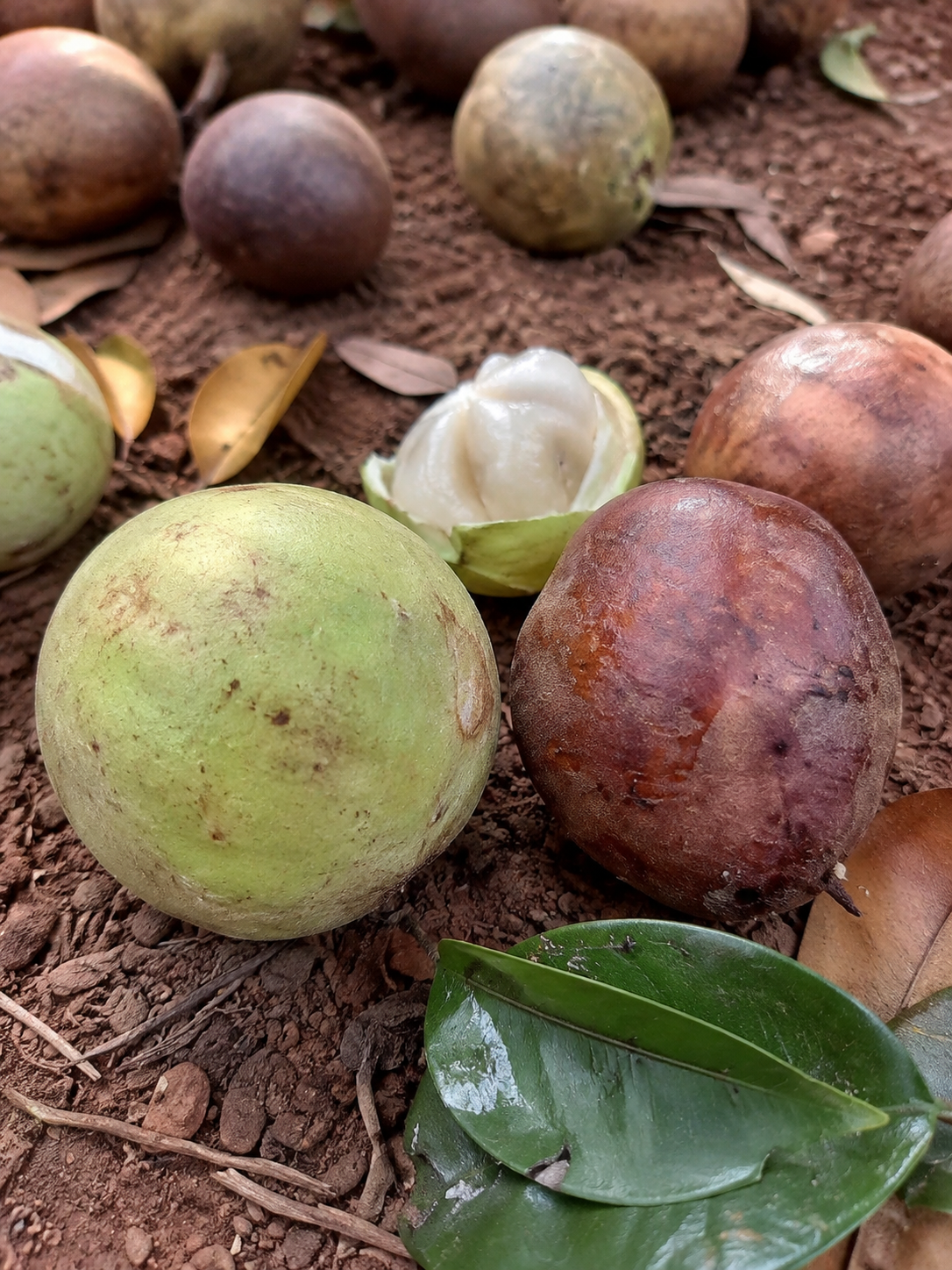
As soon as the fruits are shown together, the contrast is already visible. The green form is larger, paler and more globose. Beside it sits the darker form, with warmer skin tones ranging from pinkish to purplish-brown and slightly different proportions.
This image works as the editorial starting point: it does not prove species, but it clearly establishes that two strong visual profiles are being compared.
02 · Green form
Huge outside, almost liquid inside
This is the image the video was asking for. Once the green form is opened, the white flesh appears extremely moist, glossy and even slightly translucent in places. The overall feeling is one of abundance: generous, delicate, visually luscious flesh.
It is the strongest image in the whole set and deserves to be the hero shot. It captures exactly what was most beautiful and expressive in the original footage.
“The opened green fruit is the star image of this material.”Not as hype, but because the camera finally shows the flesh with real clarity and appeal.

03 · Very few seeds
A huge amount of fruit for surprisingly few seeds
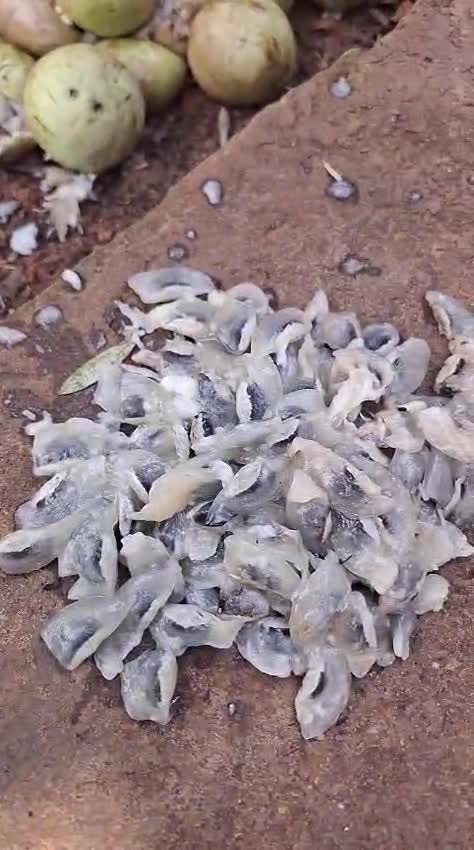
The footage also insists on a practical point: all that abundant flesh does not translate into abundant seed yield. The sequence shows a low return, almost ironic when placed against the impressive size of the fruits.
That gives the record a useful documentary edge: it is not only beautiful; it also communicates a real limitation in propagation material.
In the audio, the speaker comments that a large fruit yields only a few seeds, and another larger one gives only slightly more, still with limited usable output.
04 · Pink-purple form
The real surprise is the firmness of the flesh
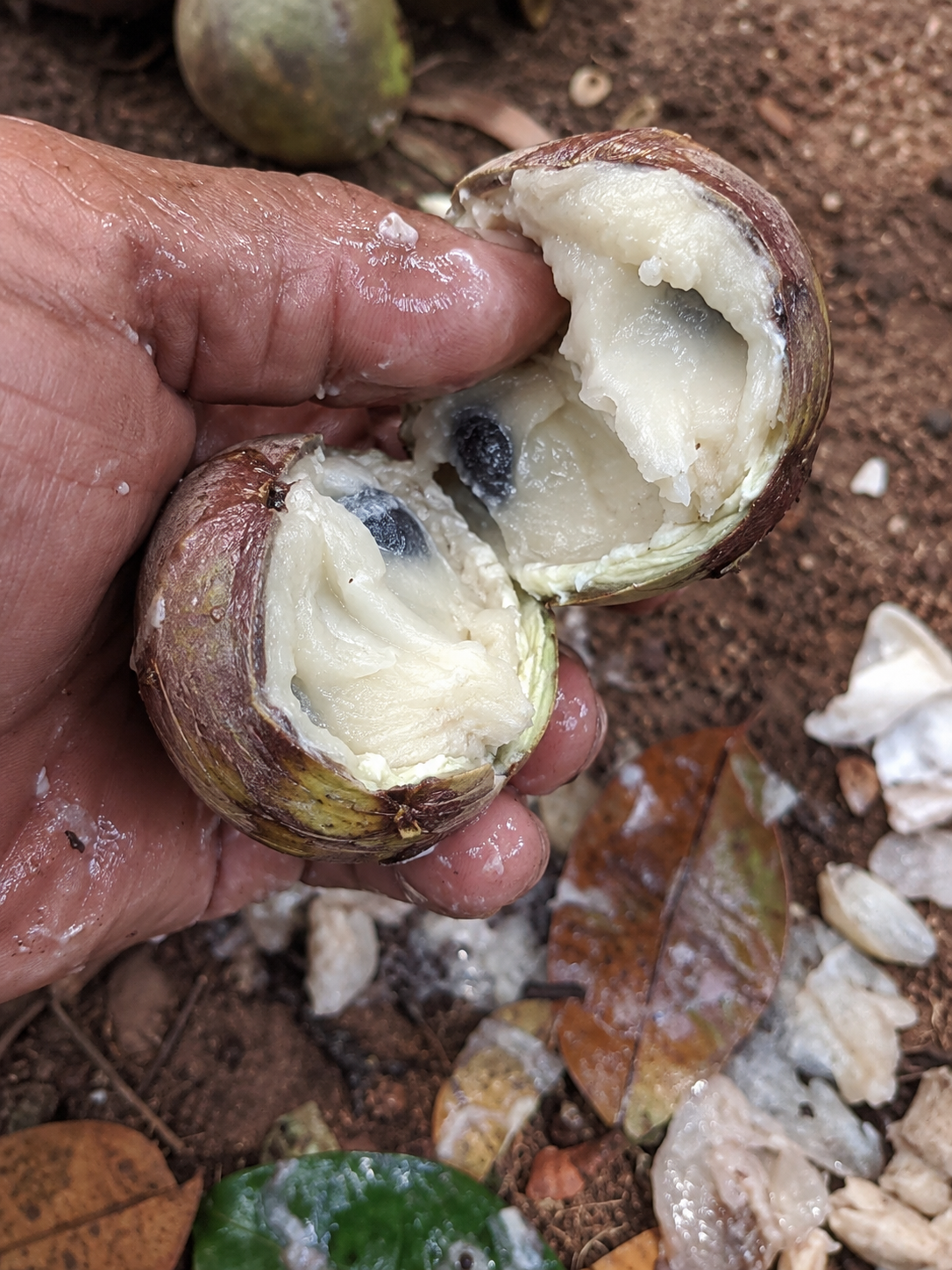
The darker form changes the tactile logic completely. Instead of the lush wetness of the green form, the flesh here feels more cohesive, thicker and more compact. The act of opening and pressing the fruit suggests resistance, as if the mass holds itself together more decisively.
That contrast is what justifies the whole text: the two forms differ not only in external color, but in the behavior of the flesh.
Green formMoister, looser, more translucent and visually exuberant.
Darker formFirmer, thicker and clearly more compact.
What this record can support
Two strong profiles; identity still open
Green form
ColorPale green.ShapeLarge, globose.FleshVery moist, white, juicy and visually abundant.Editorial readingThe hero image of the whole set.
Pink-purple / darker form
ColorDarker, ranging from pinkish to purplish-brown.ShapeMore compact / oval.FleshFirmer and more cohesive.Editorial readingThe best counterpoint to the lushness of the green form.
A small window into the field
The fruit comes before the name
The value of this material lies precisely in the fact that it does not feel like a finished botanical card. It shows hands, soil, flesh, scraps, seeds, hesitation and contrast. Instead of overpromising, this version chooses something better: to look carefully.
With the new images, the HTML finally does justice to the video: the green form now has the beautiful hero shot it needed, and the darker form has enough visual presence to sustain the comparison.
Source: private field video received on August 12, 2026. Main images were regenerated for stronger editorial readability; no collector or supplier is identified.
Both would be cainito (aka star apple).
chrysophyllum cainito is the scientific name
The green one looks delicious. Nice find!