Description
A formally recognized Plinia almost absent from cultivation
Plinia subavenia Sobral is not a provisional collector name. It is a formally described and currently accepted botanical species in the family Myrtaceae, first published in 2006. Its documented native range is restricted to eastern Brazil, specifically Bahia and Espírito Santo, where it inhabits humid Atlantic Forest.
The species was described from coastal Brazilian rainforests and has been recorded from sea level to approximately 900 meters elevation. That ecological range makes it especially interesting for collectors seeking little-known Atlantic Forest germplasm, although elevation alone must not be interpreted as proof of frost tolerance.
Sweet orange fruit with classic jaboticaba character
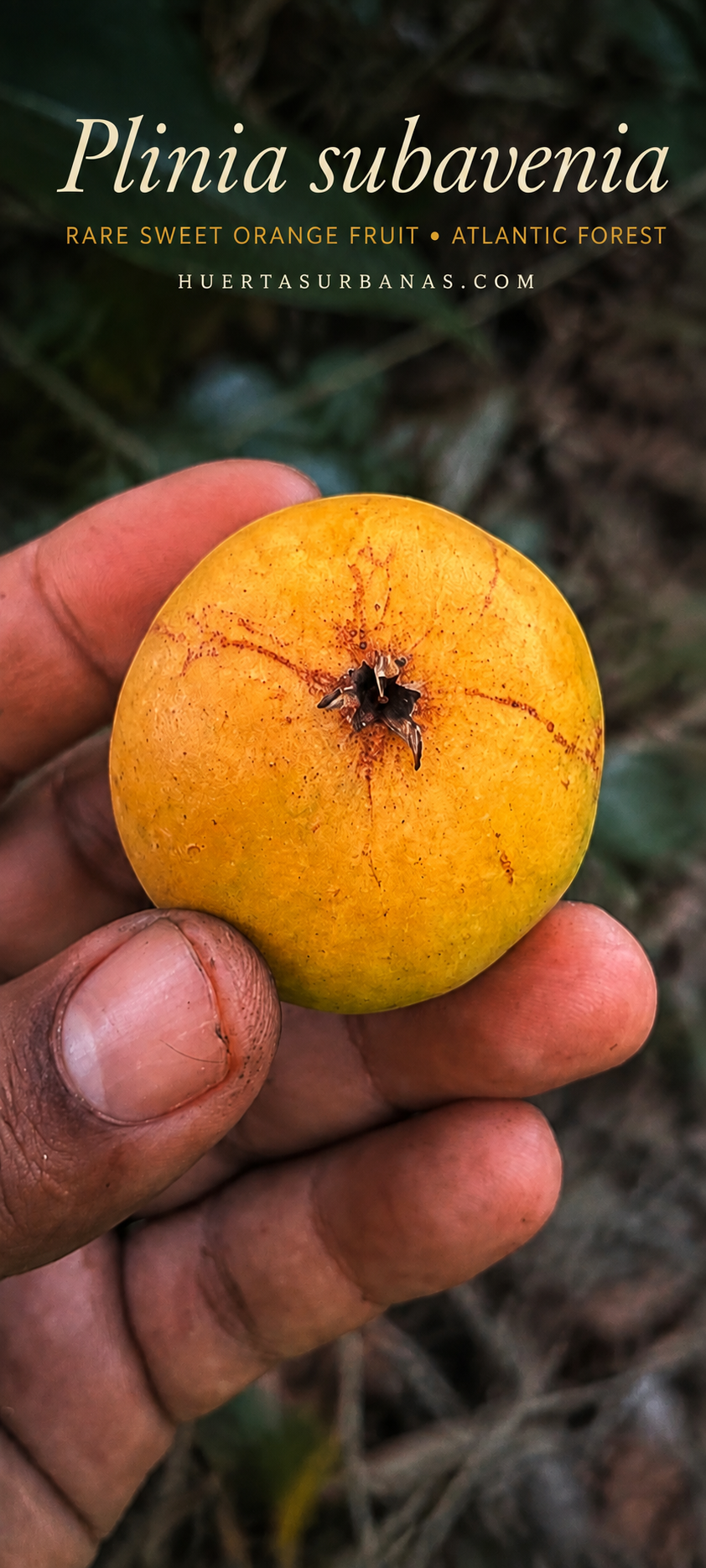
Direct information accompanying this fresh harvest describes the mature fruit as orange, with a sweet flavor reminiscent of a good jaboticaba. The fruiting mother plant is approximately four meters tall.
The fruits attract local wildlife so strongly that this crop was collected shortly before complete ripeness to prevent its loss. According to the source, seeds gathered at this advanced stage of maturity germinate readily when kept fresh and moist. This is a source observation rather than a germination guarantee, but it is a very encouraging characteristic for such scarce material.
Independent botanical evidence
A historical herbarium gathering from Santa Teresa, Espírito Santo, independently recorded a four-meter specimen bearing yellow-orange, apparently immature fruit in humid forest near the base of a waterfall. This older scientific record closely agrees with the size and orange maturation reported for the present source material.
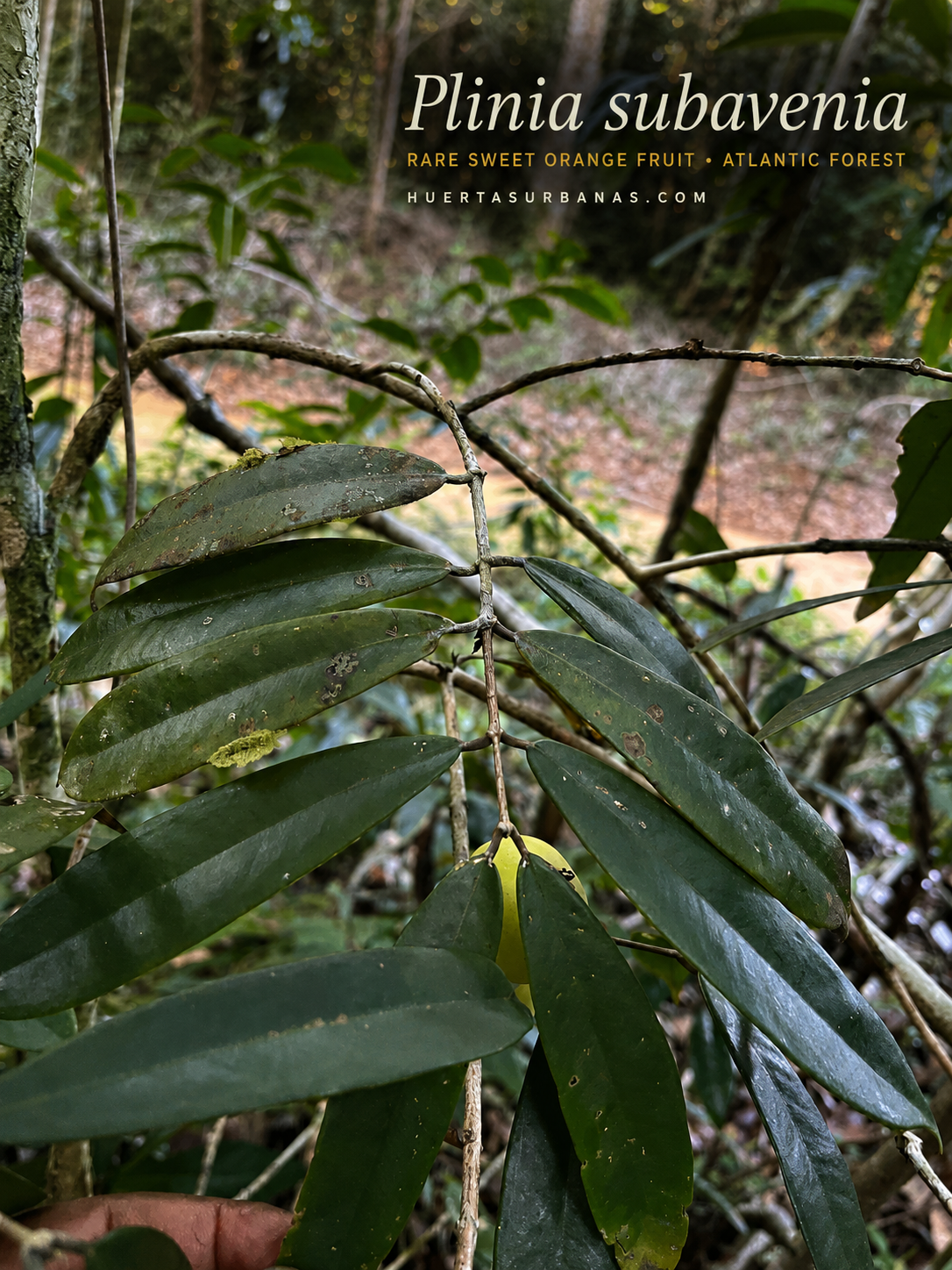
The original botanical treatment places P. subavenia close to Plinia involucrata. It distinguishes P. subavenia through the progressive loss of hairs from the leaves and fruits and through a median leaf vein that is distinctly depressed or channeled on the upper surface. These are useful diagnostic characters for collectors who intend to document their seedlings as they develop.
Why this is a premium collector species
- Accepted species: a valid botanical name, not an unresolved field accession
- Restricted native range: documented only from Bahia and Espírito Santo, Brazil
- Habitat: humid coastal Atlantic Forest, from sea level to about 900 meters
- Habit: shrub or small tree; the present mother plant is reported at approximately four meters
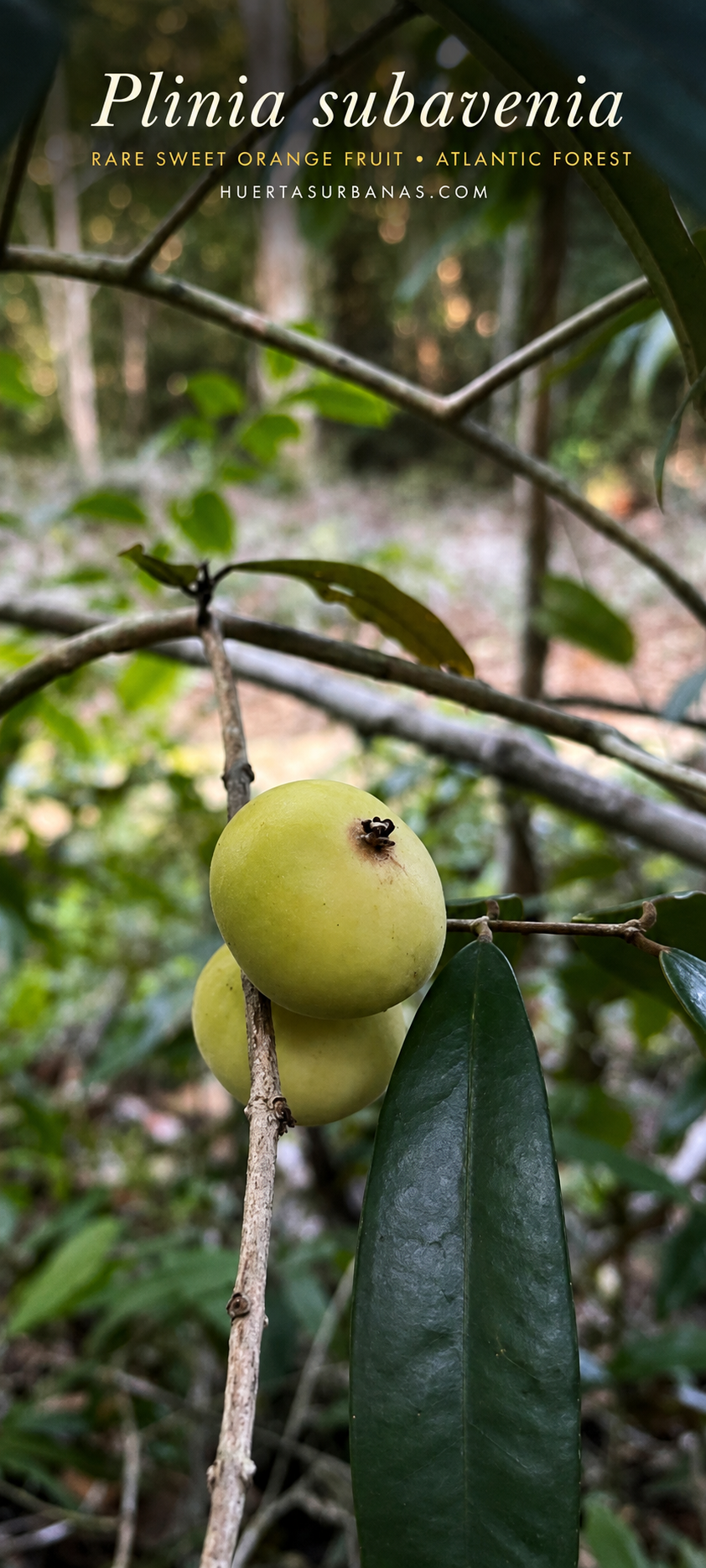
- Fruit color: yellow-orange while developing, becoming orange at maturity
- Flavor: sweet, with classic jaboticaba-like character according to the source
- Commercial rarity: no current publicly indexed retail offer under the exact name was found in our August 2026 review
- Collector value: extremely scarce living germplasm from a formally documented Atlantic Forest species
Rarity with careful wording
Our market review found no present commercial seed listing and no clearly indexed historical retail offer under the exact name Plinia subavenia. Private exchanges, unindexed social-media posts or old offline sales cannot be ruled out, so we do not claim an absolute world first. Nevertheless, this appears to be among the earliest publicly documented international seed offerings of the species and an unusual opportunity to establish it in cultivation.
September 2026 Pre-Sale
⚠️ PREMIUM LIMITED FRESH-SEED PRE-SALE
This offering belongs to a very small September 2026 collection. Future harvests are unpredictable. Final fulfillment depends on seed condition, inspection, phytosanitary preparation and international transport.
Plinia seeds are recalcitrant and must remain slightly moist. They should never be intentionally dried. Orders containing this item will be prepared with the corresponding fresh-seed pre-sale batch.
Germination and early care
- Sow promptly after receiving the seeds.
- Use a loose, organic, moisture-retentive but well-draining substrate.
- Keep the medium evenly moist without permanent waterlogging.
- Maintain warm, humid conditions with bright filtered light during germination and early growth.
- Never allow fresh seeds or newly emerged roots to dry completely.
- If germination begins during storage or transportation, plant immediately and handle the emerging root with great care.
- Acclimate young seedlings gradually; protect them from intense midday sun, drying wind and freezing temperatures.
The source reports easy germination from near-ripe seeds, but germination speed and percentage can vary with seed maturity, transit time and growing conditions.
Botanical and collector note
The species name Plinia subavenia is accepted, but this seed lot retains the identification supplied with the source population; Huertas Urbanas has not independently prepared a new herbarium voucher from the present mother tree. Seedlings are genetically individual and may vary naturally. Fruiting age, mature size and cold tolerance remain insufficiently documented in cultivation.
For conservation-minded collectors, careful labeling and long-term photographic documentation are strongly recommended.
Reviews
There are no reviews yet.