Description
A remarkable unidentified Plinia from Colombia
This rare accession is maintained under the provisional field name
Plinia sp. “Colombia”. Its exact botanical identity
has not yet been resolved, and we prefer to preserve that uncertainty rather
than force an unsupported species name.
A fruit from the Colombian–Venezuelan frontier
Source information places the mother tree in the region surrounding
Cúcuta, near Colombia’s border with Venezuela—a remarkable
biological crossroads where the hot valleys of northeastern Colombia rise
rapidly into the cooler, wetter foothills of the Eastern Andes.
Rivers descend from green mountain slopes toward the Lake Maracaibo basin,
connecting contrasting climates and ecosystems within relatively short
distances. The landscape forms a natural passage between mountains and
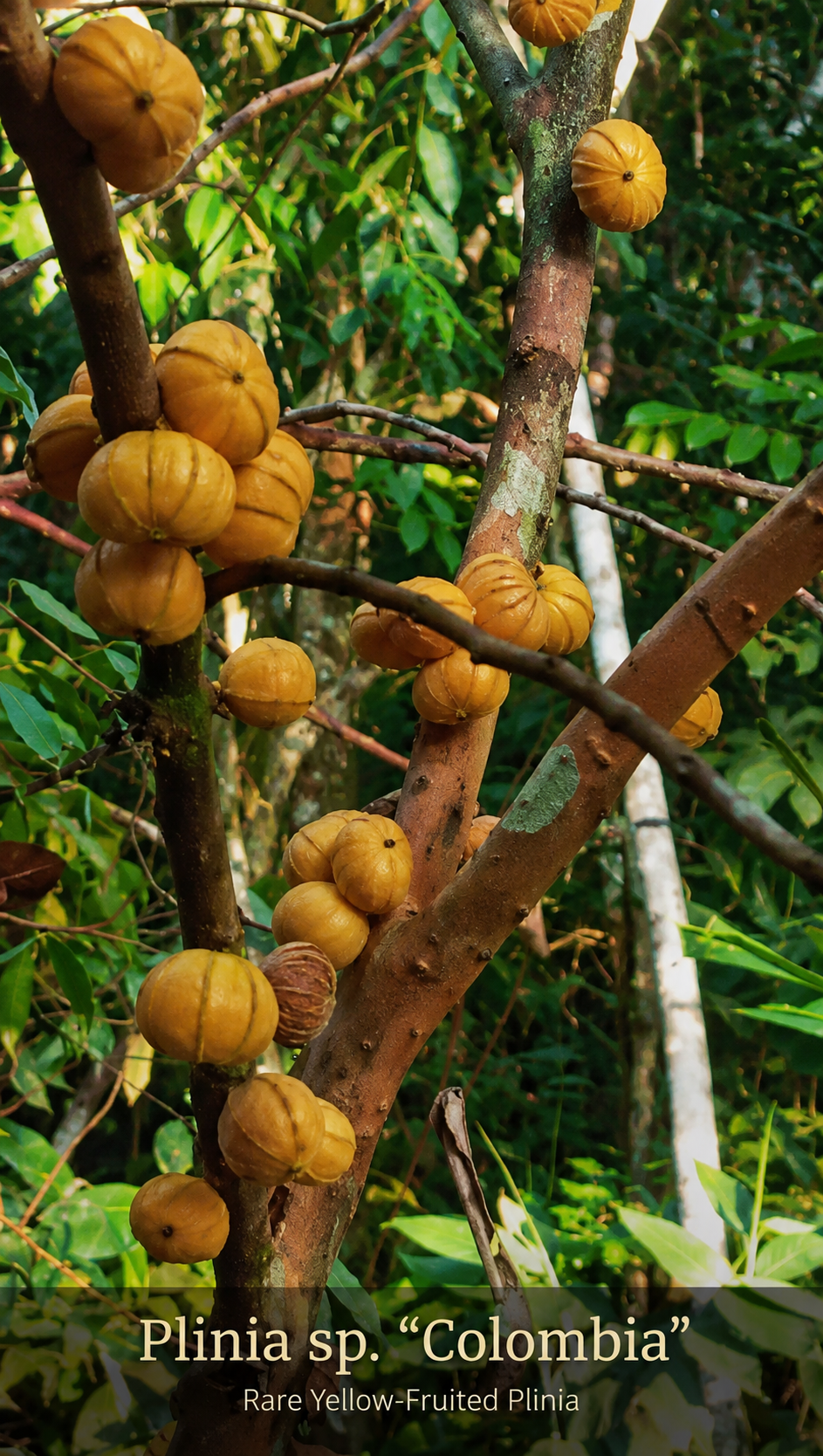
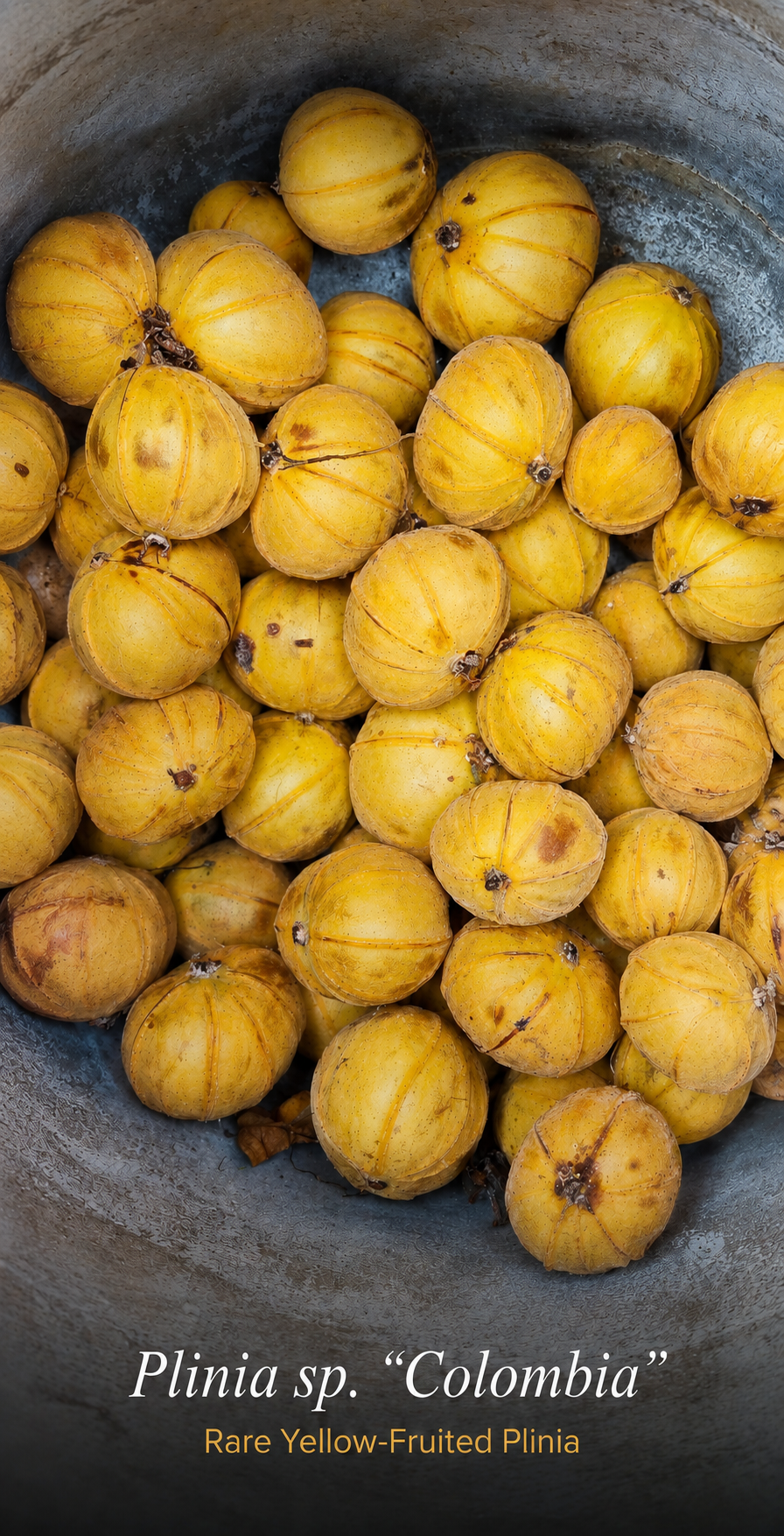
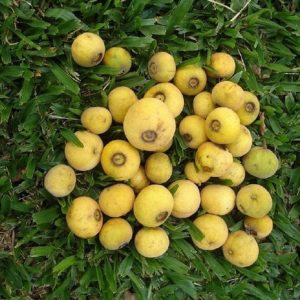
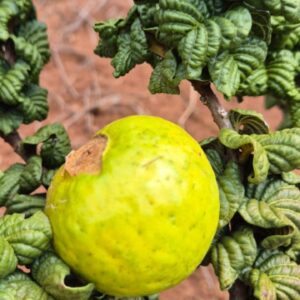
tropical lowlands, and this mysterious yellow jaboticaba—with its ribbed
golden fruit and translucent, extremely sweet pulp—seems perfectly at home
in such a little-explored frontier.
This ecological context is interesting, but it should
not be interpreted as proof of frost tolerance. Until the
accession is tested more widely, it should be treated as a tropical to
subtropical Plinia and protected from freezing temperatures.
Extremely sweet, juicy pulp
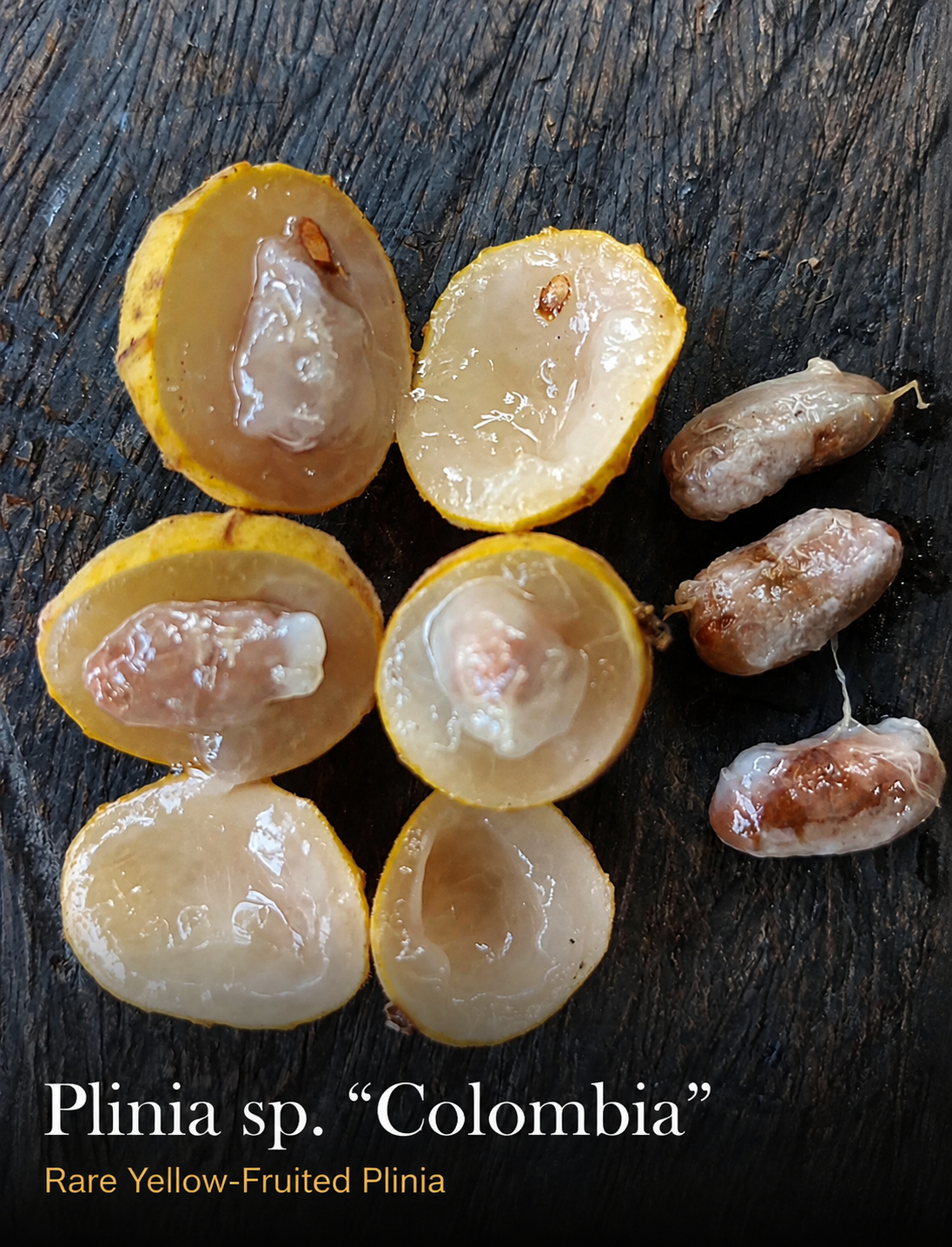
According to direct information accompanying the freshly harvested fruit,
the pulp is extremely sweet. The mature fruit becomes soft,
and its abundant translucent pulp is juicy and highly appealing.
Another especially useful characteristic is that the seeds reportedly
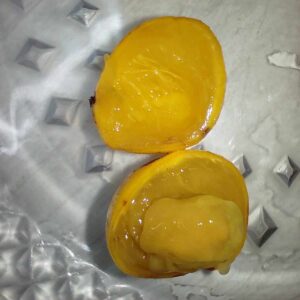
separate easily from the pulp. The actual source-fruit photographs show
generous translucent pulp surrounding elongated seeds, making this one of
the most visually attractive new Plinia materials we have encountered.
Fruit and seed characteristics
- Fruit color: Yellow to golden-yellow when mature
- Fruit surface: Distinct longitudinal ribs
- Ripe texture: Soft
- Pulp: Juicy, translucent and reportedly extremely sweet
- Seed release: Seeds reportedly separate easily from the pulp
- Seed shape: Oval and elongated
- Origin: Northeastern Colombia, near the border with Venezuela
- Taxonomic status: Unidentified; maintained as
Plinia sp. “Colombia”
The seeds have been described as resembling those of a rare
Plinia from Panama. This is recorded only as a
seed-morphology comparison; it is not evidence that both
materials belong to the same species.
Watch the actual source tree and fruits
The following video shows the real seed-source tree and fruits,
rather than representative photographs of another yellow-fruited
Plinia.
▶ Watch the Plinia sp. “Colombia” video on YouTube
Why this accession stands out
Rare Plinia collectors frequently encounter unresolved material,
but few accessions combine this fruit color, strongly ribbed appearance,
soft mature texture, extremely sweet juicy pulp and clean seed separation.
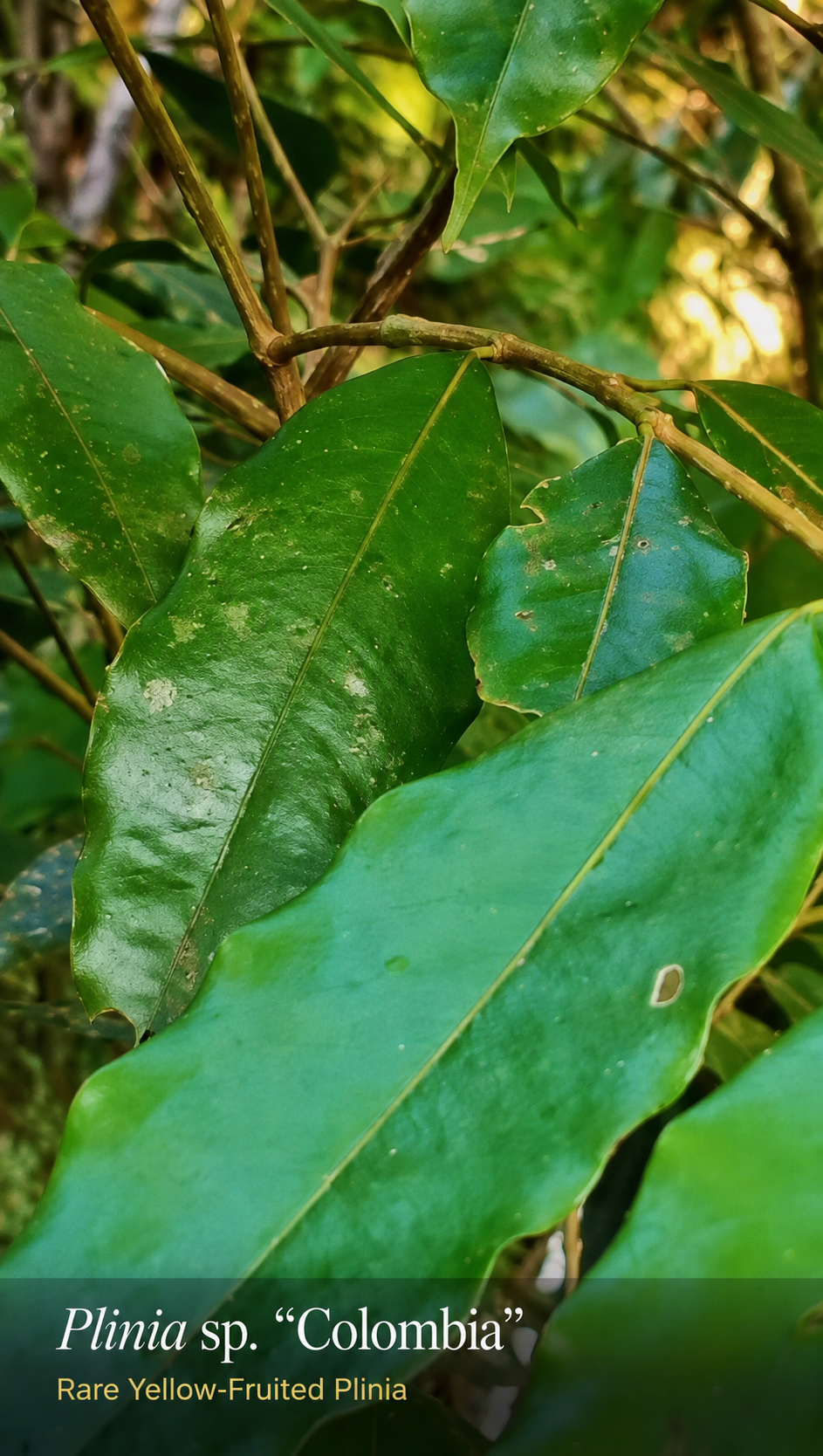
The leaves and fruiting habit shown in the original field images also make
this an especially interesting accession for future comparison with other
poorly understood northern South American Plinia.
All photographs and videos associated with this listing depict the
actual seed-source material.
September 2026 pre-sale
⚠️ LIMITED FRESH-SEED PRE-SALE ITEM
This offering is for fresh, recalcitrant Plinia seeds from the
September 2026 rare-seed collection. Availability is exceptionally limited,
and future harvests cannot be predicted.
Orders containing this item will be prepared with the corresponding pre-sale
batch. Fresh Plinia seeds must remain slightly moist and should
never be allowed to dry completely.
Germination and early care
- Plant immediately after receiving the seeds.
- Use a moist, organic and well-aerated medium with excellent drainage.
- Keep moisture consistent, but do not leave the medium permanently
waterlogged. - Maintain warm conditions with bright indirect light or partial shade
during early development. - Never allow the seed to dry completely.
- If a seed begins germinating during storage or transportation, plant it
immediately and handle the emerging root carefully.
Important collector note
This is an unresolved seed-grown accession, not a named cultivar. Seedlings
may show natural variation, and the final identity, growth behavior, cold
tolerance, flowering age and fruit characteristics require long-term
observation.
We are offering it conservatively under its field name so collectors can
maintain and compare the material without creating a premature taxonomic
claim.
Reviews
There are no reviews yet.