Description
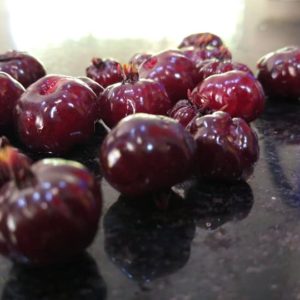
It is a compact small tree or large shrub, usually suitable for specialty orchards, botanical collections, and protected subtropical gardens. Its attractive white flowers, aromatic fruits, and unusual fruit coloration make it a very distinctive species among the guabirobas.
Flavor & eating notes
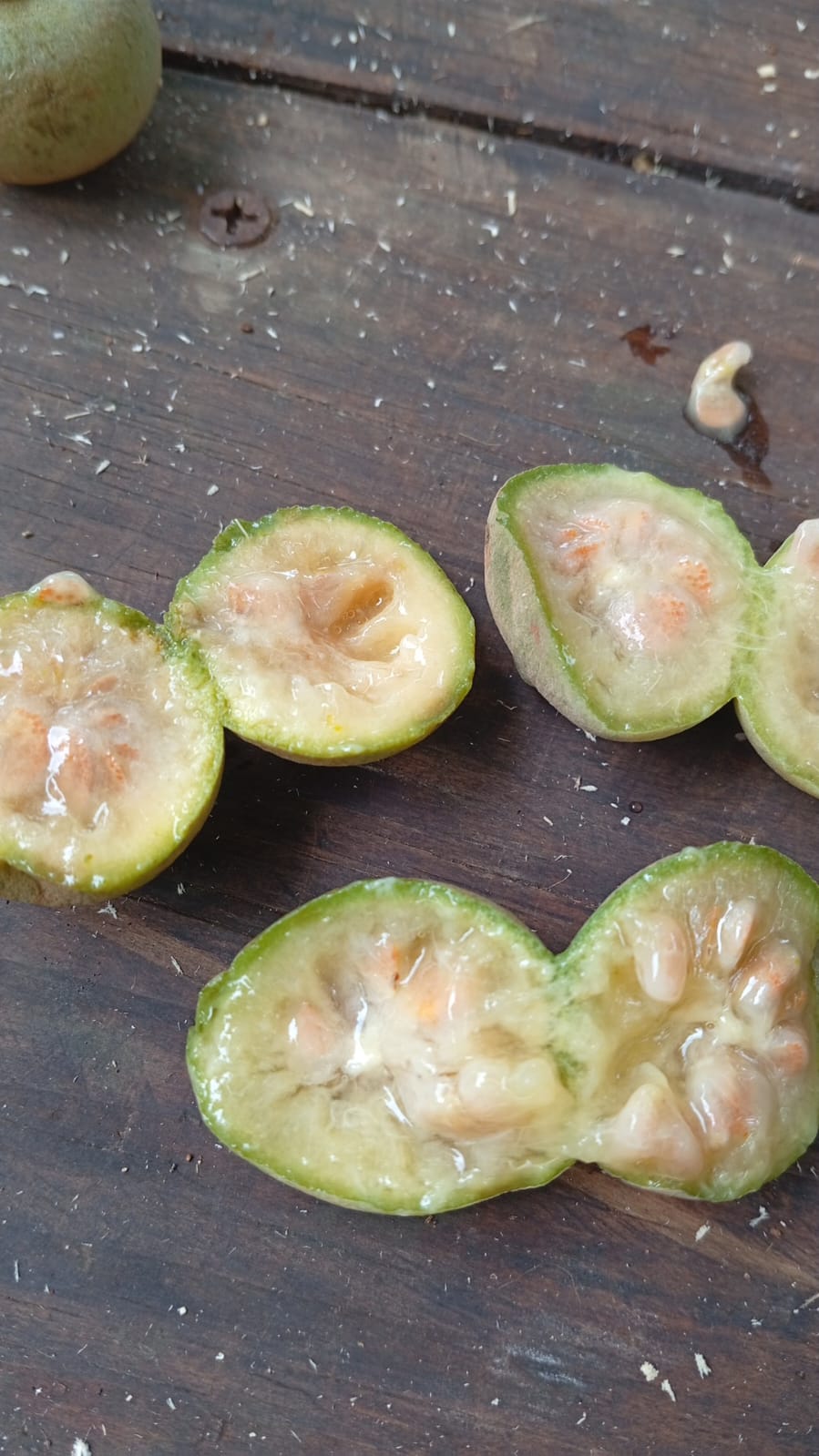
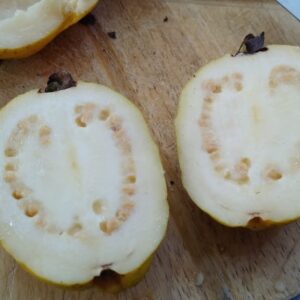
When fully ripe, the pulp is excellent: aromatic, juicy, sweet-tart, and very pleasant. In our own tasting, the flavor reminded us of baked apples, with a warm fruity aroma and a soft acidic balance.
The pulp can be eaten fresh, and it also has very good potential for jams, juices, sauces, desserts, and small-batch gourmet preparations. Like many native Myrtaceae fruits, its real value is not only sweetness, but aroma, complexity, and rarity.
Important eating note
For the best eating experience, we recommend eating only the pulp.
The thin skin can be bitter and strongly astringent, so it is usually discarded. The seeds should also not be chewed, as they may be bitter, spicy, or unpleasant in flavor. For fresh eating or processing, use the pulp and discard both skin and seeds.
Plant details
Family: Myrtaceae
Scientific name: Campomanesia neriiflora
Common names: White Guabiroba, Guabiroba Branca, Guavirá Johvy
Plant form: Small tree or large shrub
Typical height: Around 3–8 m under favorable conditions
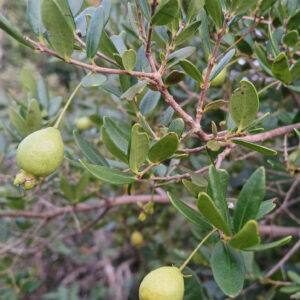
Leaves: Simple, glossy, entire-margined, ornamental
Flowers: White, attractive, with many stamens
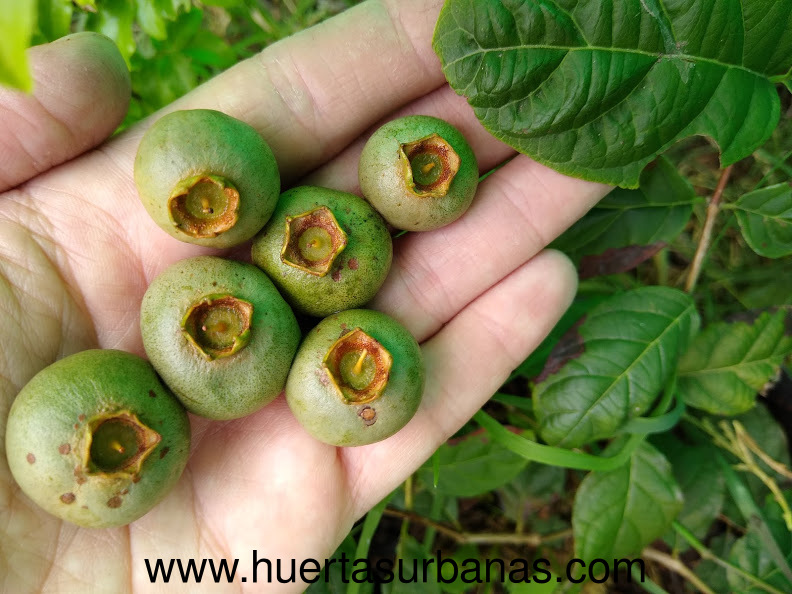
Fruit: Small to medium, globose, aromatic; greenish-blue when immature in our observed material, turning yellow-orange at full ripeness
Use: Fresh eating, juices, jams, desserts, rare fruit collecting, subtropical orchards
Cultivation & care
Campomanesia neriiflora is best suited to subtropical and warm-temperate climates. Young plants appreciate protection from harsh conditions, especially strong frost, drying winds, and intense sun while still small.
Grow in a fertile, well-drained substrate with steady moisture. Avoid waterlogged conditions, as with most Myrtaceae seedlings. Young plants may benefit from partial shade, gradually adapting to stronger light as they grow.
Seed germination & propagation
Fresh seeds are strongly recommended, as viability in many Myrtaceae can decline with long storage.
Suggested germination method:
- Sow fresh seeds as soon as possible after arrival.
- Use a well-draining but moisture-retentive substrate.
- A mix such as peat/coir with perlite or fine vermiculite can work well.
- Sow approximately 0.5–1 cm deep.
- Keep warm, ideally around 25–28 °C.
- Maintain steady humidity without waterlogging.
- Bright shade or filtered light is ideal for young seedlings.
- Germination may begin in a few weeks, but some seeds can take longer.
Patience is important. Rare native fruit species often germinate unevenly, especially when seed freshness, temperature, and moisture vary.
Why add Campomanesia neriiflora to your collection?
- Rare and little-known edible Myrtaceae.
- Beautiful white flowers and compact growth habit.
- Aromatic fruit with excellent culinary potential.
- Distinctive greenish-blue immature fruit coloration.
- Pulp with a unique baked-apple-like flavor when fully ripe.
- A great species for collectors of guabirobas, Brazilian native fruits, and rare subtropical fruit trees.
Campomanesia neriiflora is not a common commercial fruit — and that is exactly what makes it exciting. It is a collector’s species with real ornamental value, edible potential, and a flavor profile that deserves more attention.
Reviews
There are no reviews yet.