Description
Eugenia sp. “Minas Honey Drop” — Rare Brazilian Honey-Sweet Eugenia / Madame Jambu
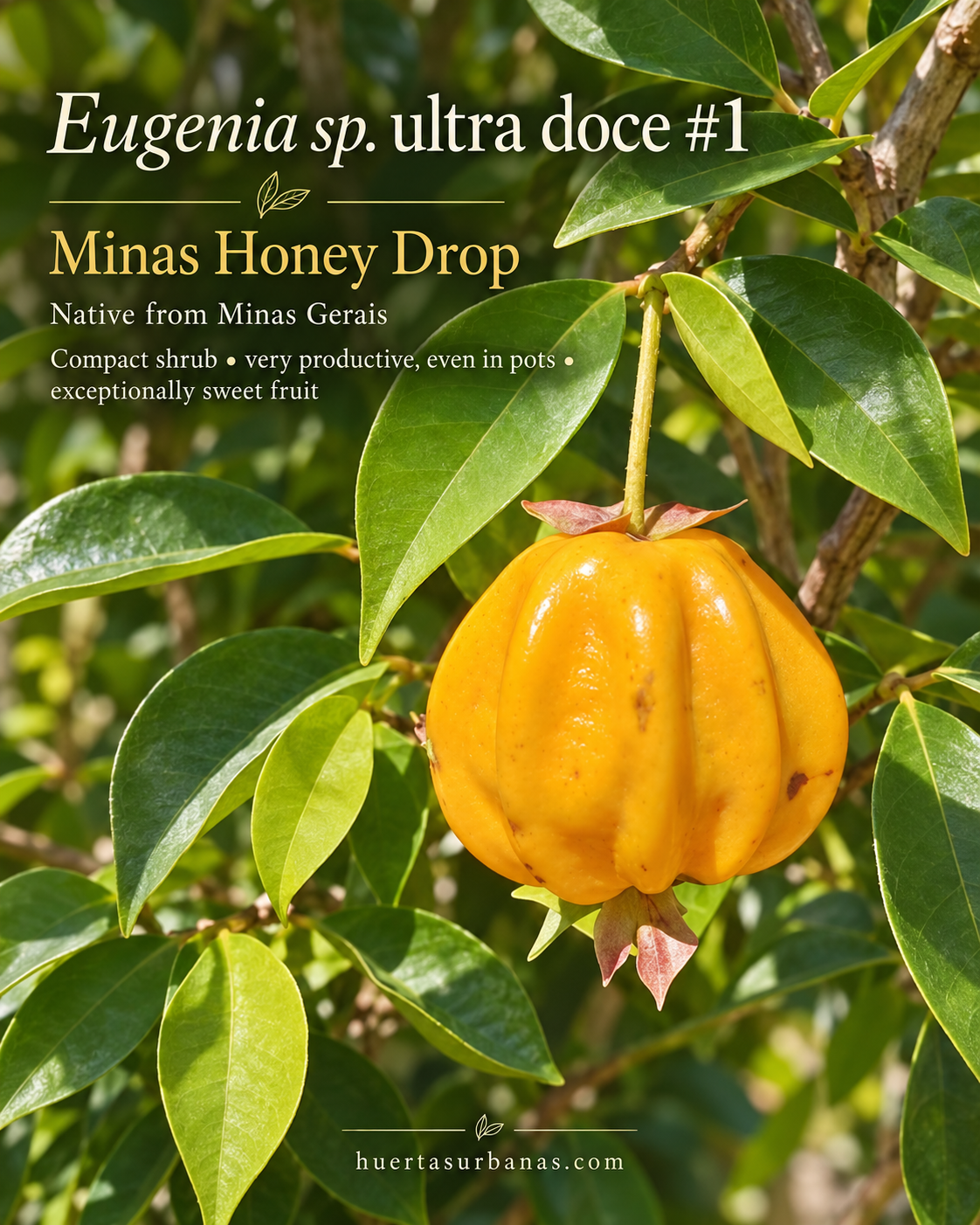
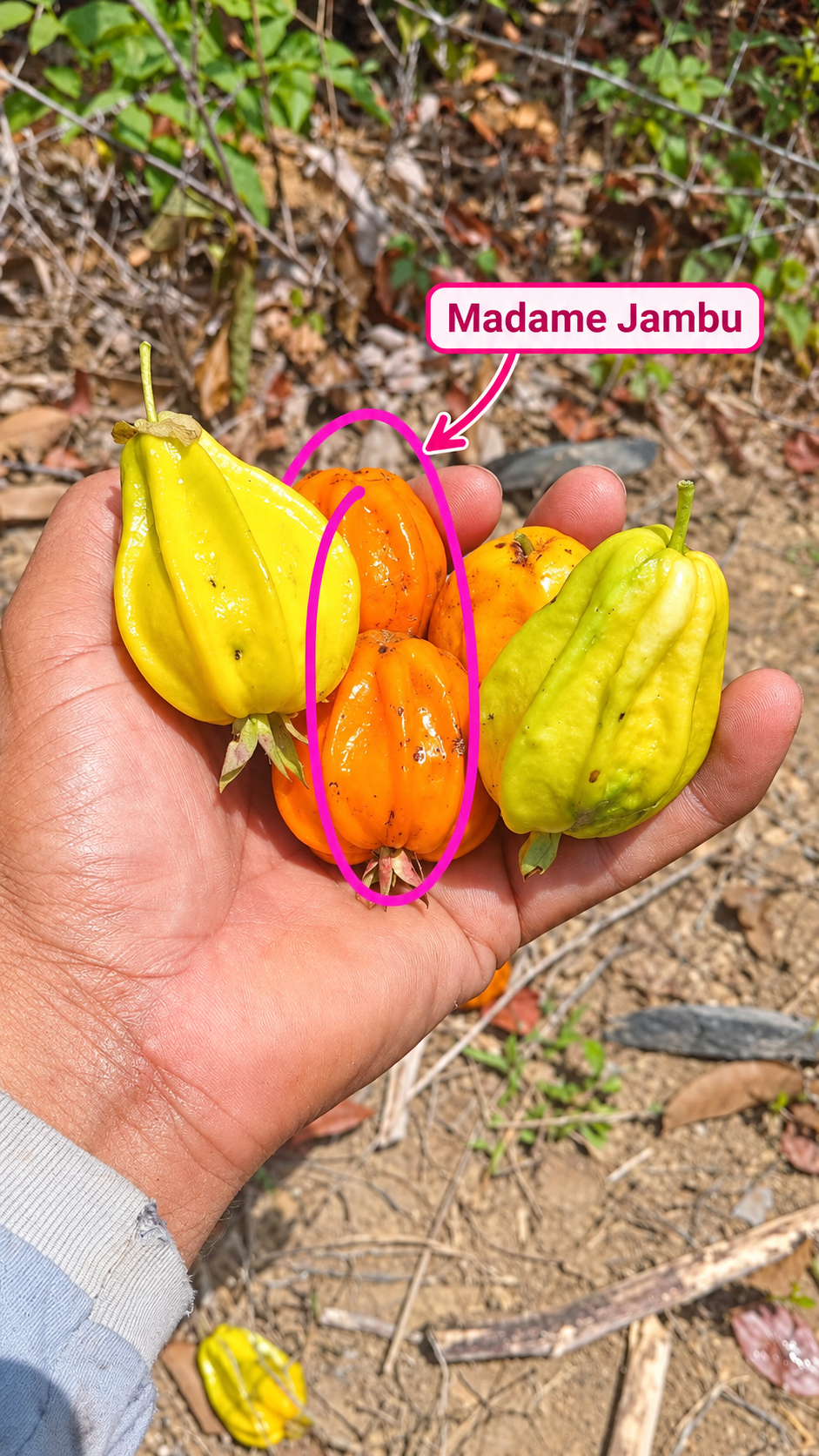
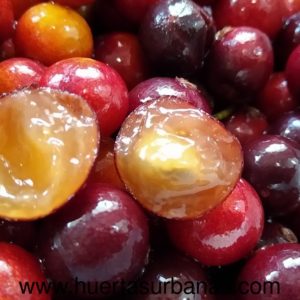
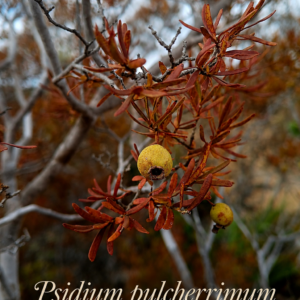
Discover a remarkable and exceptionally rare Eugenia from the mountains of Minas Gerais, Brazil, producing beautiful, strongly ribbed, golden-yellow to orange fruits.
According to its original source, the fruits have a deliciously sweet flavor, making this an especially intriguing selection among Brazil’s lesser-known native fruit trees.
This is the shorter, more rounded fruit form, offered by Huertas Urbanas under the name “Minas Honey Drop”. A related, more elongated form is offered separately as “Minas Honey Pear”.
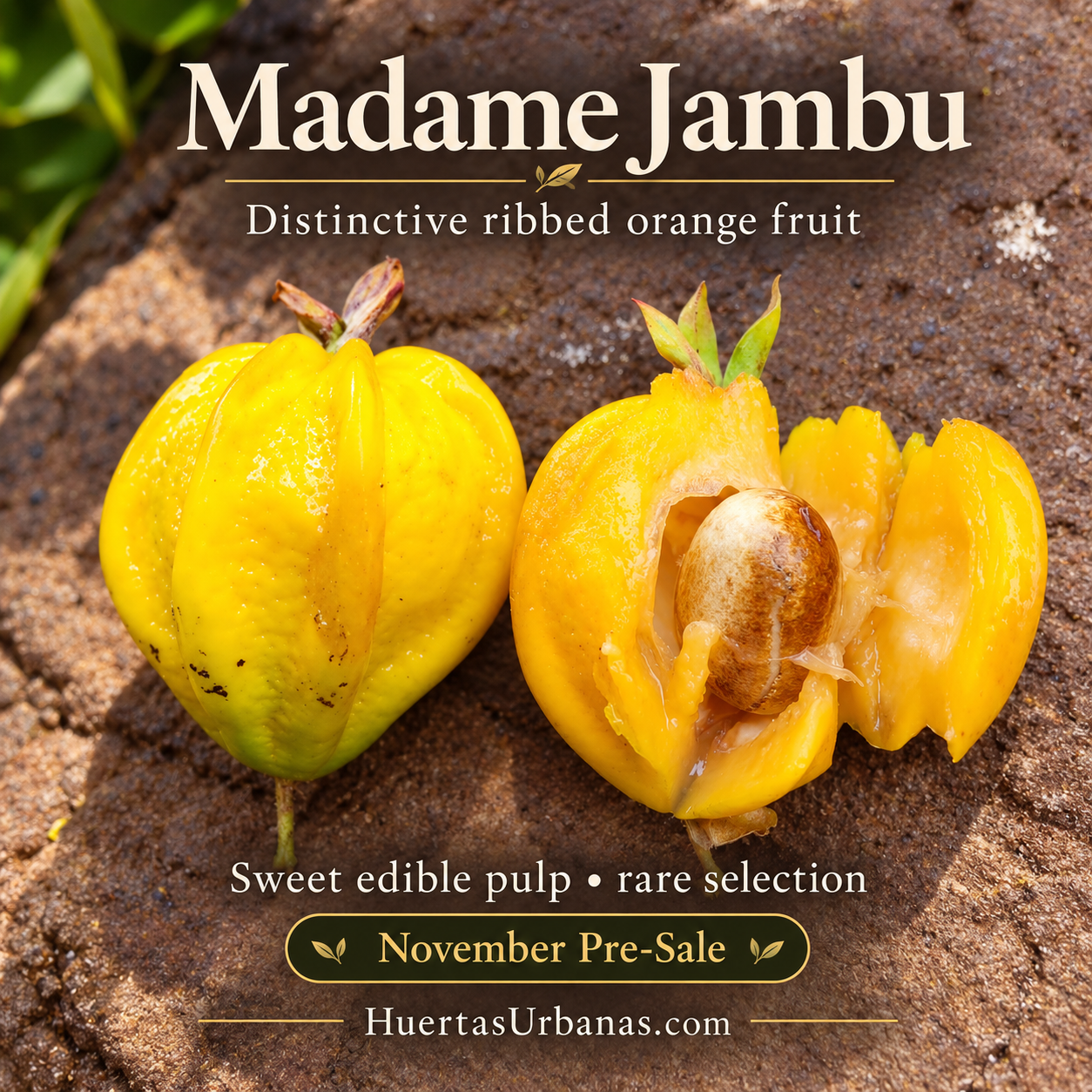
Our Brazilian source also knows this plant as “Madame Jambu”, although that name appears to be used for similar Eugenia plants from different localities. Their precise botanical relationships remain under investigation.
🍯 Fruit and Flavor
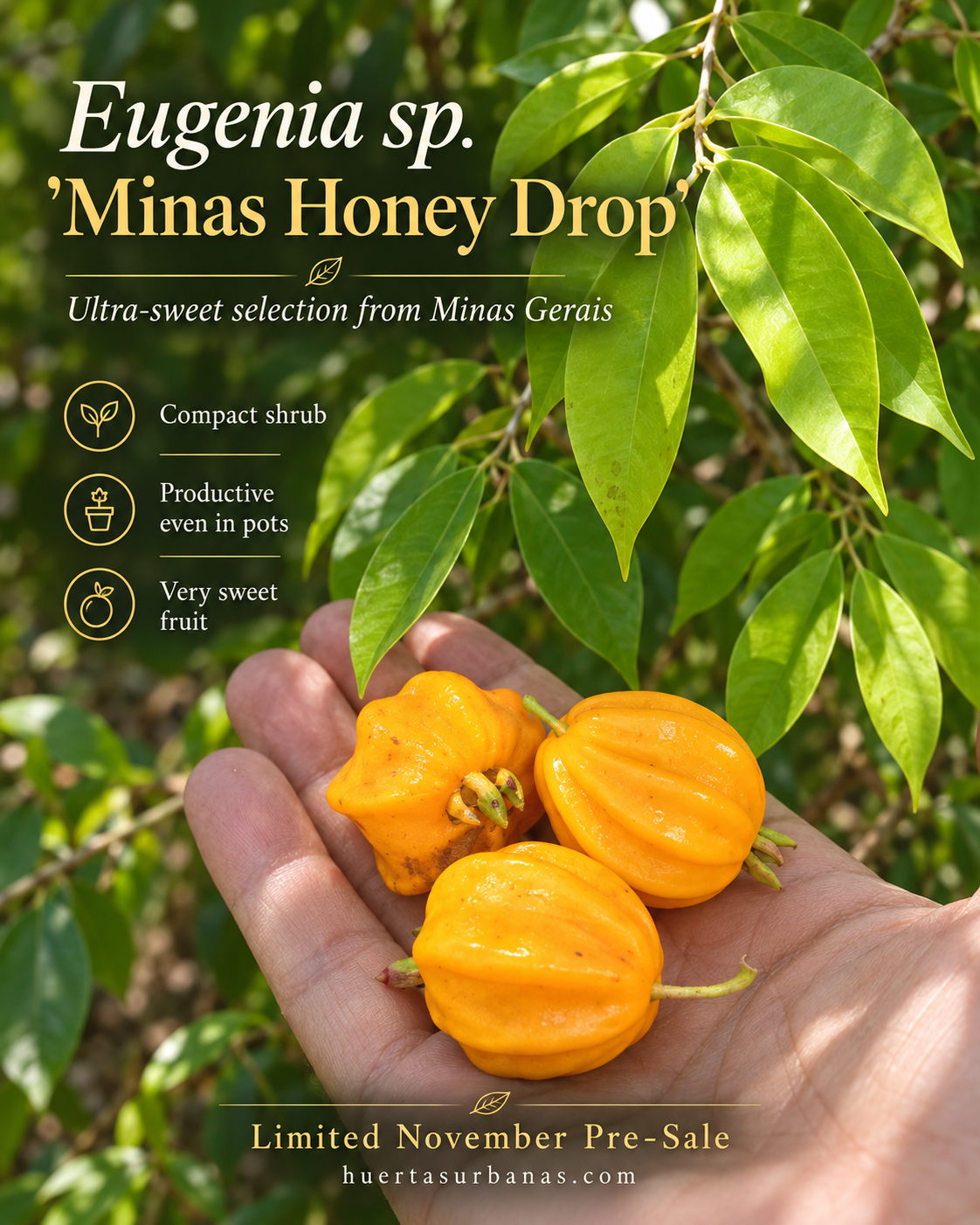
- Fruit appearance: very attractive, strongly ribbed fruits, ranging from golden yellow to orange when ripe.
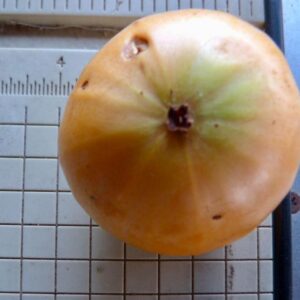
- Fruit size: approximately 6 cm on average, according to the original description.
- Fruit shape: relatively short and rounded, with prominent longitudinal ribs.
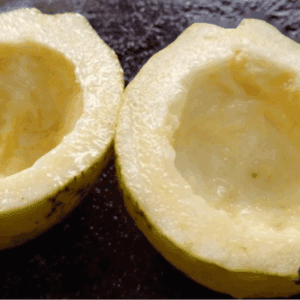
- Flavor: described by the original source as very sweet. As this remains an unidentified Eugenia, further tasting observations would be valuable.
- Botanical interest: an unusual fruit form with considerable ornamental and collector appeal.
🌳 Origin and Cultivation Potential
This accession is reported to originate from the Ouro Preto region of Minas Gerais, Brazil, near the mountainous area of Pedra do Itacolomi, where relatively cool conditions occur.
- Growth habit: reportedly compact and somewhat shrub-like.
- Container cultivation: described as productive even when grown in pots, making it particularly interesting for collectors with limited garden space.
- Cold tolerance: the source reports some frost tolerance, potentially reflecting adaptation to the cooler conditions of its region of origin. Exact tolerance limits remain unknown.
- Fruit production: reportedly capable of producing up to two crops per year under suitable growing conditions.
- Rarity: an uncommon Brazilian collector accession, rarely encountered in cultivation outside its native region.
🌱 Germination and Growth
Brazilian cultivation reports suggest that plants known as Madame Jambu may exhibit relatively rapid seed germination and moderate subsequent growth.
These observations are promising, although the identity of all plants circulating under this informal name has not yet been conclusively established.
As with other tropical and subtropical Eugenia species, germination performance depends strongly on seed freshness, moisture, temperature and growing conditions.
🔬 Botanical Identity
This plant is currently treated as Eugenia sp., an unidentified member of the Myrtaceae family.
The informal name “Madame Jambu” is also used by Brazilian collectors for a similar ribbed-fruited Eugenia. However, differences in reported provenance and fruit flavor suggest that additional comparisons are necessary before confirming whether all such plants represent the same taxon.
It should not automatically be confused with Eugenia selloi (Pitangatuba) or other superficially similar Brazilian Eugenia species.
“Minas Honey Drop” is the commercial name used by Huertas Urbanas to distinguish this short-fruited selection. It is not a formally registered or botanically described cultivar.
🌿 November 2026 Pre-Sale
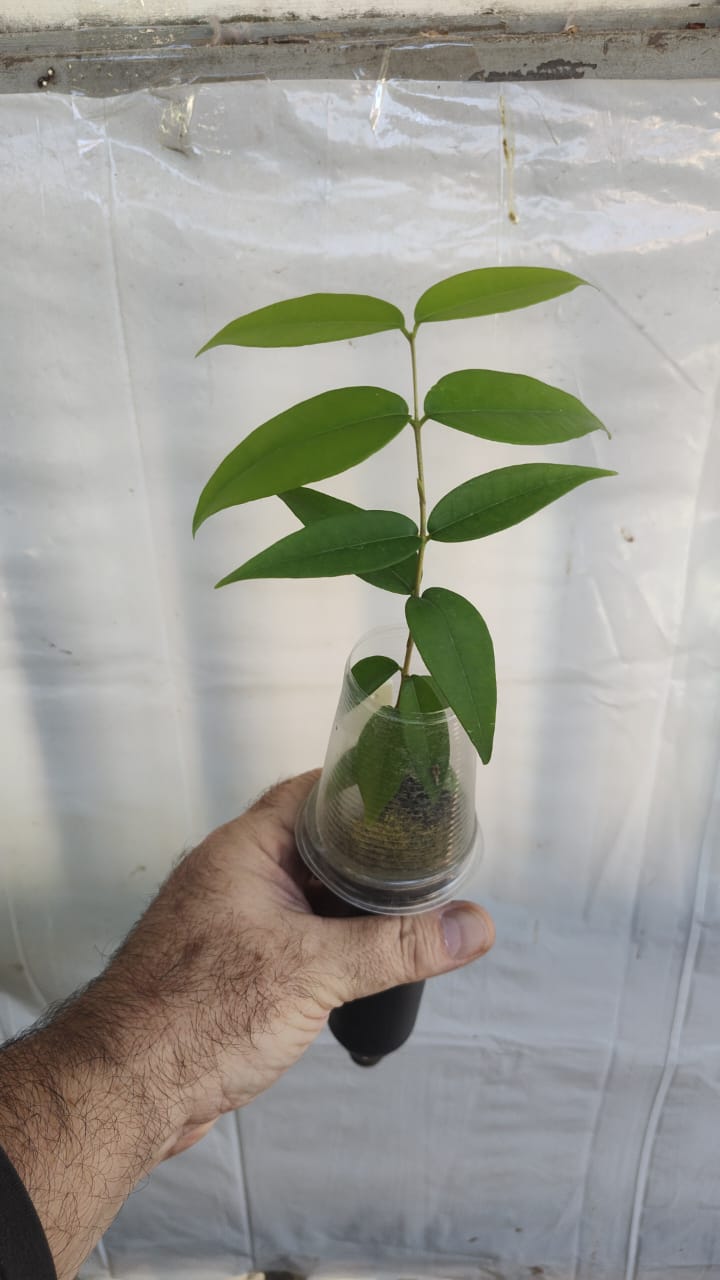
⚠️ NOVEMBER 2026 PRE-SALE ITEM.
An exciting opportunity for collectors interested in rare Brazilian Myrtaceae, unusual edible fruits and promising Eugenia selections with potential for container cultivation.
Germination and Care
- Seed freshness: Eugenia seeds should generally be kept fresh and should not be intentionally dried.
- Sowing: plant promptly in a loose, organic, well-draining medium.
- Moisture: maintain consistent humidity and even moisture without waterlogging.
- Temperature: provide mild to warm conditions for germination, avoiding temperature extremes.
- Light: bright indirect light or gentle filtered sunlight is recommended for young seedlings.
- Growing on: gradually acclimate established seedlings to brighter conditions as they develop.
Germination time and subsequent growth may vary. Reported characteristics are based on available field and cultivation observations and should not be interpreted as guarantees.
HuertasUrbanas.com
Reviews
There are no reviews yet.