Description
Plinia sp. “Pernambuco” — Rare Red-and-Green Fruited Jaboticaba from Brazil
OCTOBER 2026 UPDATE — OUR SEEDS ARE GERMINATING!
Excellent news! Our September collection of Plinia sp. “Pernambuco” has arrived in Argentina, and many seeds are already showing strong, active germination, with impressive root development.
The photographs below show the actual seed batch in our possession, inspected in October 2026. These are not reference photographs or images of unrelated species.
This is particularly encouraging for such an unusual and rarely available Brazilian Plinia. The seeds are now being carefully prepared for our upcoming international shipments.
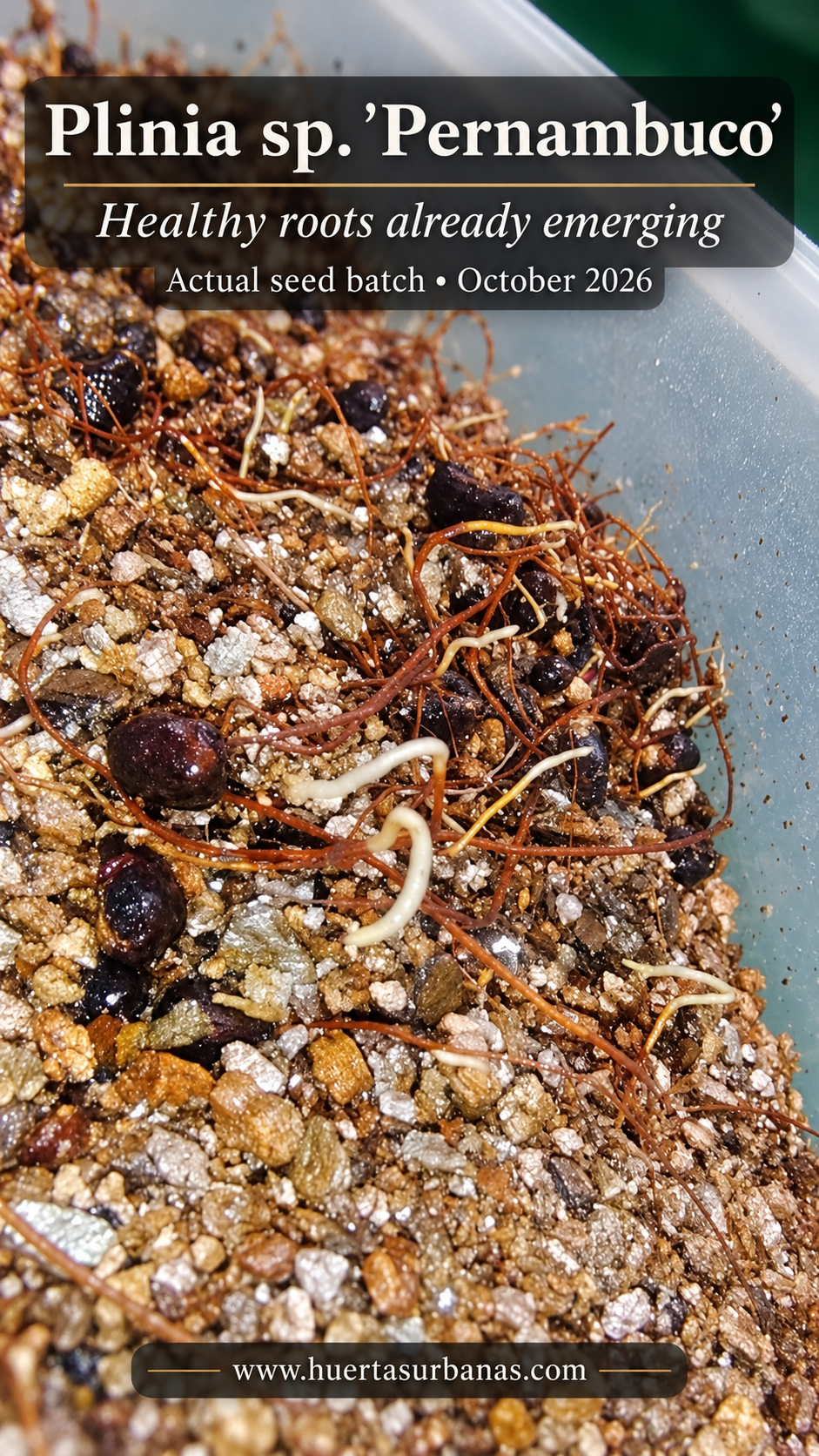
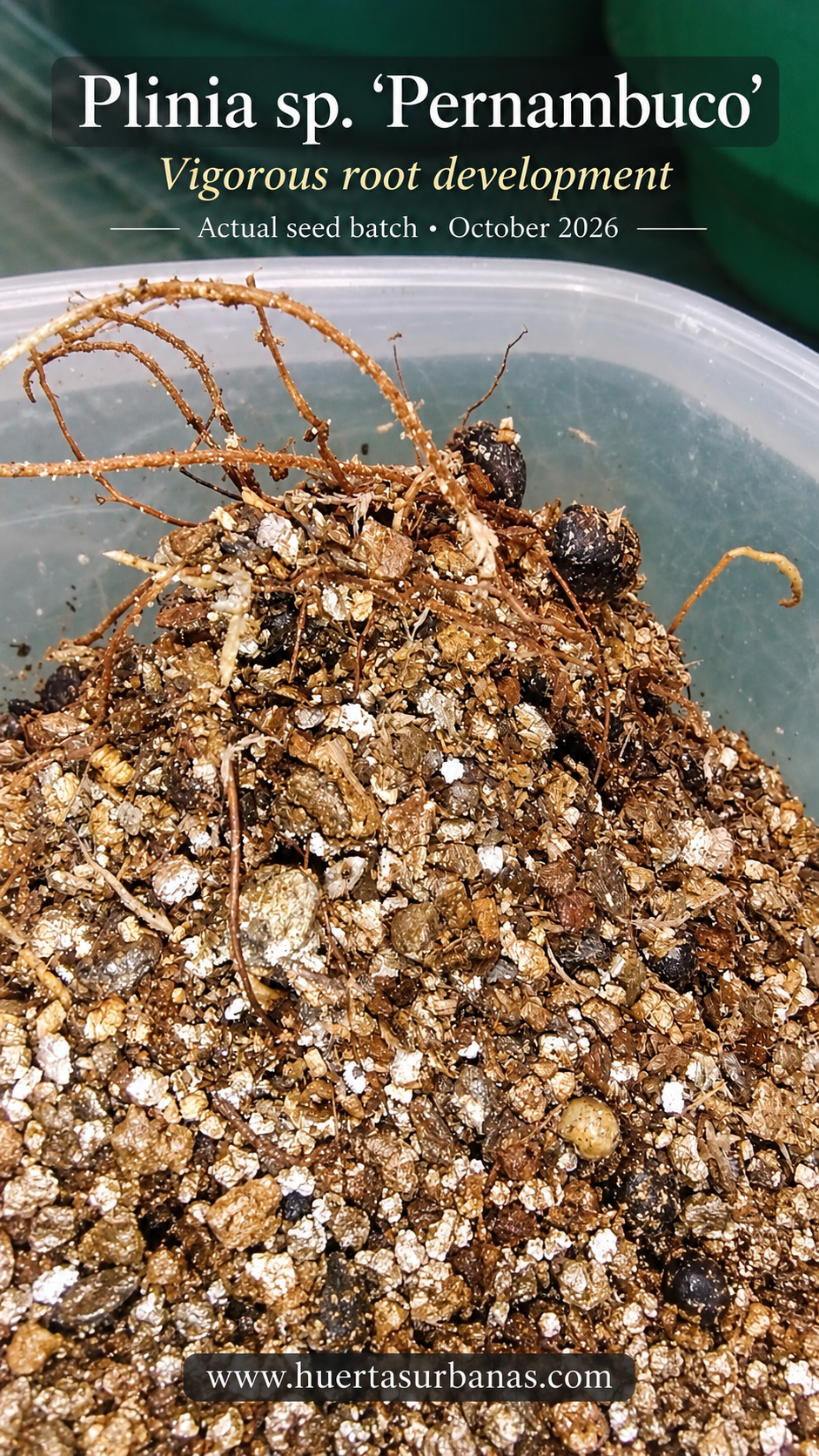
Fresh seeds. Actual germination evidence. An exceptionally rare Brazilian accession.
An Extraordinary Red-and-Green Cauliflorous Plinia
Plinia sp. “Pernambuco” is one of the most remarkable collector accessions in our September 2026 release.
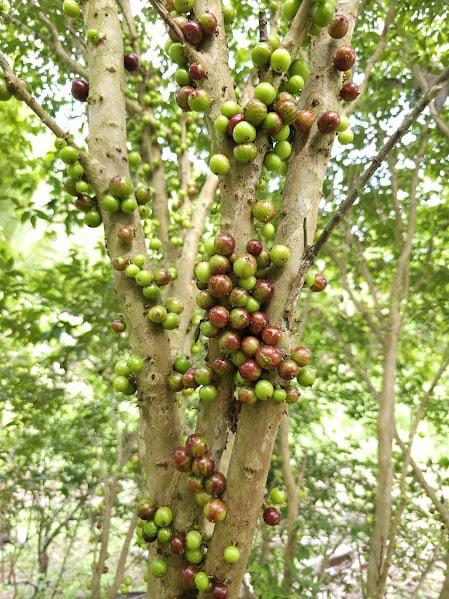
This unidentified Plinia originates from a highly localized population in Pernambuco, Brazil, and produces exceptionally distinctive fruits directly on older woody growth.
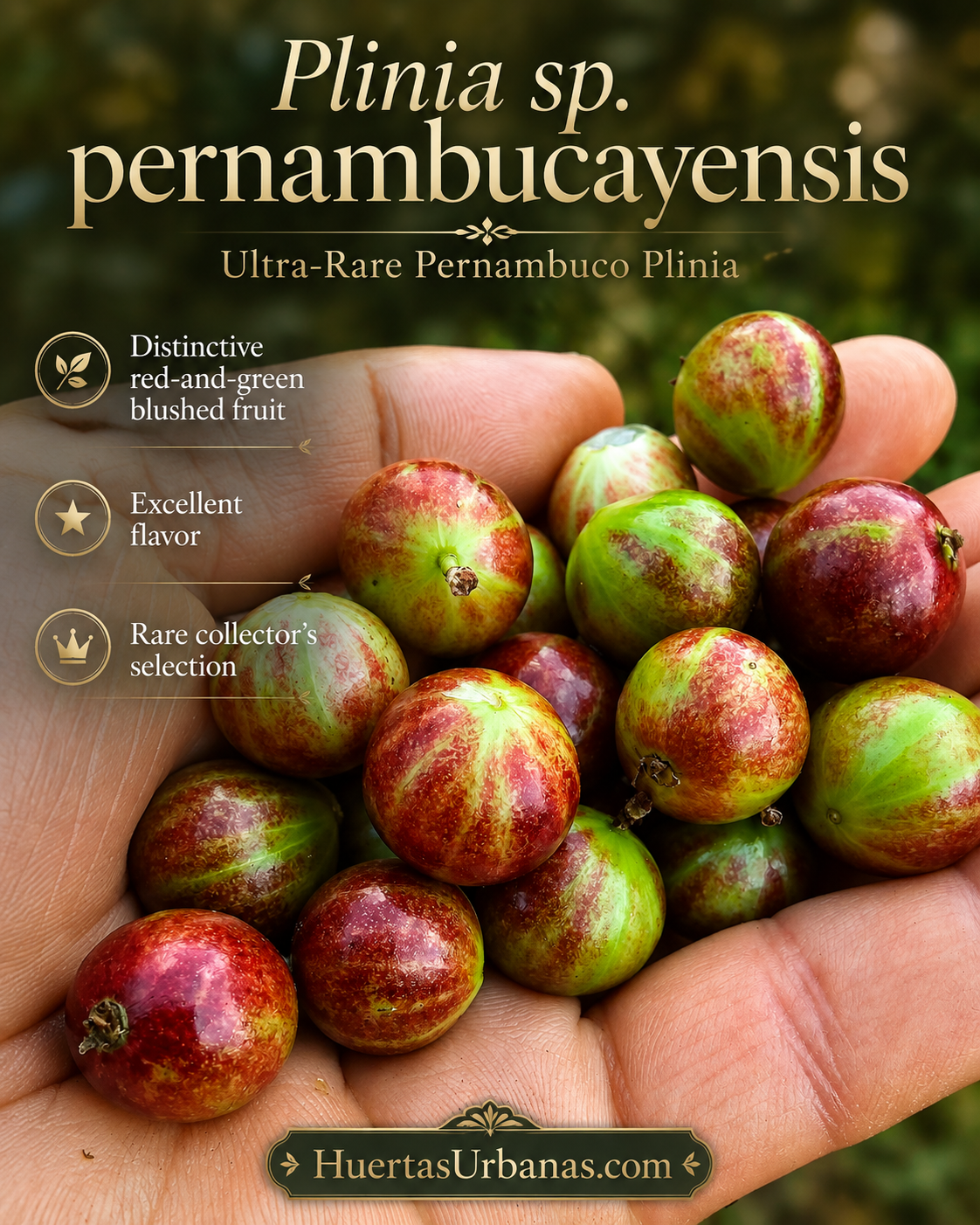
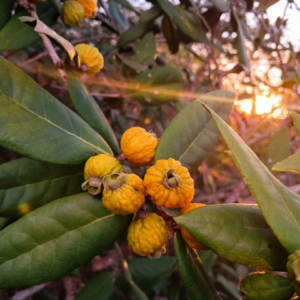
The fruits develop intense red to reddish-purple coloration while retaining conspicuous green areas, streaks, or irregular zones as they approach maturity.
According to our Brazilian collectors and field contacts, the fruit has an excellent, intense, and particularly memorable flavor.
What Makes This Plinia So Special?
- Unusual fruit coloration: Red to reddish-purple skin with persistent green areas and markings.
- Cauliflorous fruiting: Fruits develop directly on mature branches and woody growth.
- Excellent reported flavor: Described by the Brazilian collector as intense and memorable.
- Origin: A highly localized population in Pernambuco, northeastern Brazil.
- Uncommon genetic material: Not a standard commercial jaboticaba cultivar.
- Specialized provenance: Access to the source material was established through our Brazilian field network.
- Botanical interest: Its exact species identity remains unresolved.
- Germination evidence: Multiple seeds from our actual October 2026 batch are already developing extensive roots.
Fruit Characteristics
The fruits are visually unlike the more familiar uniformly purple, red, or black jaboticaba types.
The available photographs and field descriptions show a distinctive combination of colors:
- Green during early fruit development.
- Bright red as pigmentation increases.
- Reddish-purple coloration approaching maturity.
- Persistent green sections or irregular markings contrasting with the red skin.
This unusual coloration is a striking feature of the observed accession, although additional observations will be needed to determine how consistently it appears across fruits and growing conditions.
The fruits develop directly on older woody growth, producing the dramatic cauliflorous appearance highly prized by collectors of Plinia and related jaboticaba species.
Beyond its ornamental appeal, the Brazilian field reports emphasize its excellent eating quality.

Native Forest of Pernambuco — Video from the Collection Region
We are also sharing a short video showing the native forest environment associated with the collection area in Pernambuco, Brazil.
This footage offers a glimpse of the tropical vegetation and natural surroundings from which this unusual accession originates.
Please note: The video documents the native forest habitat. It does not specifically show the Plinia tree or its fruits.
Watch the native forest video on YouTube
A Rare Accession with an Unusual Collection History
This material did not originate from a commonly cultivated nursery tree or an established commercial jaboticaba cultivar.
According to our Brazilian network, access to the source population was highly restricted. Contact with the collecting area was established through a biologist and involved an extended process of communication and relationship-building before seed material became available.
We consider this provenance information valuable for collectors interested in preserving unusual regional fruit genetics.
Although we cannot claim worldwide exclusivity or confirm that this is the first international introduction, the information available to us suggests that this Pernambuco accession remains very poorly represented in cultivation outside its region of origin.
We encourage growers to maintain accurate accession records and share future observations of its growth, flowering, and fruiting.
Botanical Identification
The exact species identity has not yet been formally confirmed. We therefore offer this material under the conservative geographic accession name:
Plinia sp. “Pernambuco”
The provisional expression “pernambucayensis” has occasionally been associated with this material within the collector network. However, we are not presenting it as a formally published botanical name or as proof that the plant represents a scientifically described new species.
A more precise identification will require further examination of:
- Flowers and reproductive structures.
- Leaves and new growth.
- Bark and mature tree architecture.
- Fruit and seed morphology.
- Additional plants and specimens from the original population.
Seed-grown plants may show natural variation in fruit color, size, flavor, and growth characteristics.
Until further botanical evidence becomes available, we recommend preserving the complete accession name Plinia sp. “Pernambuco” in cultivation records.
September 2026 Collection — Seeds Now in Argentina
SEPTEMBER 2026 COLLECTION — OCTOBER GERMINATION UPDATE
Our Pernambuco seed collection has already reached Argentina, where the seeds have been examined and carefully handled for international distribution.
Many seeds are actively germinating, with visibly developed roots. The photographs at the beginning of this listing document the condition of the actual batch during October 2026.
Seeds are being prepared for our upcoming shipments, including distribution to customers in the United States through our US partner.
Final dispatch dates remain dependent on phytosanitary documentation, inspection, transportation, and international logistics.
Because the accession is uncommon and future collections cannot be guaranteed, availability may be limited.
Important: Root development varies naturally between individual seeds. Some may be supplied already germinating, while others may remain firm and ungerminated at the time of dispatch. The photographs document the current batch but are not a guarantee that every individual seed will have the same root development.
Germination and Early Growing Recommendations
Like many tropical Plinia accessions, these seeds should be handled carefully and should not be intentionally dried.
- Plant promptly: Fresh seeds generally benefit from being sown without unnecessary delays.
- Growing medium: Use a loose, moisture-retentive but well-draining substrate.
- Moisture: Maintain consistent humidity without waterlogging.
- Temperature: Warm, stable tropical conditions are a reasonable starting point; approximately 24–28°C (75–82°F) may be suitable, although the optimal range for this unidentified accession has not been established.
- Light: Bright shade or filtered light during early development.
- Already germinating seeds: Handle emerging roots with extreme care. Avoid bending, drying, or breaking them during planting.
- Cold protection: Protect young plants from frost and prolonged cold exposure.
- Patience: Individual seeds may germinate at different times, even within the same collection.
Visible roots are strong evidence of active germination, but subsequent seedling establishment depends on proper handling, planting conditions, and individual plant health.
Germination and survival after delivery cannot be guaranteed, as they are influenced by natural variation, transit conditions, storage, and cultivation practices.
Rare Genetics — Real Germination — A Remarkable Brazilian Fruit
Plinia sp. “Pernambuco” combines extraordinary red-and-green cauliflorous fruits, excellent flavor reported by the collector, unusual geographic provenance, and strong germination activity documented in our own seed batch.
For serious jaboticaba and rare-fruit collectors, this is an opportunity to cultivate a distinctive Brazilian accession that remains largely unknown outside specialist circles.
Explore more rare Brazilian fruit seeds at Huertas Urbanas.
Reviews
There are no reviews yet.