Description
Plinia cf. pinnata — a living botanical mystery from the Amazon
This is not simply another rare jaboticaba.
Its story reaches back to the very beginning of modern botanical nomenclature. In 1753, Carl Linnaeus published the genus Plinia in Species Plantarum, and Plinia pinnata became the type species of the entire genus — the historical botanical reference upon which the name Plinia itself was established.
More than two and a half centuries later, the Brazilian history of this species remains extraordinarily fragmentary. Brazil’s official conservation records document it from only two municipalities — Iranduba in Amazonas and Trairão in Pará — represented by merely three historical botanical collections made in 1961 and 1977.
For decades, it existed mainly as a name in botanical literature and as a handful of preserved herbarium records.
Now, a living and fruiting Amazonian accession has been located.
From forgotten herbarium records to living fruit
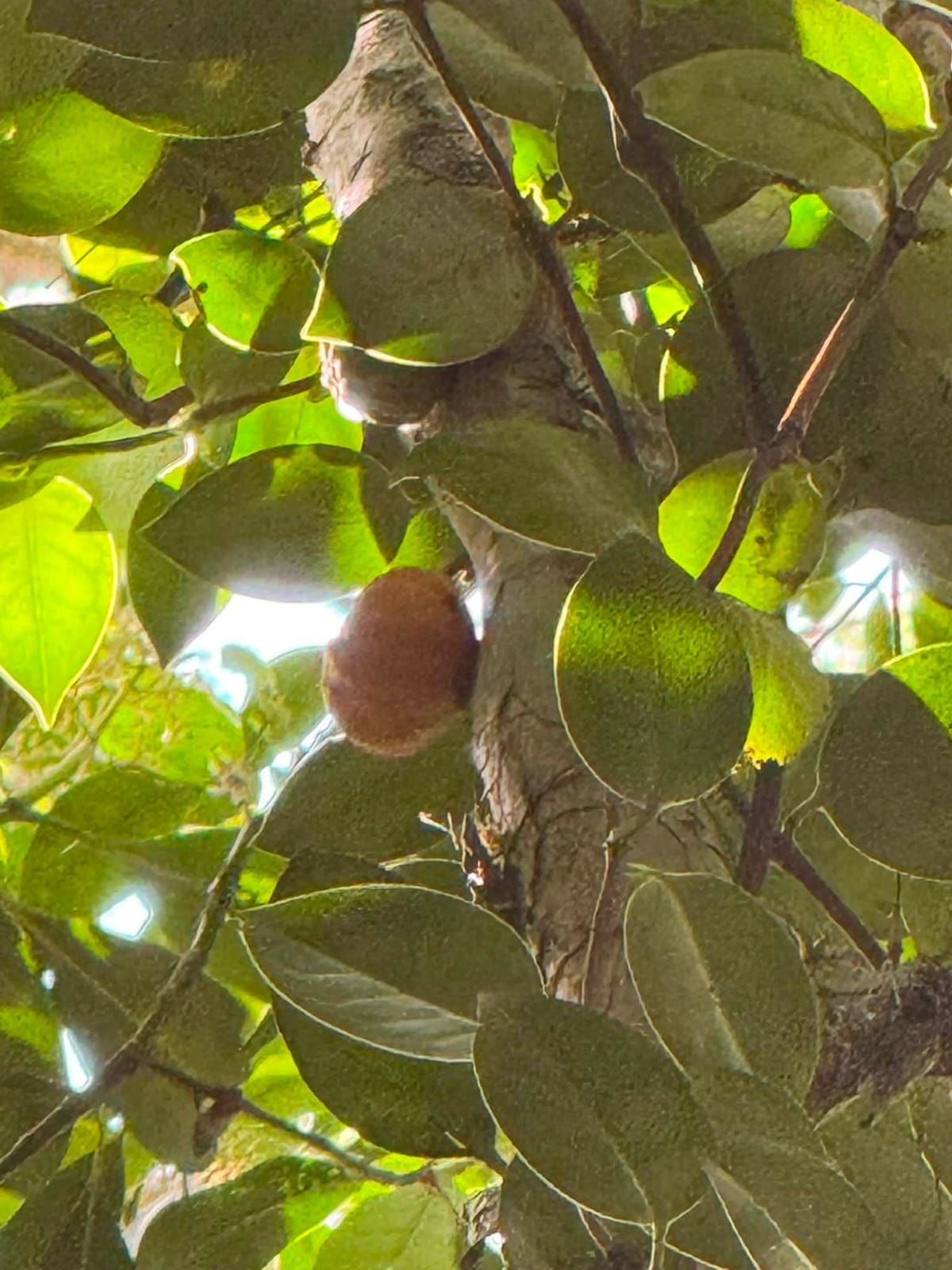
According to the collector, this material comes from the Brazilian Amazon, with populations reported in Amazonas and Pará.
Both fruiting shrubs and taller trees have been observed in the wild, suggesting substantial natural variation in growth habit. Some plants reportedly begin producing while still relatively compact, while others develop into larger forest trees.
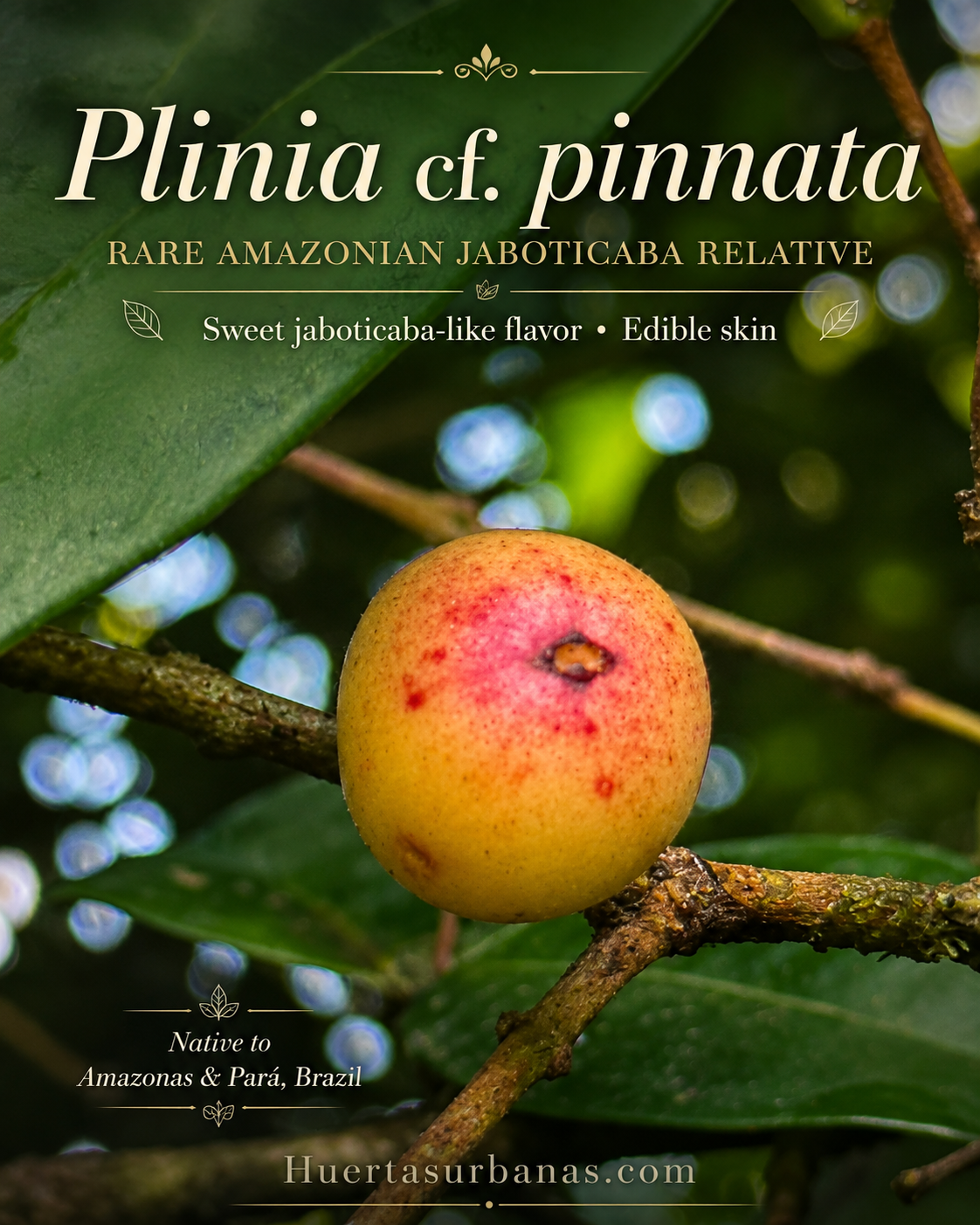
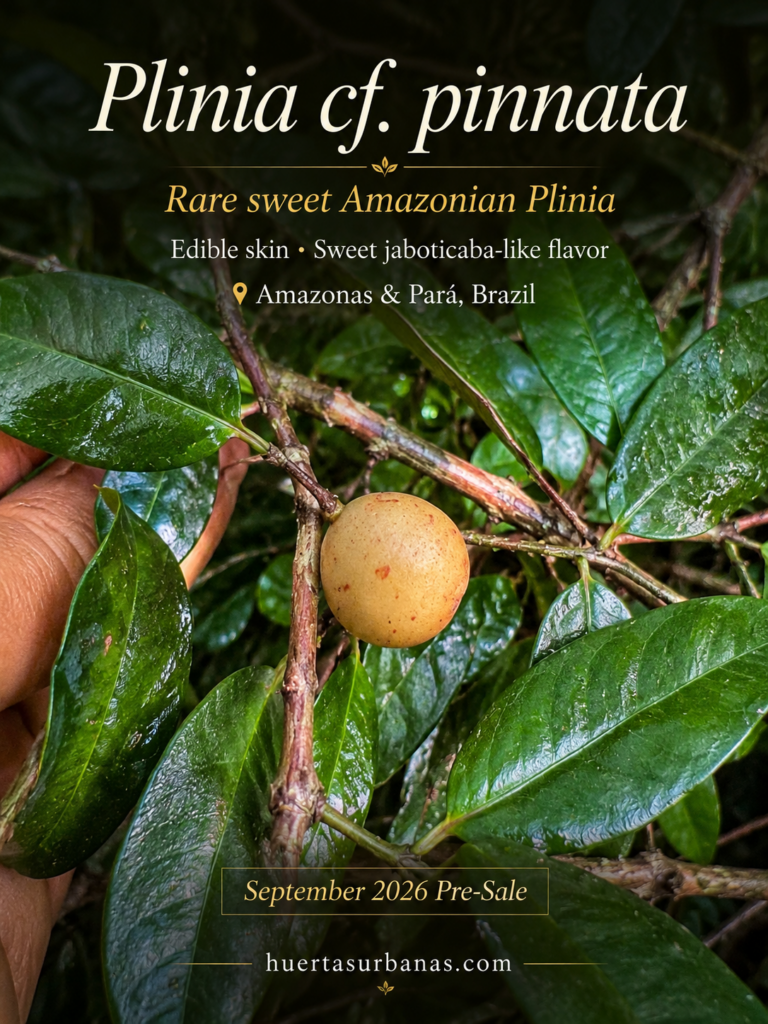
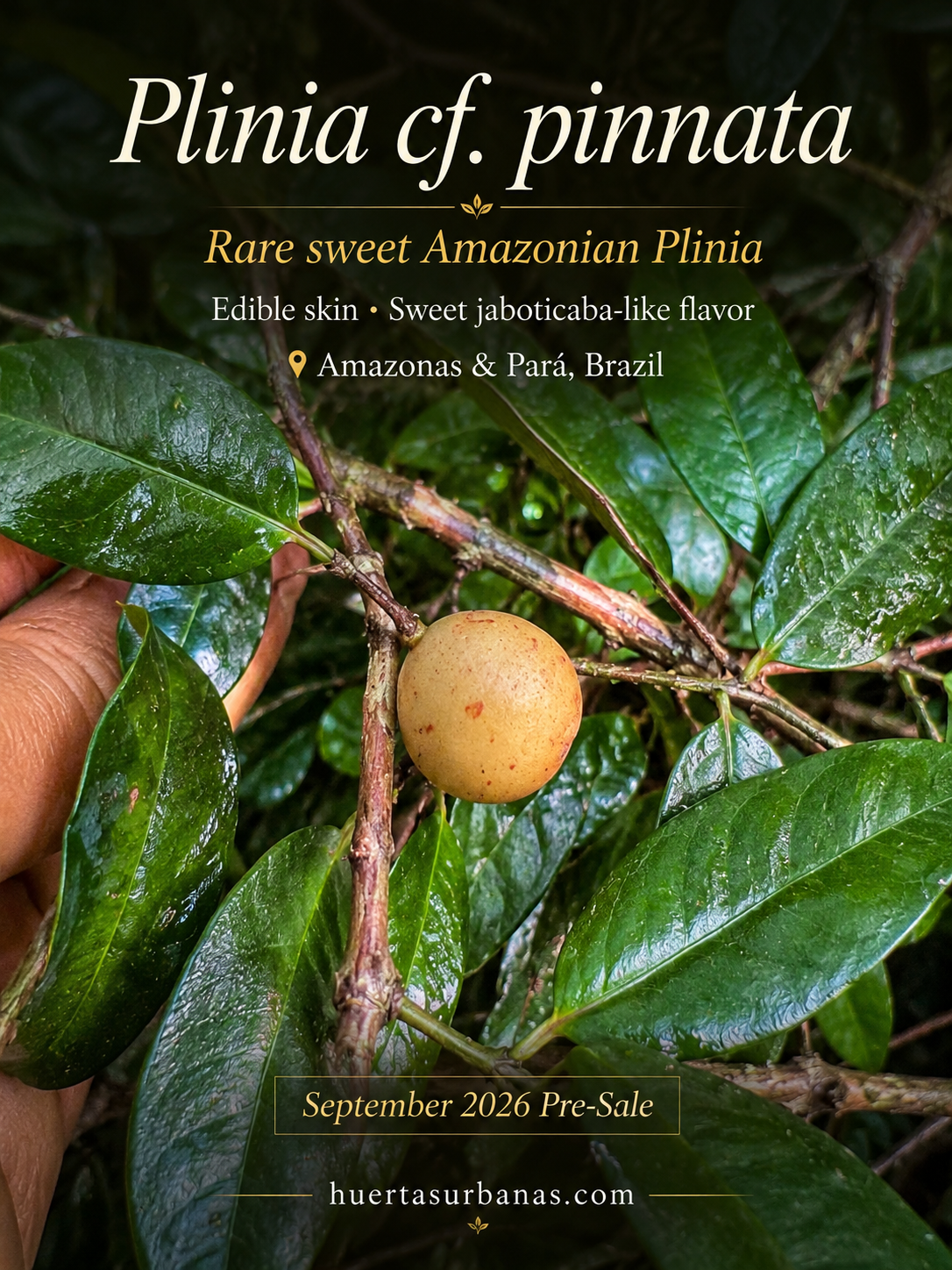
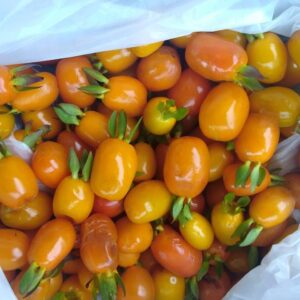
The fruits measure approximately 3–4 cm and mature through shades of yellow, warm orange-brown and soft reddish blush.
The skin is reported to be fully edible, while the pulp has the rich, sweet and familiar character of an excellent jaboticaba.
Not merely edible. Not merely rare. A genuinely delicious Amazonian Plinia.
 Fruit and plant characteristics
- Provisional identification: Plinia cf. pinnata
- Family: Myrtaceae
- Reported fruit size: Approximately 3–4 cm
- Reported flavor: Sweet, rich jaboticaba-like flavor
- Skin: Reported as edible
- Fruit color: Yellow to orange-brown, sometimes developing a reddish blush
- Reported source region: Amazonas and Pará, Brazil
- Observed growth habit: Fruiting shrubs as well as taller trees
- Biome: Amazonian tropical forest
- Availability: Extremely limited September 2026 release
Possibly the first documented commercial release of this Amazonian accession
The collector states that this material has never previously been commercially offered.
During our own research, we were unable to locate any earlier documented commercial offering of seeds or plants under the name Plinia pinnata, Plinia cf. pinnata, or its principal botanical synonyms.
Because undocumented private exchanges may have occurred, we will not claim an absolute and scientifically proven worldwide first. Nevertheless, the evidence currently available suggests that this may be the first documented international commercial seed release of this living Amazonian accession.
This is therefore more than the launch of a rare fruit seed.
It may represent the entrance into cultivation of genetic material that has remained almost entirely absent from horticulture, nurseries and private collections.
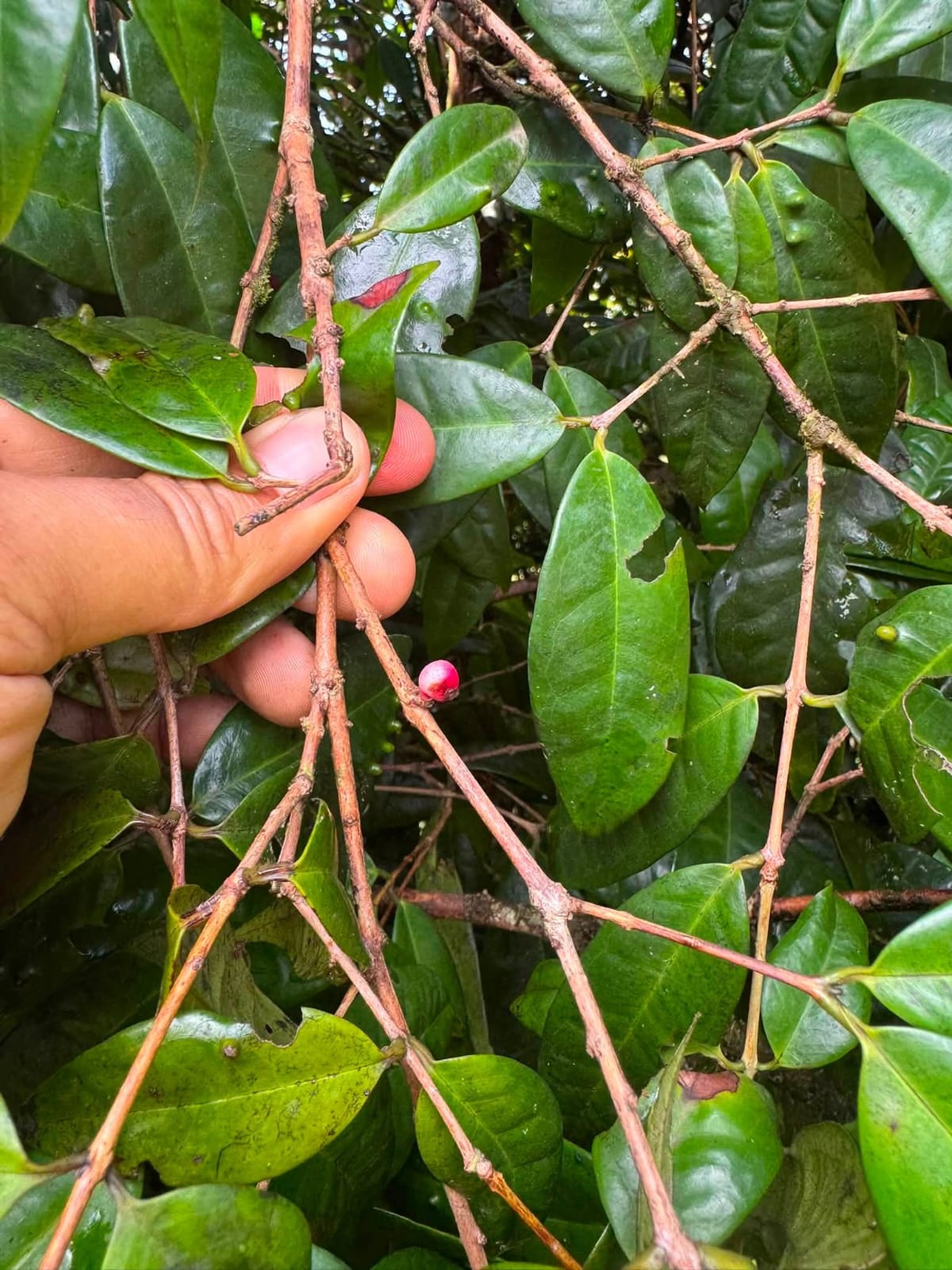
Why we use the name Plinia cf. pinnata
The abbreviation “cf.” means “compare with.” It indicates that the material appears related to Plinia pinnata, but that its final identification still requires more complete botanical study.
Modern botanical databases do not agree completely on the geographic range of true Plinia pinnata. Brazilian conservation records include historical collections from Amazonas and Pará, while other international taxonomic sources emphasize Caribbean populations.
There are also differences between some historical fruit descriptions and the living material shown here.
Rather than hiding that uncertainty behind an impressive name, we prefer to preserve the mystery honestly.
Flowers, mature leaves, seeds and additional diagnostic characters will be documented as the material becomes available. Until then, the scientifically responsible designation is:
Plinia cf. pinnata — Amazonian accession from Amazonas and Pará.
Why this accession is exceptional
- A connection with the birth of the genus: Plinia pinnata is the historical type species of Plinia.
- An extraordinary Brazilian record: Official records document only three historical Brazilian collections from 1961 and 1977.
- Living fruiting material: This is not merely an herbarium specimen or an old botanical citation.
- Excellent eating quality: Sweet jaboticaba-like flavor with edible skin.
- Large fruit: Approximately 3–4 cm according to the collector.
- Unusual growth variation: Fruiting shrubs and taller trees have both been observed.
- Amazonian provenance: Material reported from Amazonas and Pará.
- Possible horticultural first: No earlier documented commercial seed release was found during our research.
- Extremely limited availability: Only a very small initial quantity is being released internationally.
A seed carrying more than genetics
Every rare seed carries uncertainty. But some also carry history.
This accession connects a living Amazonian fruit with a botanical name published in 1753, with specimens collected more than sixty years ago, and with forests that remain difficult to explore and imperfectly understood.
Its descendants may eventually allow growers to compare growth habit, foliage, flowers, fruit morphology and flavor across different climates and continents.
Collectors purchasing this material are not simply adding another jaboticaba relative to their collection. They are participating in the first stages of documenting, cultivating and preserving an almost unknown Amazonian lineage.
September 2026 pre-sale
⚠️ EXTREMELY LIMITED SEPTEMBER 2026 PRE-SALE ITEM
This listing belongs to our September 2026 Brazilian rare-seed collection. Only a very small initial quantity is being released while we evaluate final harvest, seed condition and collector demand.
Orders containing September pre-sale items will be prepared with the corresponding September batch.
Final availability and shipping timing depend on:
- Natural fruit maturation
- The final number of viable seeds collected
- Transportation from the source region
- Seed cleaning and inspection
- Brazil-to-Argentina logistics
- Phytosanitary preparation and certification
- International transport to our United States distribution point
If the final viable quantity is lower than expected, orders will be fulfilled according to payment date. Any quantity that cannot be supplied will be refunded.
Because of its rarity and limited quantity, maximum purchase limits may apply during the initial release.
Germination and early care
Fresh tropical Myrtaceae seeds are generally moisture-sensitive and should not be intentionally dried.
- Sow promptly after receiving the seeds.
- Use a loose, organic and well-draining substrate.
- Sow shallowly, covering the seed only lightly.
- Keep the medium consistently moist but never stagnant or waterlogged.
- Maintain warm conditions, ideally around 24–28°C / 75–82°F.
- Provide bright shade or filtered light during germination.
- Avoid intense afternoon sun during the earliest growth stages.
- If a seed arrives already rooted, carefully position the root downward without bending or breaking it.
- Protect seedlings from cold wind, frost and sudden changes in humidity.
Germination speed may vary considerably. Some fresh Plinia seeds may begin rooting during transport, while others can require substantially more time.
Germination and subsequent plant performance cannot be guaranteed because they depend on natural seed variation, maturity, handling, transit time and the buyer’s cultivation conditions.
Botanical and historical references
- International Plant Names Index — Plinia L. and its type species
- CNCFlora / Jardim Botânico do Rio de Janeiro — Brazilian records of Plinia pinnata
- Plants of the World Online, Royal Botanic Gardens, Kew
From a name printed in 1753, to three historical Brazilian collections, to a living fruit in the Amazon: this may be the first opportunity for collectors around the world to grow this extraordinary lineage.
Reviews
There are no reviews yet.