Description
Plinia cf. callosa — a spectacular dark red to purple-fruited accession from Itacaré, Bahia
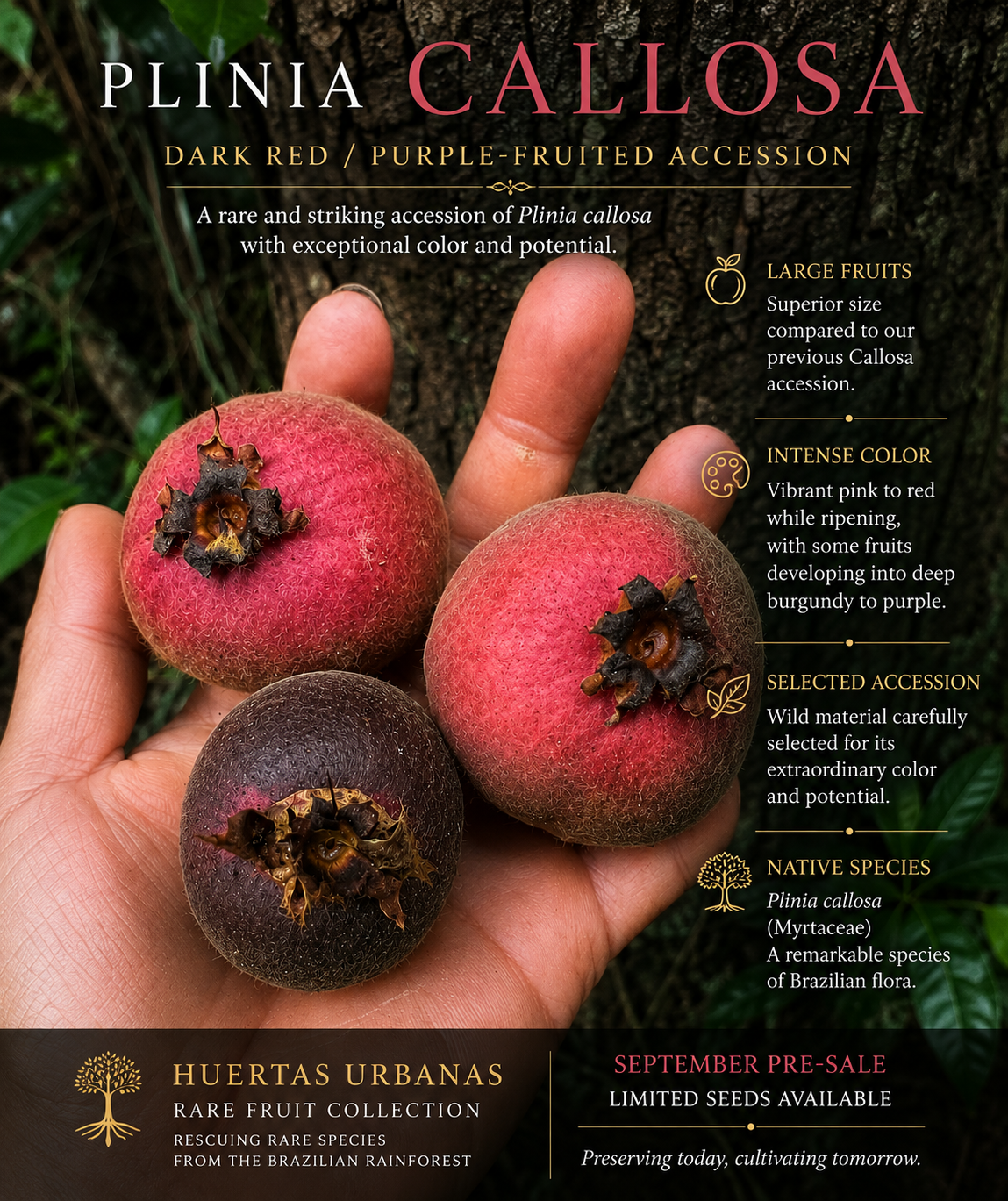
This newly secured Plinia cf. callosa accession immediately stood out for one reason: the fruit is extraordinary.
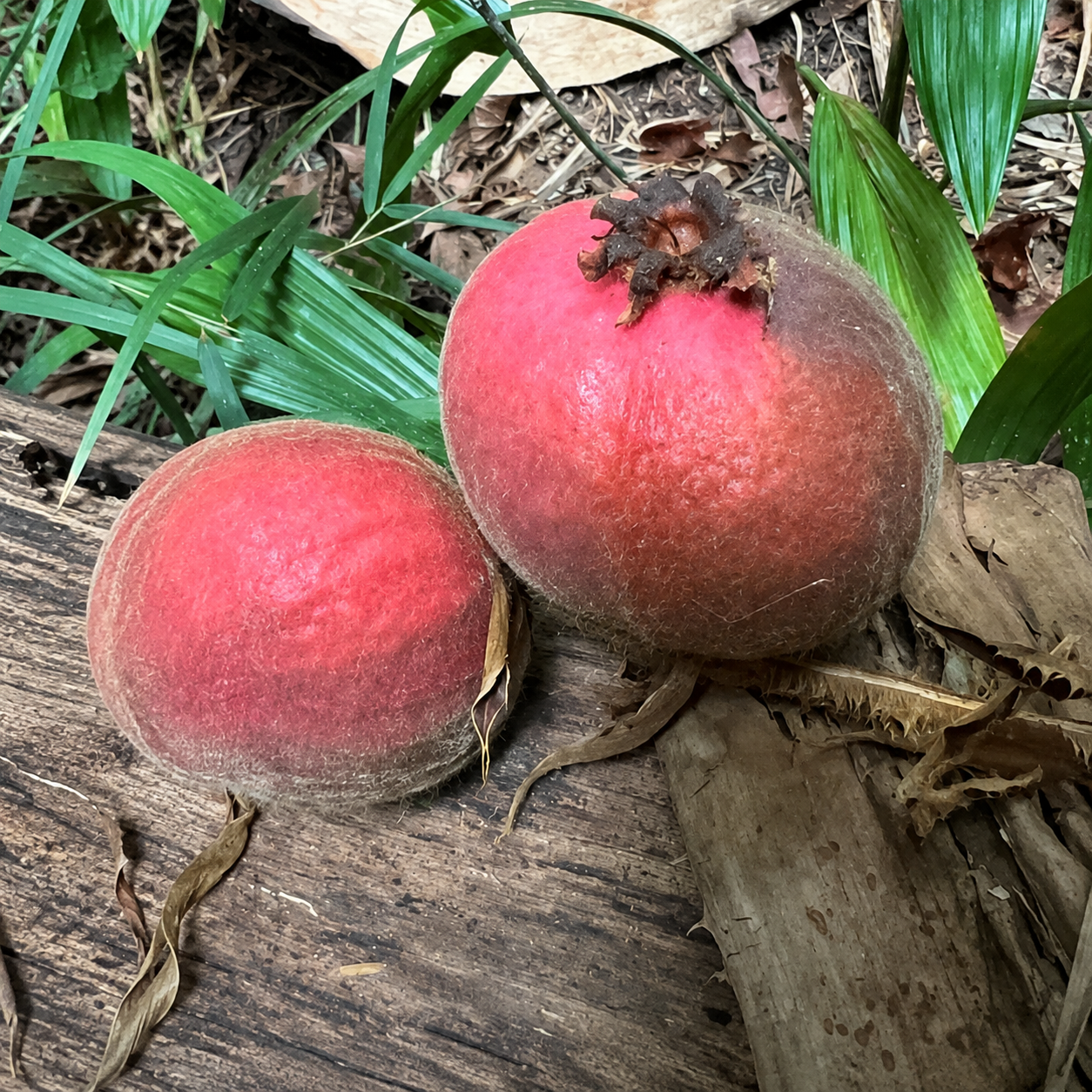
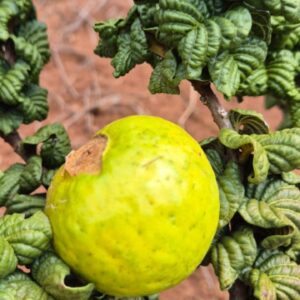
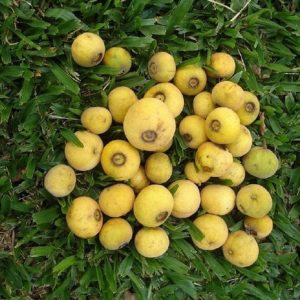
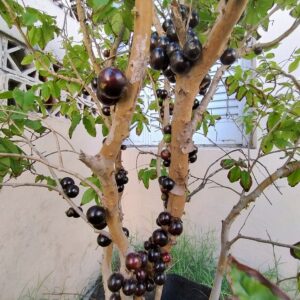
The documented source fruits are large and rounded, with a striking range of mature coloration from intense pink-red to deep burgundy and purple. Within the same source population, some fruits remain vivid red while others become dramatically darker as they mature, giving this accession a very different visual character from the paler Plinia callosa material that has circulated previously among collectors.
The material comes from Itacaré, Bahia, Brazil. After additional field research and comparison, the source has chosen to identify it conservatively as Plinia cf. callosa, acknowledging that there are some morphological differences that deserve further study.
For that reason, we are maintaining it under the collector designation Dark Red / Purple-Fruited Accession rather than presenting it as a formally named cultivar or botanical variety.
Why we selected this material
- Exceptional fruit color: vivid pink-red through deep burgundy/purple in the documented mature fruits.
- Large, attractive fruit: substantial rounded fruits with outstanding collector appeal.
- Sweet, edible skin: the peel is reported to be sweet, pleasantly crisp and an important edible part of the fruit.
- Sweet flavor: the fruit has been described as sweet and reminiscent of jaboticaba, while remaining clearly different from other rare Plinia accessions.
- Compact trees: the observed plants were approximately 2–4 meters tall.
- Rare Brazilian Plinia: material of this type remains exceptionally uncommon in international collections.
- Distinct collector accession: this seed lot is being maintained separately from our previous Callosa material.
- Extremely limited fresh seed: only a controlled portion of the expected commercial quantity is being released online.
Field origin — Itacaré, Bahia
This accession was documented in Itacaré, in the state of Bahia, Brazil.
Approximately 19 relatively young plants were observed in the source population, growing in a humid environment with soil rich in natural organic matter and decomposing vegetation.
The trees observed were approximately 2 to 4 meters tall. Mature fruits were found naturally fallen beneath the plants, allowing direct examination of fully developed fruit.
The site was reached near nightfall, so detailed photographs of the foliage and complete plants were not obtained during the initial collection. Further botanical documentation is expected as the material continues to be studied.
About the identification
Plinia callosa Sobral is an accepted Brazilian species in the family Myrtaceae. However, rare Brazilian Plinia populations can show substantial local variation, and collector material is sometimes circulated before complete botanical comparison is possible.
This material was initially identified as Plinia callosa. After additional research and recognition of some differences from previously known material, the source elected to use the more conservative designation Plinia cf. callosa.
The abbreviation “cf.” means “compare with” and indicates that the material closely resembles P. callosa but that its exact taxonomic placement deserves further study.
We consider this the most responsible way to preserve the identity of the accession while avoiding an unsupported claim that it represents a formally established variety.
A different-looking Callosa
We have worked with another P. callosa-type accession previously. This new material is being maintained separately because the documented fruits show a much stronger red to dark burgundy/purple pigmentation.
At this stage we do not claim that the color difference represents a formally stable variety. Seed-grown plants are genetically individual, and the exact degree of pigmentation may vary among seedlings.
The photographs and descriptions on this page refer specifically to the Itacaré source population.
Flavor — sweet, crisp skin and a jaboticaba-like character
We now have direct tasting information from this exact accession.
The fruit is described as sweet, with a flavor that recalls jaboticaba while remaining noticeably different from other rare Plinia materials.
One of its most interesting characteristics is the edible skin. The peel is reported to be sweet and pleasantly crisp, and much of the fruit can therefore be eaten rather than discarded.
The pulp layer is relatively modest, but it is also sweet. The combination of sweet pulp and an enjoyable edible peel makes this accession particularly interesting from an eating-quality perspective.
For serious Plinia and jaboticaba collectors
This is precisely the kind of material we believe should be maintained as a separate living accession: visually exceptional, botanically intriguing and represented by a very limited fresh-seed collection.
Collectors growing multiple Plinia accessions will have the opportunity to compare its foliage, growth habit, fruit pigmentation, skin texture, size and flavor as the seedlings mature.
For us, this is true collector material: unusual enough to deserve preservation, propagation and long-term documentation.
September 2026 Fresh-Seed Pre-Sale
⚠️ VERY LIMITED SEPTEMBER PRE-SALE RELEASE
This listing is part of our September 2026 fresh-seed batch. Only a conservative portion of the expected commercial allocation is being released online initially.
Final fulfillment depends on seed condition, inspection and the corresponding phytosanitary and international logistics process. Orders containing this item should therefore be considered part of the September pre-sale batch rather than immediate ready-to-ship inventory.
Fresh-seed handling
- Plant promptly after arrival.
- Use a loose, organic, moisture-retentive but well-drained medium.
- Keep fresh seeds consistently moist and do not allow them to dry completely.
- Warm conditions with bright indirect light or partial shade are recommended during early growth.
- Natural variation should be expected in all seed-grown plants.
Botanical summary
- Working identification: Plinia cf. callosa
- Family: Myrtaceae
- Source locality: Itacaré, Bahia, Brazil
- Observed population: approximately 19 young plants
- Observed tree height: approximately 2–4 m
- Fruit color: vivid pink-red to deep burgundy/purple
- Skin: edible, sweet and crisp
- Pulp: relatively limited but sweet
- Flavor: sweet, reminiscent of jaboticaba, but distinct from other rare Plinia materials
- Habitat observed: humid environment with organically rich soil
- Material status: rare collector accession under continued botanical study
- Release: September 2026 fresh-seed pre-sale
Reviews
There are no reviews yet.