Description
A newly described Costa Rican Plinia with extraordinary collector value
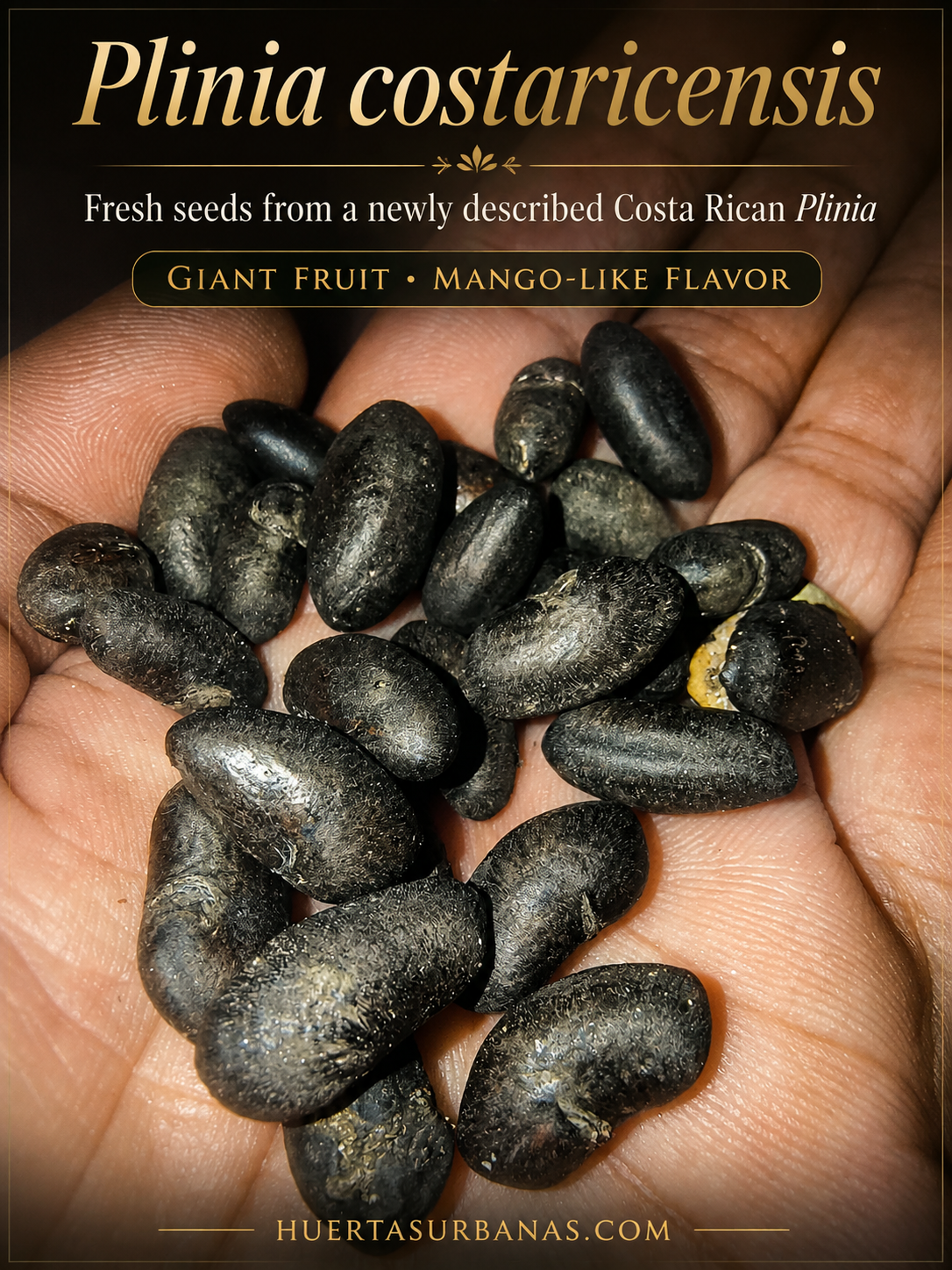
Plinia costaricensis M. Carranza & P.E. Sánchez is a formally described and currently accepted species of Myrtaceae, published as new to science in 2021. It is not a provisional collector name. The original scientific treatment described it from the humid forests of northern Costa Rica and reported it as endemic to the country.
This is one of the most remarkable Plinia accessions we have been able to offer: a true accepted species with a very restricted documented distribution, unusually large edible fruit, and a flavor profile that immediately separates it from the familiar jaboticaba spectrum.
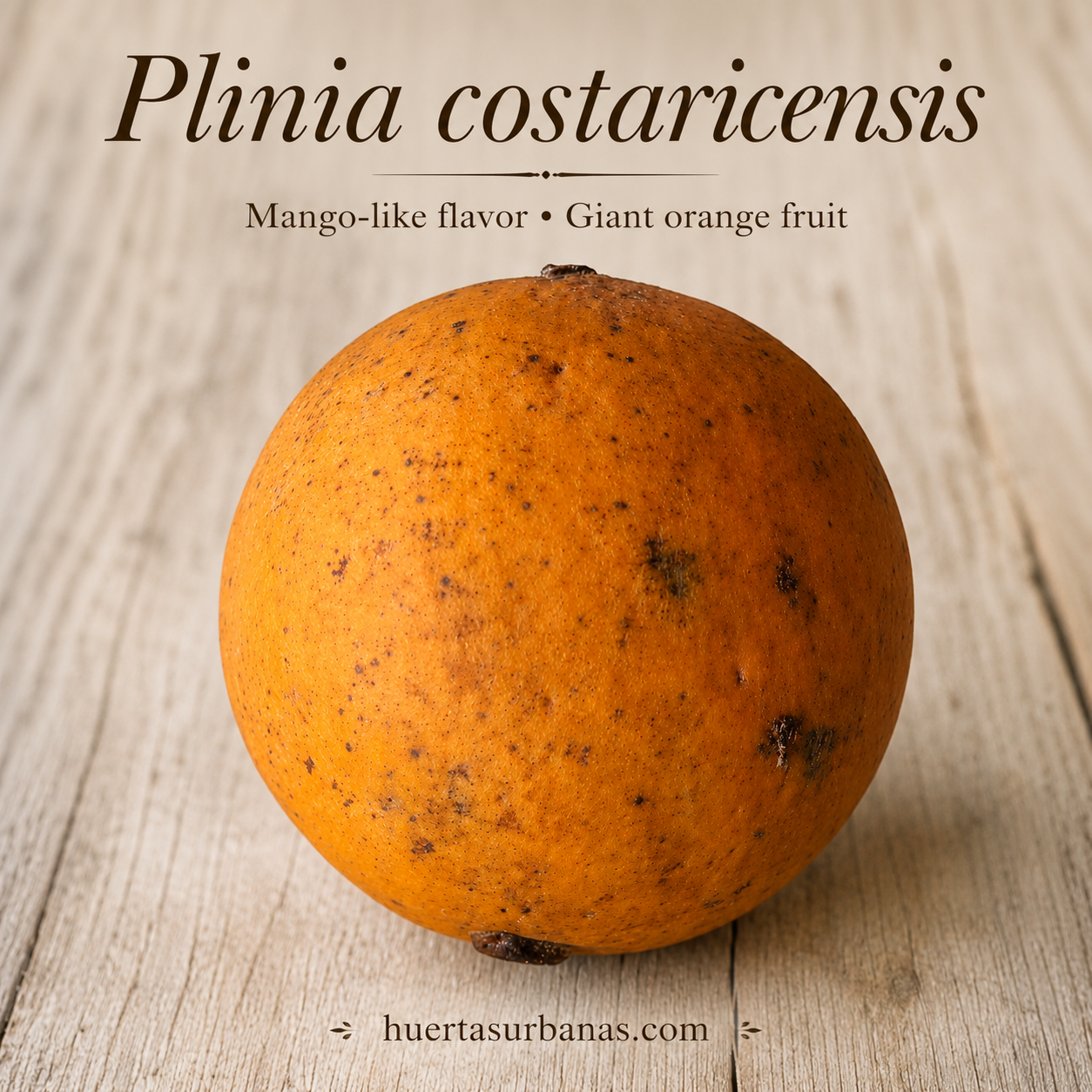
Large, extremely juicy fruit with mango-like aroma and flavor
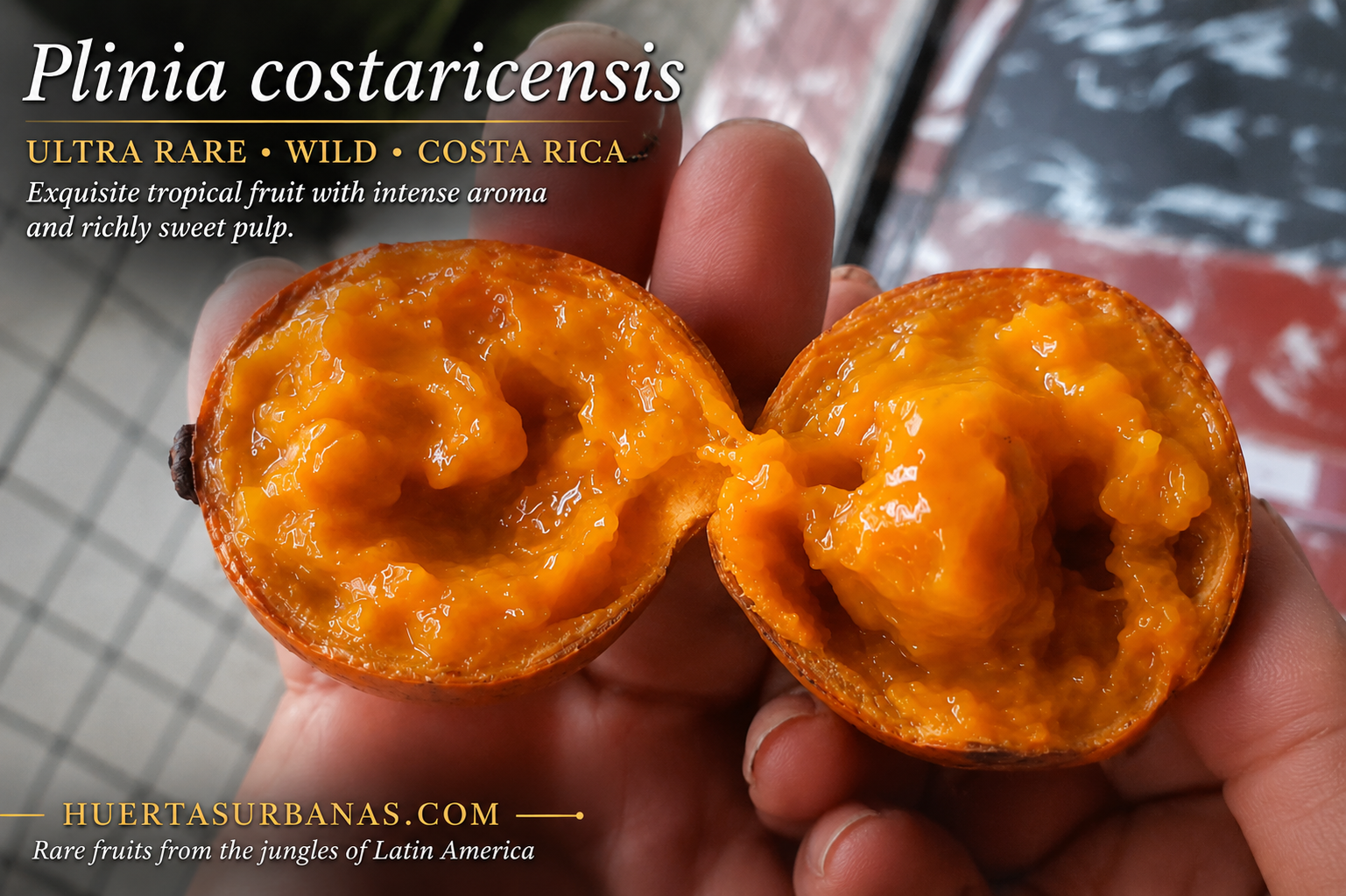
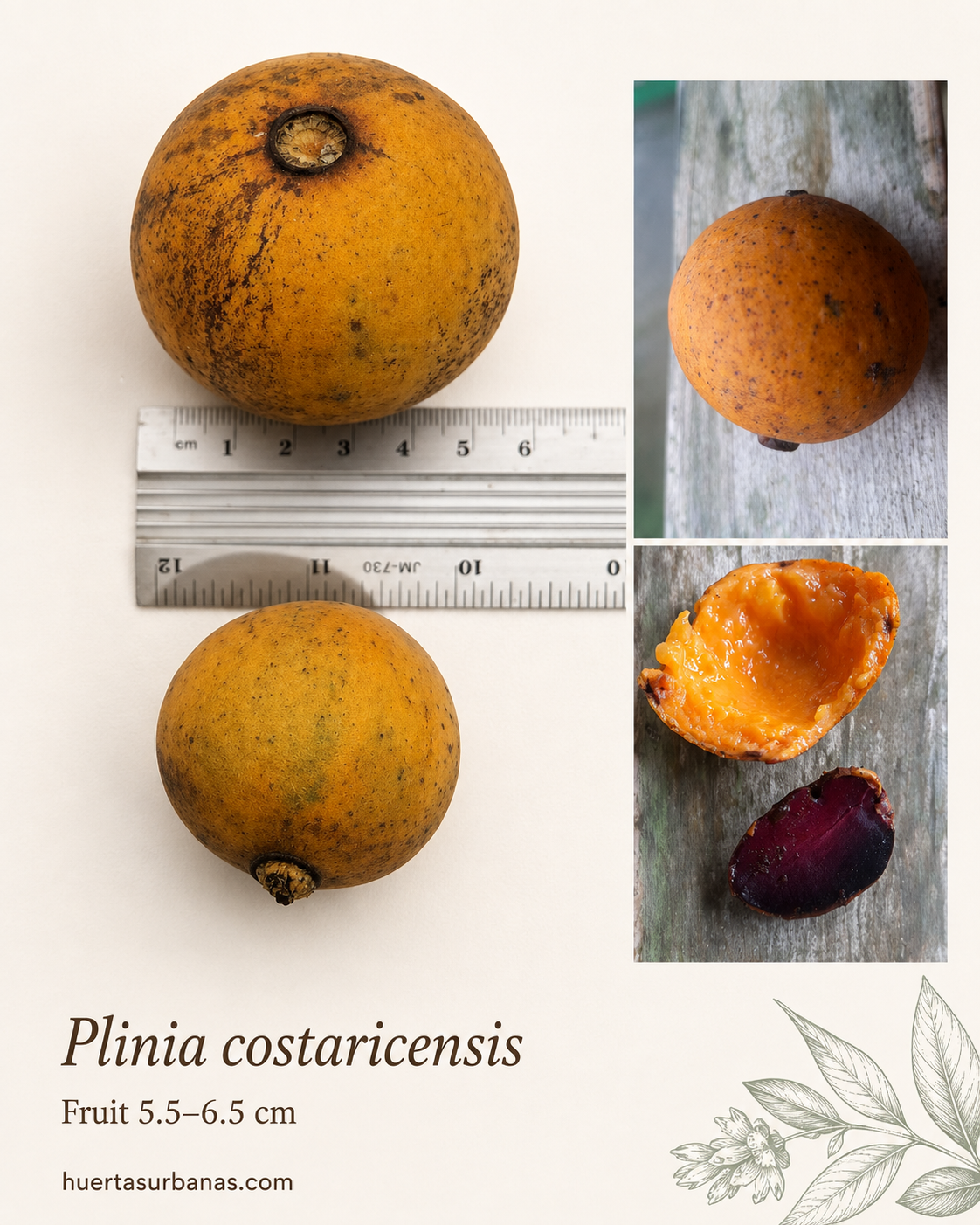
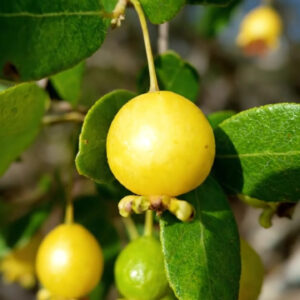
The original botanical description records mature fruits as smooth, rounded to oblate, yellowish to green-yellow, approximately 5.5–6.5 cm long and up to about 5.5 cm wide. The pericarp/pulp is described as very juicy and orange-yellow.
Most strikingly, the authors explicitly describe the smell and taste as similar to mango (Mangifera indica). Information accompanying the present material agrees with this mango-like flavor description.
So, although collectors may naturally wonder whether the fruit resembles cambucá in flavor, the best documented comparison is actually mango: sweet, juicy, tropical and aromatic.
Closely compared with cambucá — but clearly distinct
In the species description, P. costaricensis is directly compared with Brazilian cambucá, Plinia edulis, which the authors consider its closest morphological look-alike. The two are nevertheless distinguishable. Among the characters highlighted in the original paper, P. costaricensis has essentially glabrous twigs and flowers, a prominent midrib on the upper leaf surface, and smooth fruits, while P. edulis is described as having visibly pubescent twigs and more noticeably ribbed fruit, especially when immature.
For Plinia collectors, that combination is especially fascinating: a Central American species with a botanical affinity to the Brazilian cambucá group, yet with its own distinctive fruit morphology and a documented mango-like sensory profile.
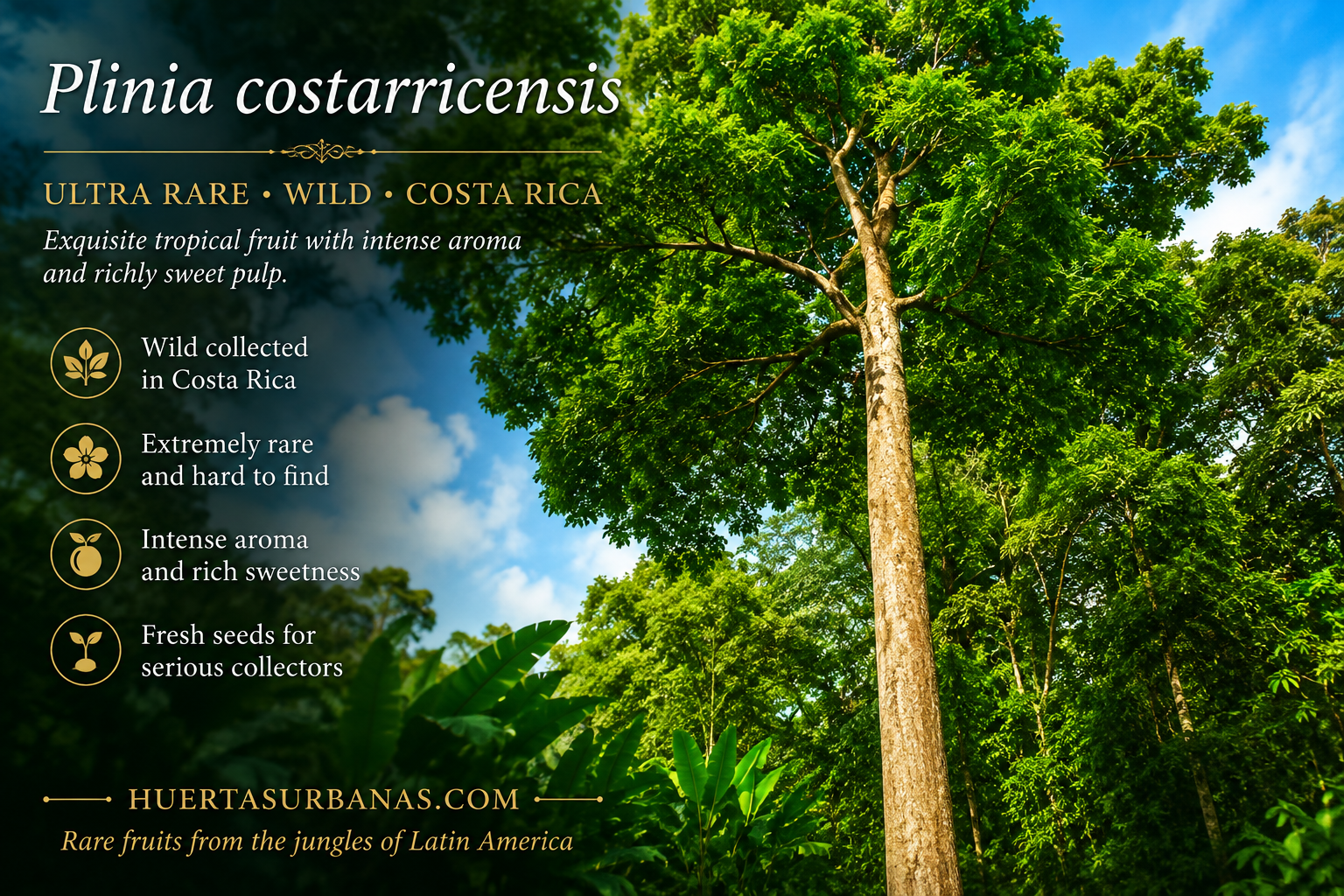
A canopy tree from very wet primary forest
The type material was collected near Bajo Rodríguez, San Ramón, Alajuela, in the Río Balsa basin of Costa Rica. The original treatment places the species in very humid primary forest at low to middle elevations. Mature trees can reach approximately 35 m in height with trunks around 40 cm in diameter, although a smaller sterile specimen was also documented growing below the forest canopy.
The bark is described as smooth and yellowish-brown, exfoliating in thin papery plates somewhat reminiscent of guava bark. Leaves are aromatic, elliptic-oblong to lanceolate, with numerous conspicuous secondary veins.
Flowering, fruiting and ecology
- Family: Myrtaceae
- Accepted name: Plinia costaricensis M. Carranza & P.E. Sánchez
- Described: 2021
- Native range: Costa Rica
- Documented habitat: very humid primary forest
- Flowering observed: April–June
- Fruiting observed: July–August
- Fruit size: approximately 5.5–6.5 cm long
- Fruit: smooth, yellowish to green-yellow when mature
- Pulp/pericarp: very juicy, orange-yellow
- Flavor and aroma: explicitly described as similar to mango
- Seed: usually one large seed per fruit in the original description
The scientific paper also notes that the fruits are edible and are consumed in habitat by several mammals and birds. The authors specifically mentioned the species’ potential for future fruit development and commercialization, while also noting that more food-composition and breeding work would be needed.
Why this is a premium collector species
- Formally accepted species: not an unresolved field accession or provisional name.
- Recently described: published as new to science only in 2021.
- Restricted documented range: originally known from a very small area of Costa Rican wet forest.
- Exceptional fruit size: large for a Plinia, reaching roughly 5.5–6.5 cm.
- Distinct flavor: the scientific description itself records mango-like aroma and taste.
- Cambucá connection: formally compared with Plinia edulis by the describing botanists.
- Commercial rarity: our August 2026 market review located plants in specialist collections and retail channels, but no current publicly indexed seed listing under the exact accepted name.
Rarity with careful wording
Because private collections, unindexed social-media exchanges and offline seed trades cannot be fully surveyed, we do not claim an absolute world-first seed offering. However, fresh seed of Plinia costaricensis appears to be exceptionally scarce in the public international market, making this a particularly unusual opportunity for advanced collectors.
September 2026 Pre-Sale
⚠️ PREMIUM LIMITED FRESH-SEED PRE-SALE
This is a deliberately small release. Orders containing this species will be handled with the corresponding September 2026 fresh-seed batch, subject to final seed condition, inspection, phytosanitary preparation and international transport.
As with our other rare Plinia offerings, visible website stock may be kept below the total physical allocation in order to control availability and reassess pricing as the release progresses.
Botanical note
The accepted name and diagnostic information used here follow Carranza Varela & Sánchez-Vindas (2021) and current Plants of the World Online treatment. Seed-grown plants are genetically individual and natural variation should be expected. Fruiting age and cold tolerance remain insufficiently documented in cultivation, so no frost-hardiness claim is made.
Scientific references:
Carranza Varela, M. & P. Sánchez-Vindas. 2021. Plinia costaricensis (Myrtaceae), una especie nueva para las selvas húmedas de Costa Rica. Phytoneuron 2021-41: 1–6.
Royal Botanic Gardens, Kew — Plants of the World Online, Plinia costaricensis.
Reviews
There are no reviews yet.