Description
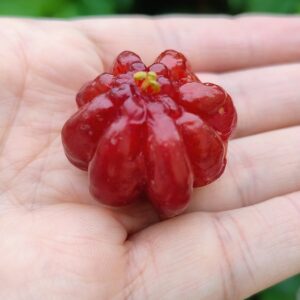
Very rare edible fruit species from tropical South America, known locally as Saputá, Siputá, Guapomó or Pacurí laranja da mata atlántica
This species is extremely uncommon in cultivation and is rarely available in the international rare fruit market.
This fruit was previously circulated as a “Garcinia-type” due to its appearance, but has now been identified as Salacia spp., a completely different genus. This makes it an especially interesting addition for collectors and botanical enthusiasts.
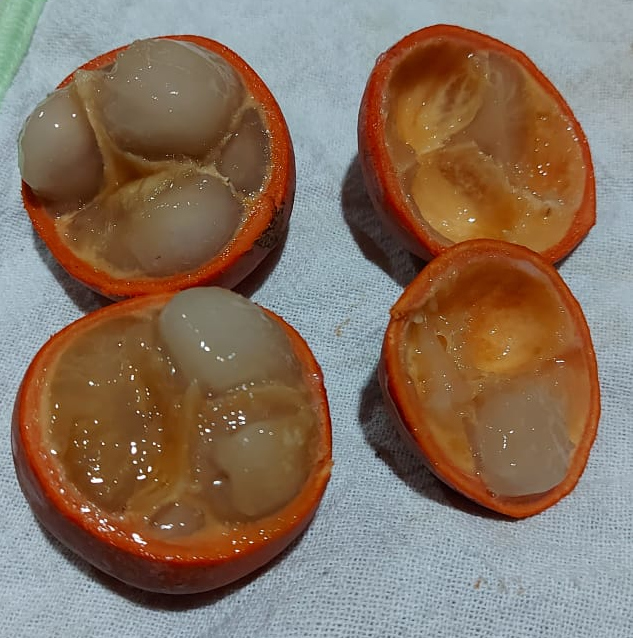
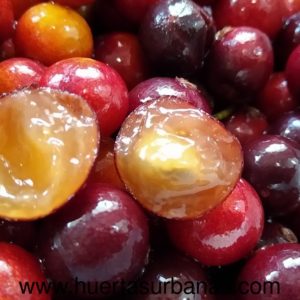
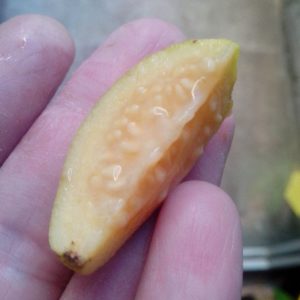
While this material closely resembles Salacia elliptica (Siputá), one notable difference has been observed in the fruit pulp: in our specimens, the pulp is whitish to translucent and jelly-like, whereas in most documented Brazilian material and videos, the pulp appears more orange to yellowish and less translucent. This consistent difference in pulp coloration and texture is one of the reasons why this form is currently treated as Salacia aff. elliptica, pending further confirmation.
Fruit description
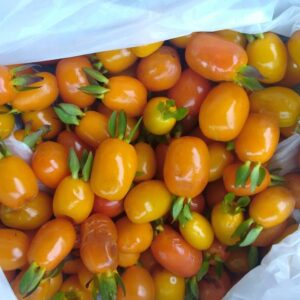
- Round to slightly pear-shaped fruits with orange to reddish skin
- Interior with translucent, jelly-like pulp
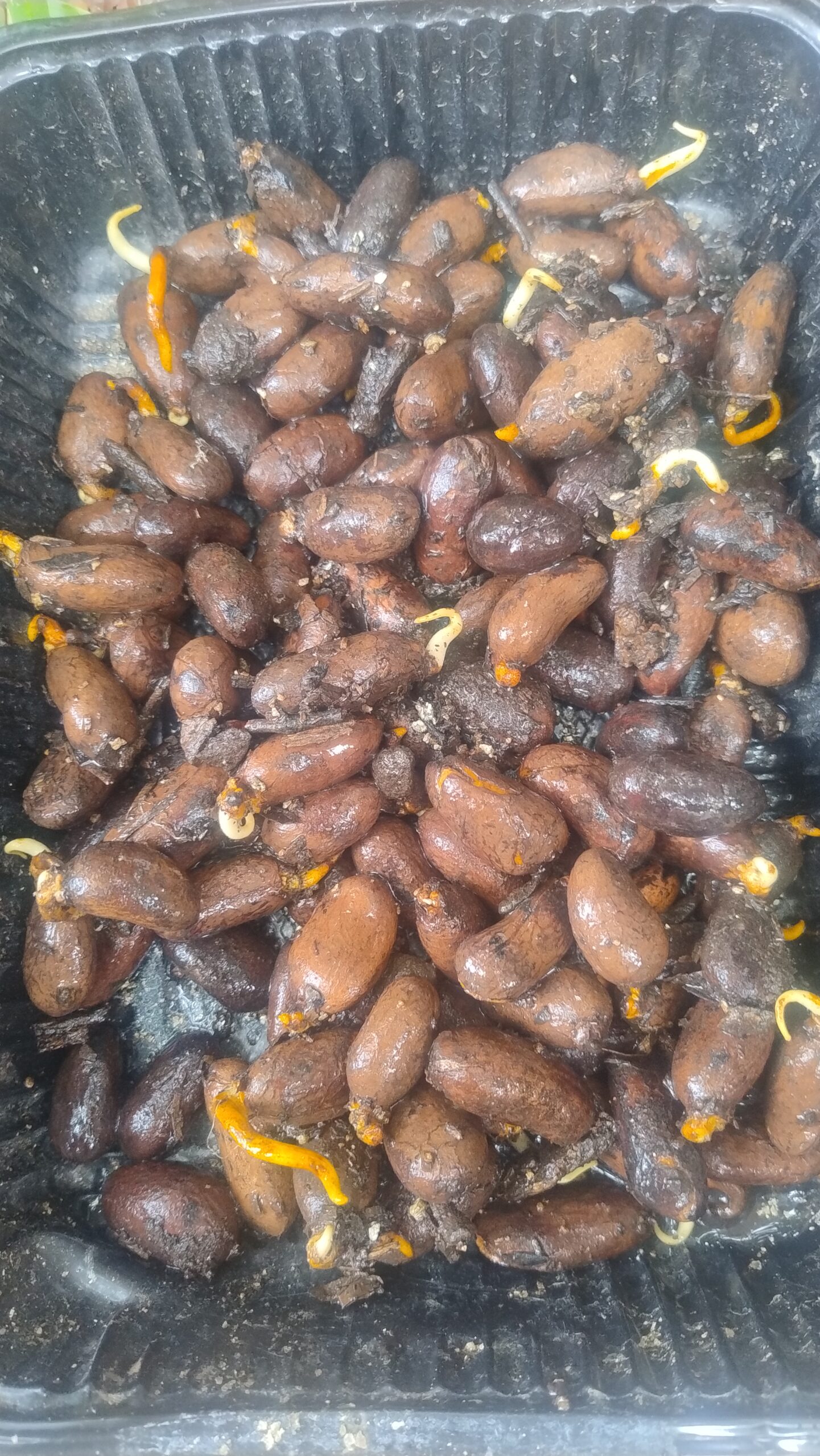
- Typically few large seeds (1–6)
- According to the original collector, the fruit is very sweet and has no noticeable acidity, with a flavor unlike most common fruits. This matches several public references for Siputá-type material, which often describe the pulp as very sweet, pleasant, and sometimes caramel-like, although some reports mention slight acidity.
Plant & growth habit
- Native to a wide range of tropical environments in South America
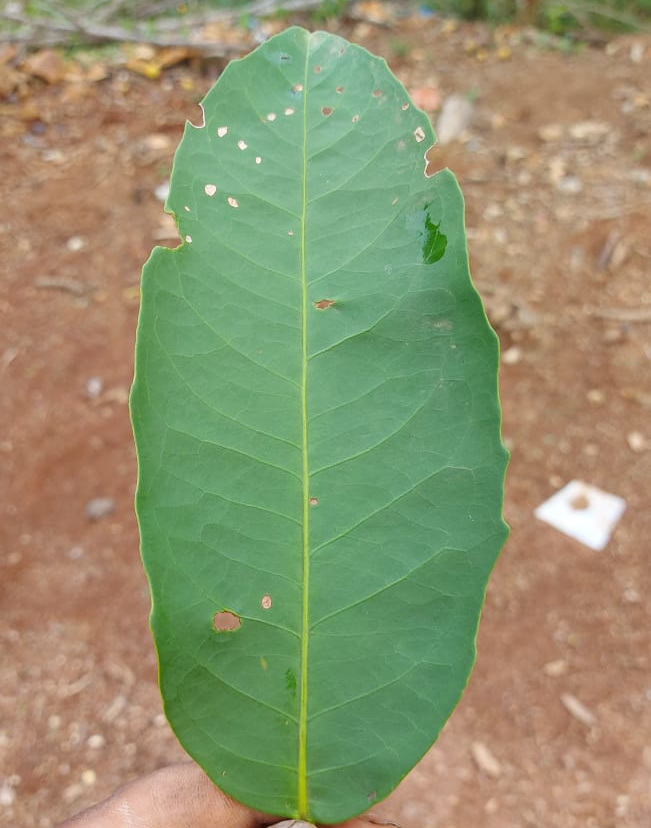
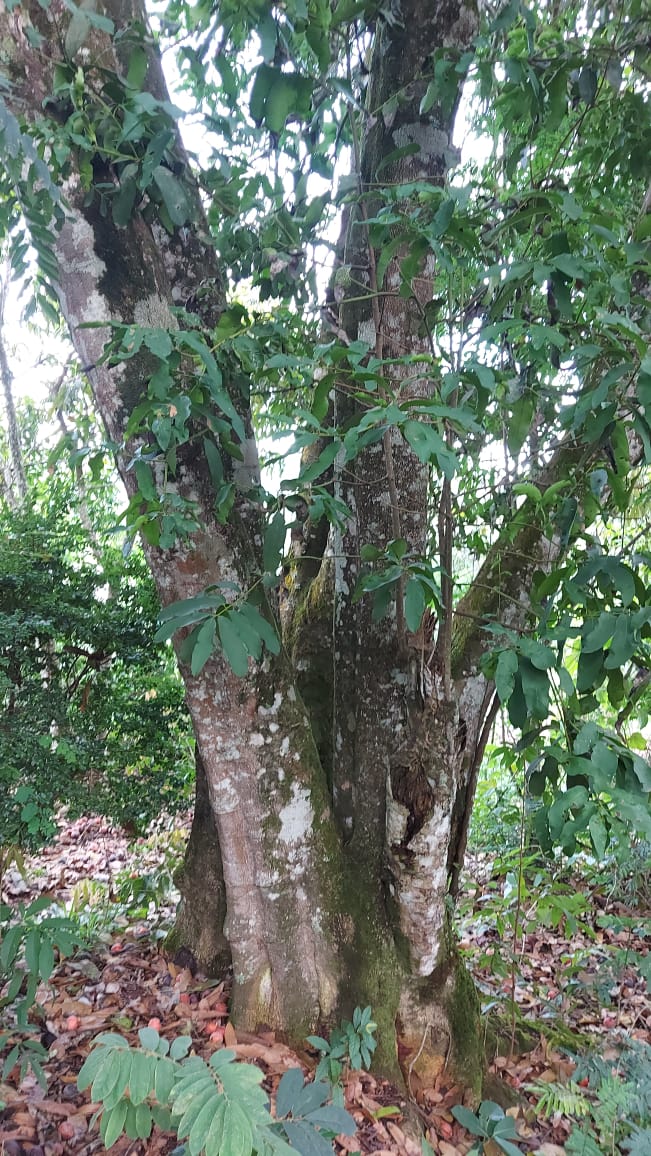
- Can grow as a small tree or scrambling woody plant
- Considered slow-growing
- Likely suited for tropical to subtropical climates (frost sensitive)
Rarity & collector value
This species is:
- Almost absent from US and European nurseries
- Known mainly from wild collections and botanical references
- A true collector’s item for rare fruit enthusiasts
Seeds
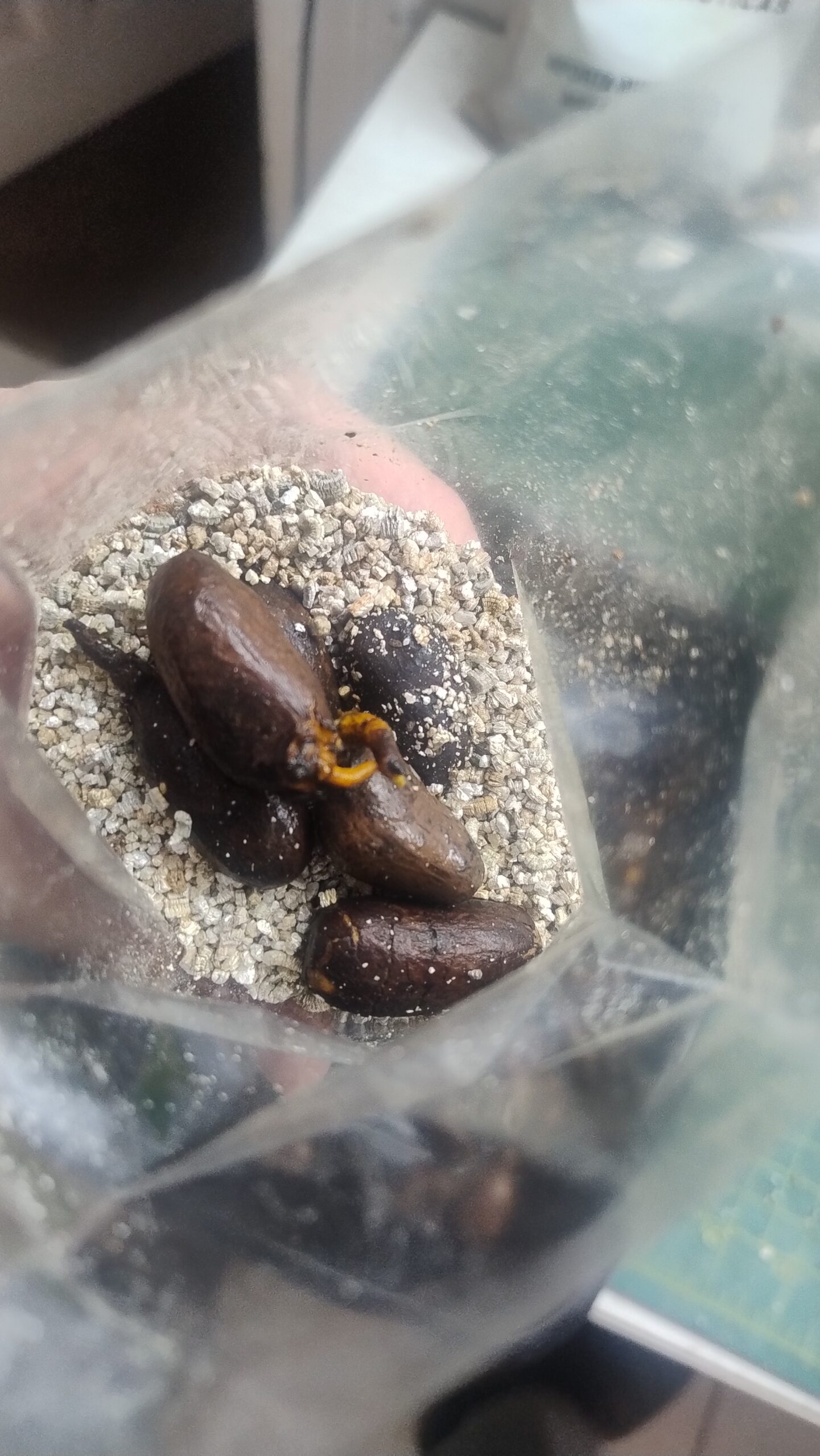
- Fresh, recalcitrant seeds
- Must be planted as soon as possible
- Keep moist but not waterlogged
- Warm temperatures recommended (24–30°C / 75–86°F)
Origin
Collected in Brazil (Minas Gerais / Bahia region)
Price note
Due to its rarity and limited availability, quantities are very limited.
Ordering Guidance
Ready to send, USA stock!
Reviews
There are no reviews yet.