
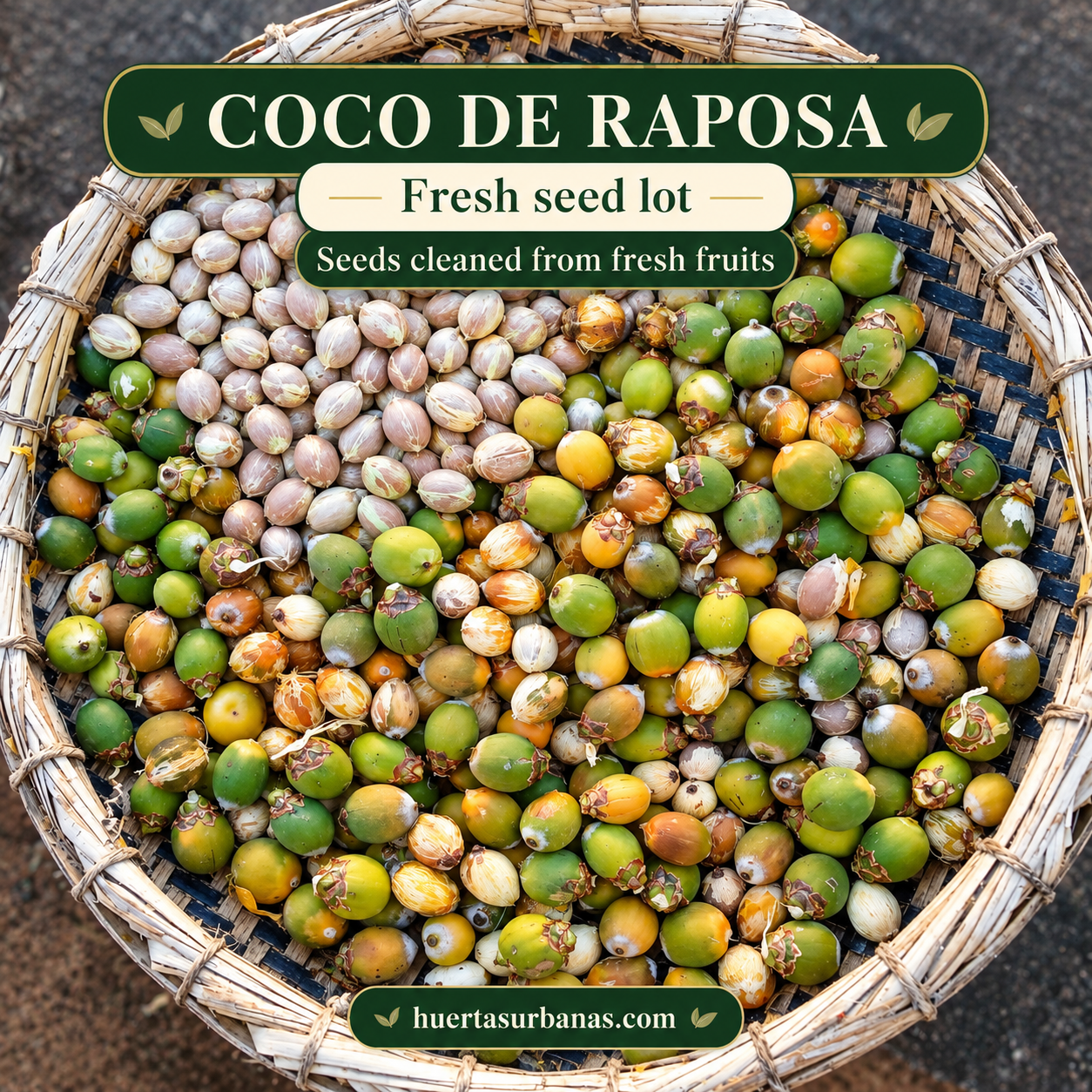
Description
Syagrus werdermannii (C) — Coco-de-Raposa, a rare dwarf palm endemic to Bahia
The Coco-de-Raposa (Syagrus werdermannii Burret) is an extraordinary Brazilian palm valued for its compact habit, deeply regional native range, and striking fruiting structures. While many members of the genus Syagrus grow as substantial palms, this species develops a short to subterranean stem and a low crown of elegant, pinnate leaves.
A true botanical specialty from the Brazilian Cerrado
This accepted species occurs naturally in a restricted region of southern Bahia, Brazil, notably around Caetité and the northern Espinhaço region. It grows in open Cerrado habitats and in the ecological transition toward the Caatinga. A short, underground stem is a characteristic part of its unusual growth form; it is not simply a juvenile version of a tall palm.
Fruits, foliage and collector appeal
- Plant: mostly stemless or with an extremely short/subterranean stem, carrying a cluster of slender pinnate leaves.
- Fruits: small, often yellowish at maturity, borne on a conspicuous branching inflorescence close to the leaves.
- Fruit structure: a fibrous, fleshy outer layer surrounds a hard endocarp containing the seed.
- Habitat: seasonally dry Brazilian landscapes, with local populations associated with native Cerrado vegetation.
- Collector interest: unusual dwarf habit, restricted distribution, and distinctive origin within the Syagrus genus.
Documented research and germination
A 2025 Brazilian ethnobotanical conference paper documents traditional local knowledge of this palm, its ornamental value, and propagation studies. In that specific experiment, seed germination after 60 days reached approximately 73% with mechanical scarification, compared with 63% without scarification. Those figures are published research results, not a germination guarantee for any commercial seed batch.
Growing suggestions
Choose a warm, bright location and a very free-draining, mineral-rich growing medium. Protect young plants from severe cold or prolonged waterlogging, and bear in mind that palm seeds can germinate unevenly. Mechanical scarification has been studied, but it must be performed carefully to avoid harming the embryo. The actual method and timing may vary with seed maturity and storage conditions.
Seed pre-sale and dispatch
Purchase unit: 1 unit = 1 seed (unless otherwise specified). We supply planting seeds, not edible nuts or ready-grown plants.
November 2026 Pre-Sale: this is a future-arrival seed lot, not stock currently in the USA. We may ship earlier if the lot reaches us ahead of schedule, passes physical and viability inspection, and can join an earlier shipment; however, earlier shipment is not guaranteed. Actual availability depends on receipt and seed condition. If any purchased quantity cannot be fulfilled, we will contact you and arrange a refund or an agreed alternative.
Botanical references: Kew — Plants of the World Online; CNCFlora/JBRJ; and the linked 2025 ethnobotanical paper. The species has a restricted distribution; a historical Brazilian conservation assessment listed it as Least Concern (LC) in 2014, so we do not describe it as officially endangered.
Reviews
There are no reviews yet.