Description
Plinia sp. “Flavonoides” — Rare Black-Fruited Accession from Ilhéus, Bahia
This extraordinary Plinia accession comes from Ilhéus, Bahia, Brazil, within the Atlantic Forest region—one of the world’s richest centers of Myrtaceae diversity.
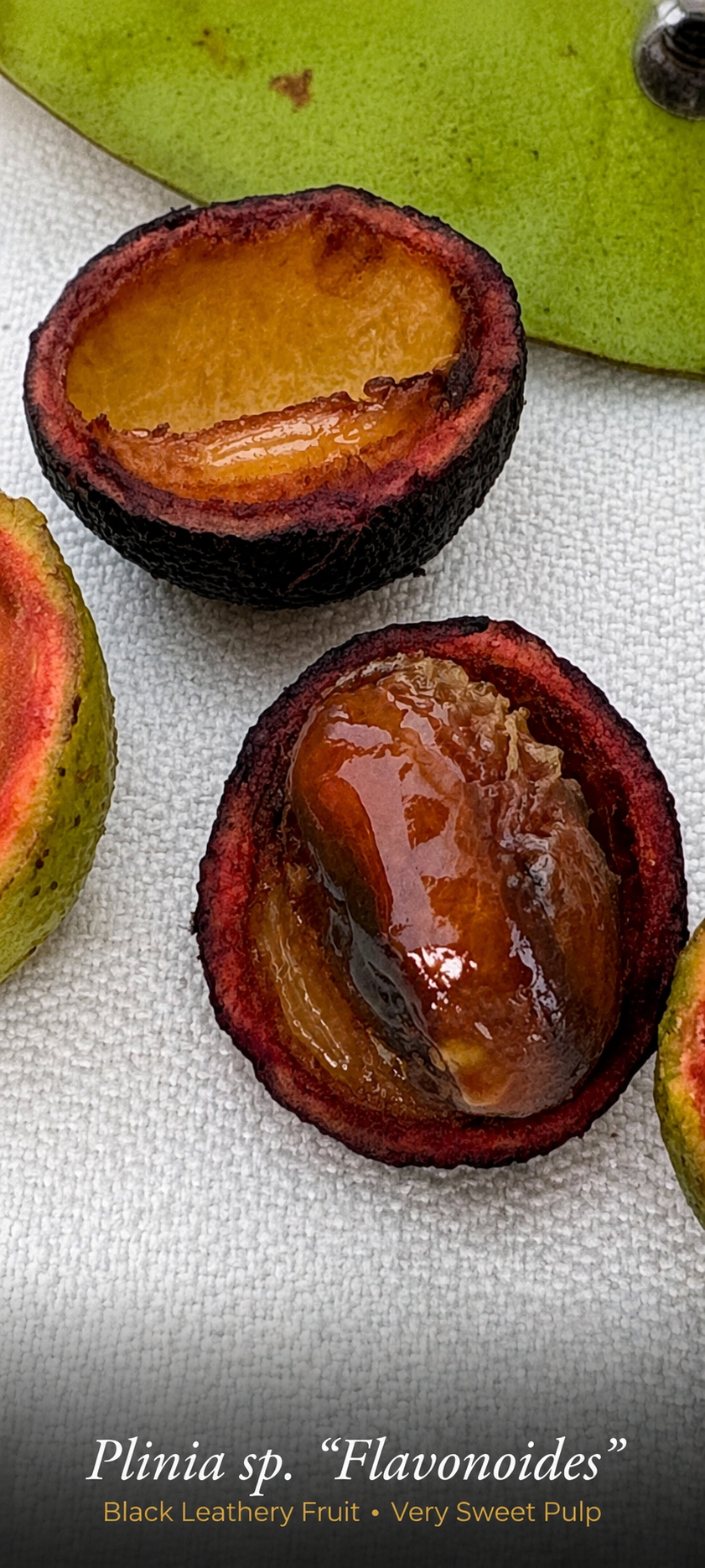
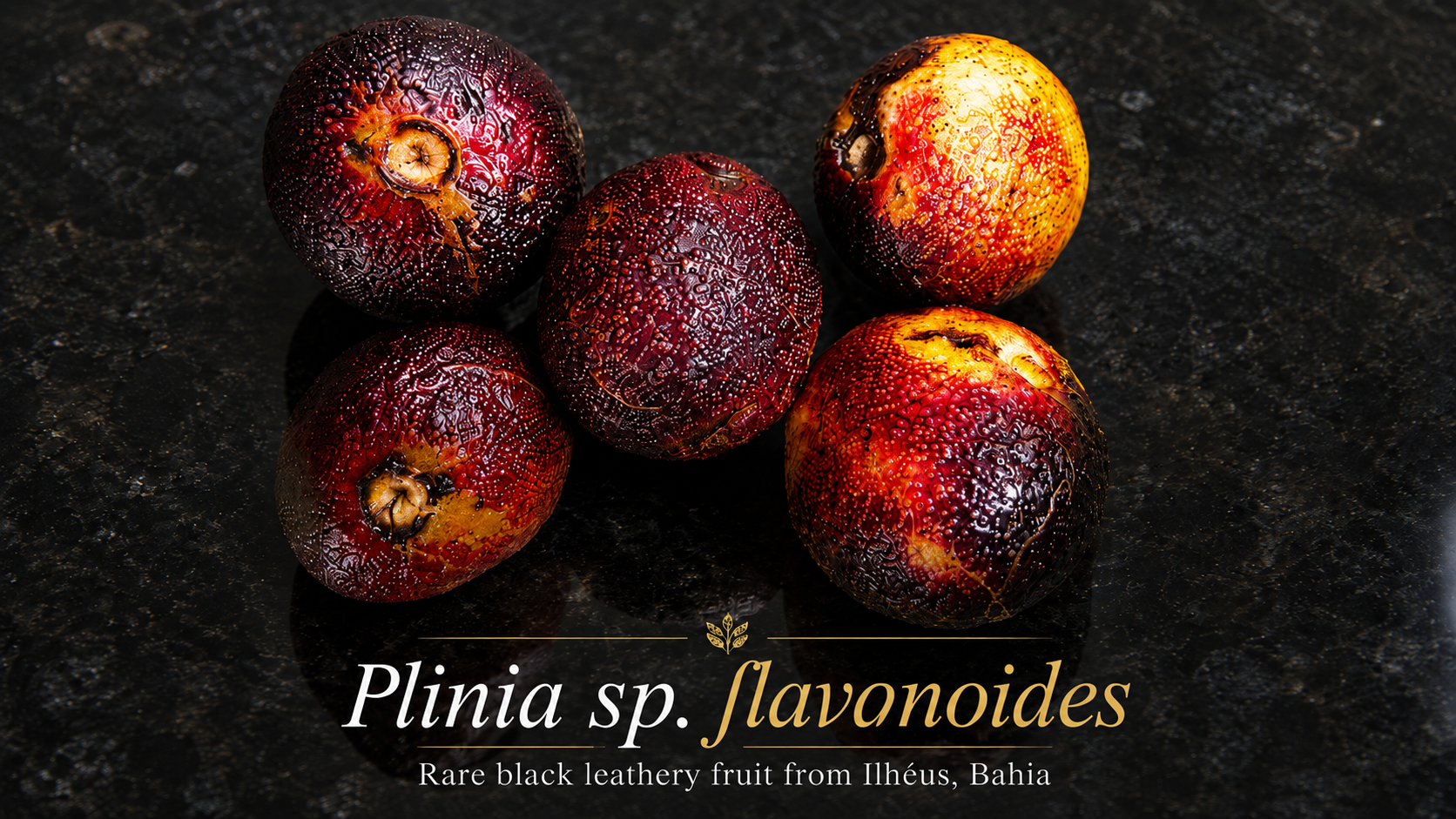
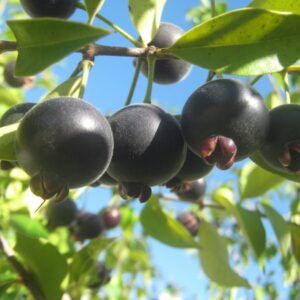
The source compares its general fruit qualities with those of the rare Camacã accession. It reportedly produces fruits reaching approximately 4 cm, with an edible skin and very sweet pulp. Visually, however, “Flavonoides” is immediately distinctive.
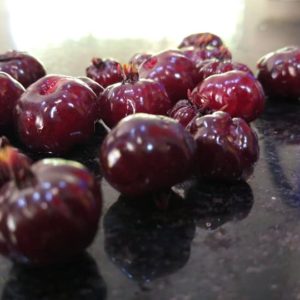
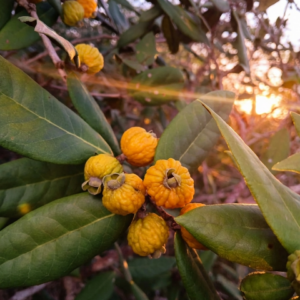
The fruits develop from green to dark brown or nearly black at maturity. Their exterior is distinctly coriaceous or leathery, with a finely textured surface rather than the smooth, highly polished skin commonly associated with ordinary jaboticabas.
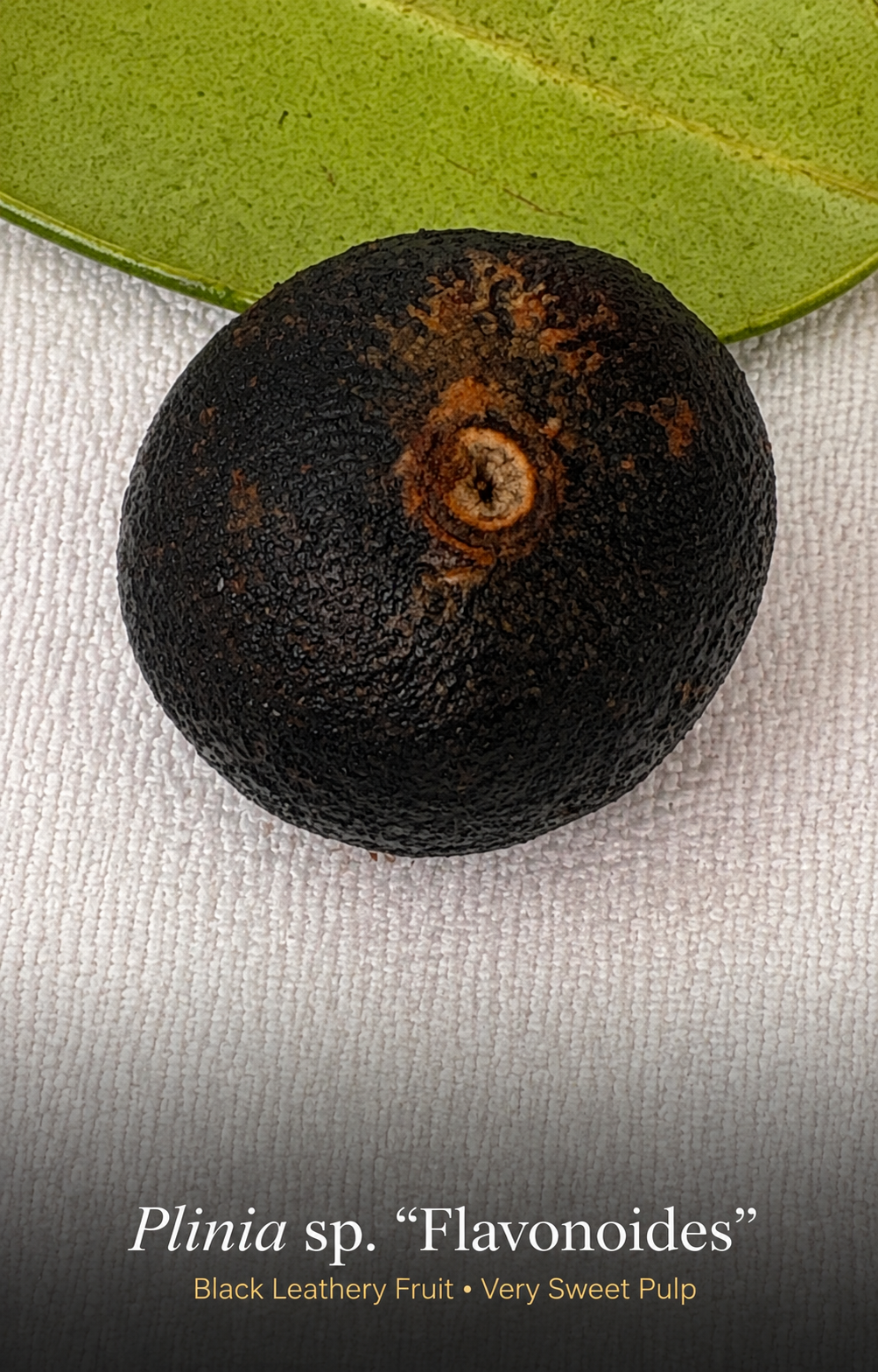
Black Skin, Wine-Red Rind and Translucent Amber Pulp
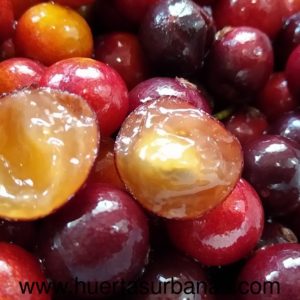
The opened fruit reveals an exceptional combination of colors and textures. Beneath the black outer skin is a conspicuous burgundy to wine-red inner rind, surrounding an amber-gold cavity and a moist, translucent pulp mass.
The pulp ranges from golden amber to reddish brown depending on its thickness and the light passing through it. It appears glossy, juicy and gelatinous, surrounding the seed naturally. According to the source information, the flavor is very sweet.
Fresh seeds:
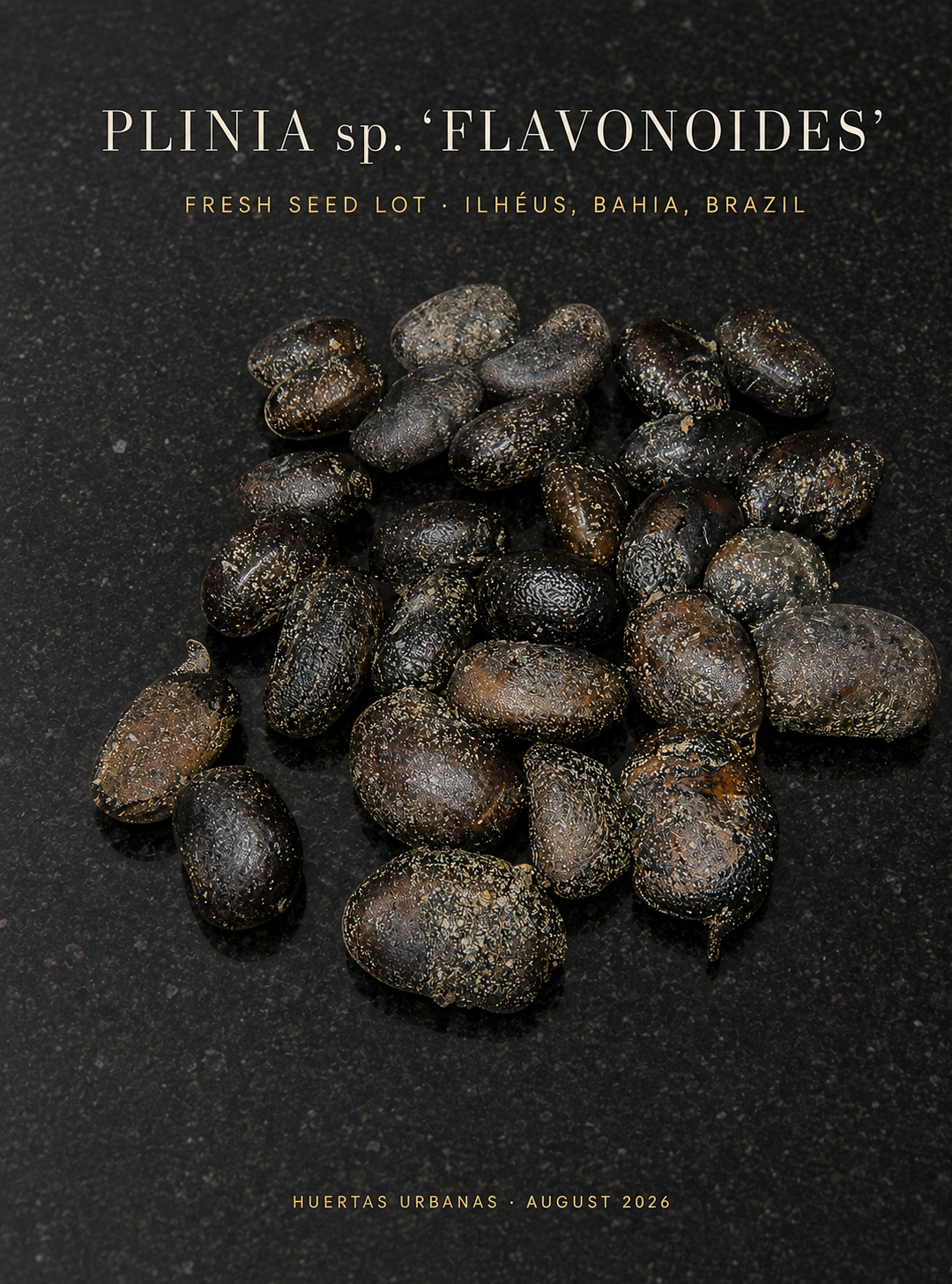
- Origin: Ilhéus, Bahia, Brazil
- Family: Myrtaceae
- Genus: Plinia
- Identification: Provisional collector/accession name “Flavonoides”
- Reported fruit size: Up to approximately 4 cm
- Immature fruit: Green and finely mottled
- Mature fruit: Dark brown to nearly black
- Skin: Coriaceous or leathery; reportedly edible
- Inner rind: Burgundy to wine red
- Pulp: Juicy, translucent and amber to reddish brown
- Flavor: Reportedly very sweet
- Provenance: Bahian Atlantic Forest region
Leaves and Botanical Appearance
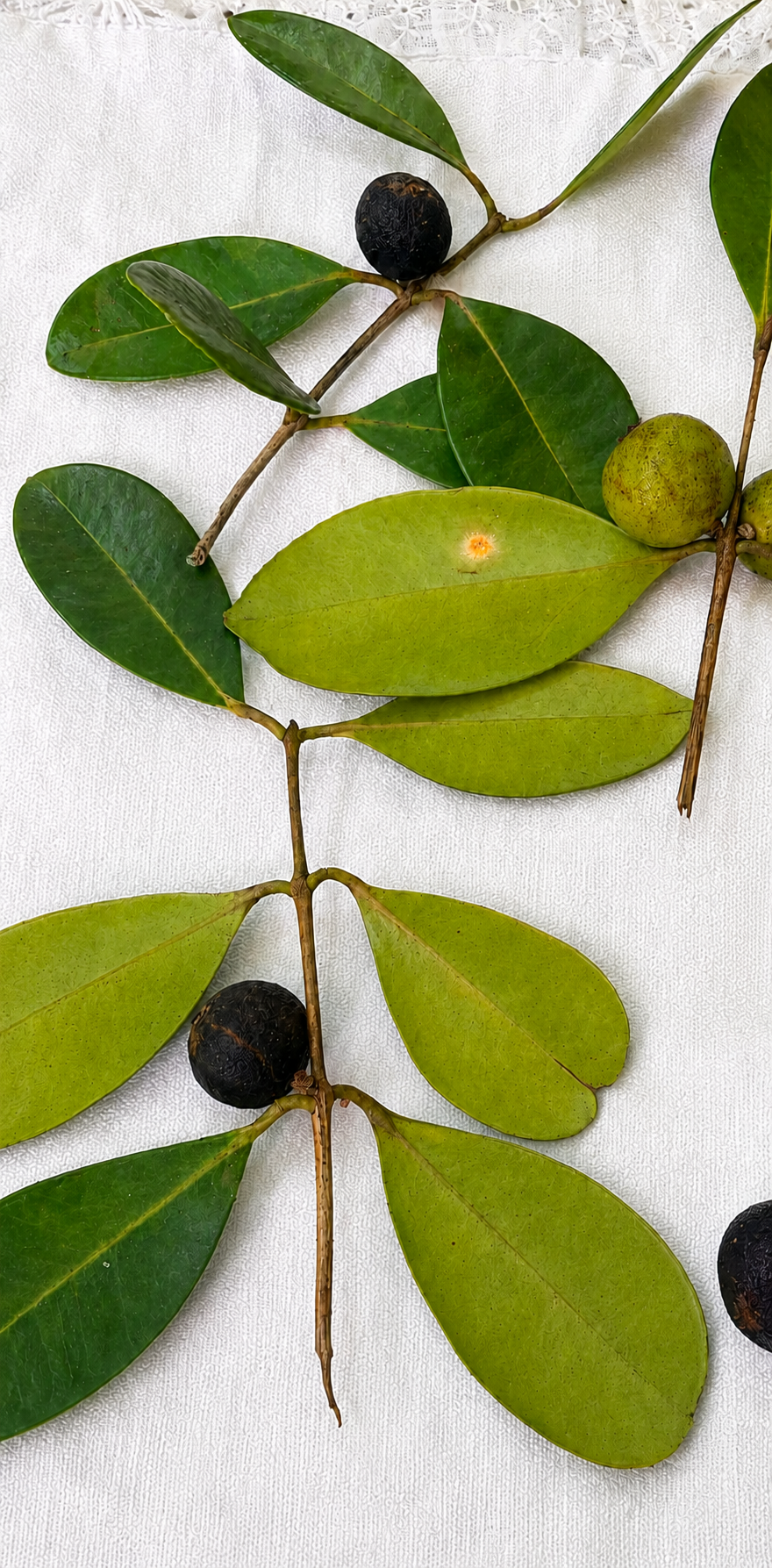
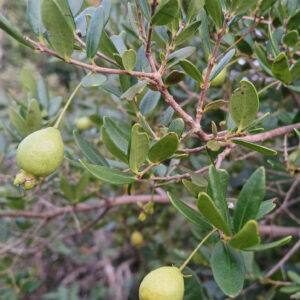
The available botanical material shows simple, opposite or nearly opposite leaves borne on slender woody twigs. The leaves are relatively broad, generally elliptic to obovate, with entire margins, short petioles and rounded to mildly acute tips.
The upper surfaces are dark green, while the undersides are noticeably paler and more yellow-green. The central midrib is clearly visible, but the secondary venation remains subtle. This broad, moderately coriaceous foliage complements the fruit’s unusual appearance and may prove useful in future comparisons with other unresolved Bahian Plinia accessions.
Relationship with the Camacã Accession
The source describes “Flavonoides” as sharing the principal fruit qualities associated with the Camacã accession, including very sweet pulp, edible skin and fruits reaching approximately 4 cm.
Nevertheless, “Flavonoides” comes from a different area of Bahia and is being maintained as a separate accession. Similar fruit qualities alone are not sufficient evidence that both materials represent the same species, variety or genetic line.
Taxonomic Note
“Flavonoides” is being preserved as the collector’s original accession label. We are not presenting it as a formally confirmed botanical species name.
Its precise identity remains unresolved. Maintaining the material under a provisional field name will allow future comparison of its leaves, flowers, fruits, seeds and growth habit without imposing an unsupported taxonomic identification.
Why This Accession Stands Out
Black-fruited Plinia are not unusual by themselves. What makes “Flavonoides” exceptional is its complete combination of characteristics:
- Nearly black, rough and leathery mature fruit
- Reportedly edible skin
- Strongly contrasting wine-red inner rind
- Beautiful translucent amber pulp
- Reported very sweet flavor
- Fruits reaching approximately 4 cm
- Broad leaves with contrasting dark upper and pale lower surfaces
- Extremely limited circulation outside its region of origin
Its mature fruit does not resemble an ordinary commercial jaboticaba. The unusual rind, internal coloration and luminous pulp give this accession a distinctive identity and considerable interest for serious collectors of Bahian Plinia and Atlantic Forest Myrtaceae.
September 2026 Pre-Sale
⚠️ SEPTEMBER 2026 PRE-SALE ITEM
A limited allocation has been reserved. Final fulfillment depends on seed condition, inspection, phytosanitary preparation and international transport.
These are fresh, recalcitrant seeds and must never be intentionally dried. Future availability cannot be predicted.
Germination and Care
- Sow immediately after receiving the seeds.
- Use a loose, organic and well-aerated substrate with excellent drainage.
- Keep the medium consistently moist but never permanently waterlogged.
- Maintain warm, humid conditions with bright filtered light or partial shade.
- Never allow the seeds to dry completely.
- If germination begins during transportation, plant immediately and handle the emerging root carefully.
For serious collectors of rare Plinia and Atlantic Forest Myrtaceae.
Reviews
There are no reviews yet.