Description
Plinia sp. “Amarela de Rondônia” — Small-Fruited Form
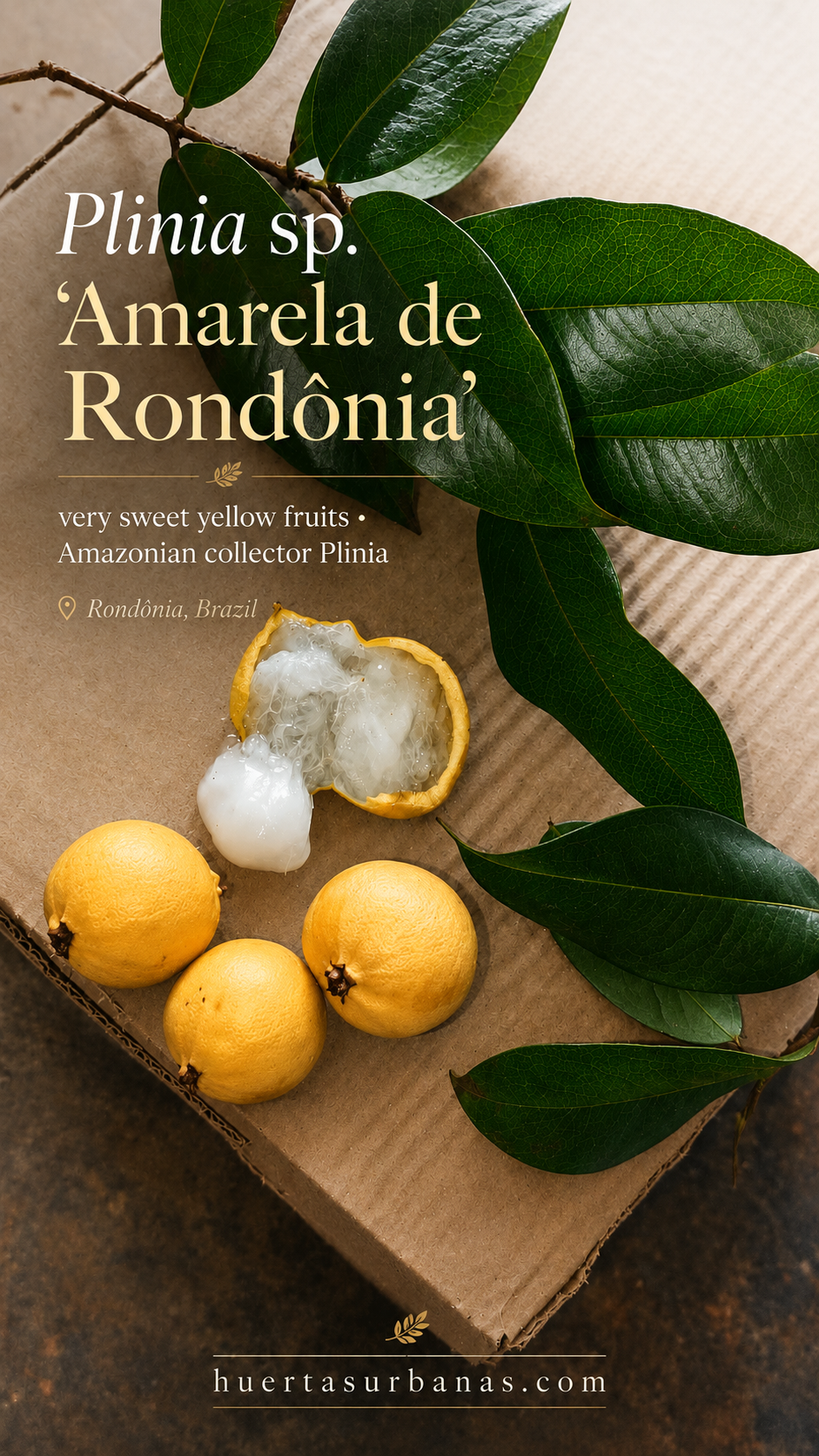
Plinia sp. “Amarela de Rondônia” — Small-Fruited Form is an exceptionally interesting yellow-fruited Plinia collected in Rondônia, in the Brazilian Amazon.
New direct information from the field collector indicates that this wild material occurs in at least two noticeably different forms.
The material offered in this listing corresponds to the form associated with smaller fruits and somewhat smaller, more oval or elongated seeds.
A second form, associated with larger fruits and larger seeds, is being maintained separately.
The exact botanical relationship between these forms remains unresolved. They may represent variation within a single species, distinct local forms, natural genetic variation, or potentially closely related taxa. For this reason, we are deliberately keeping the identification conservative.
Fresh September 2026 Update — Seeds Have Arrived and Are Germinating
Excellent news: the August batch has now arrived safely in Argentina.
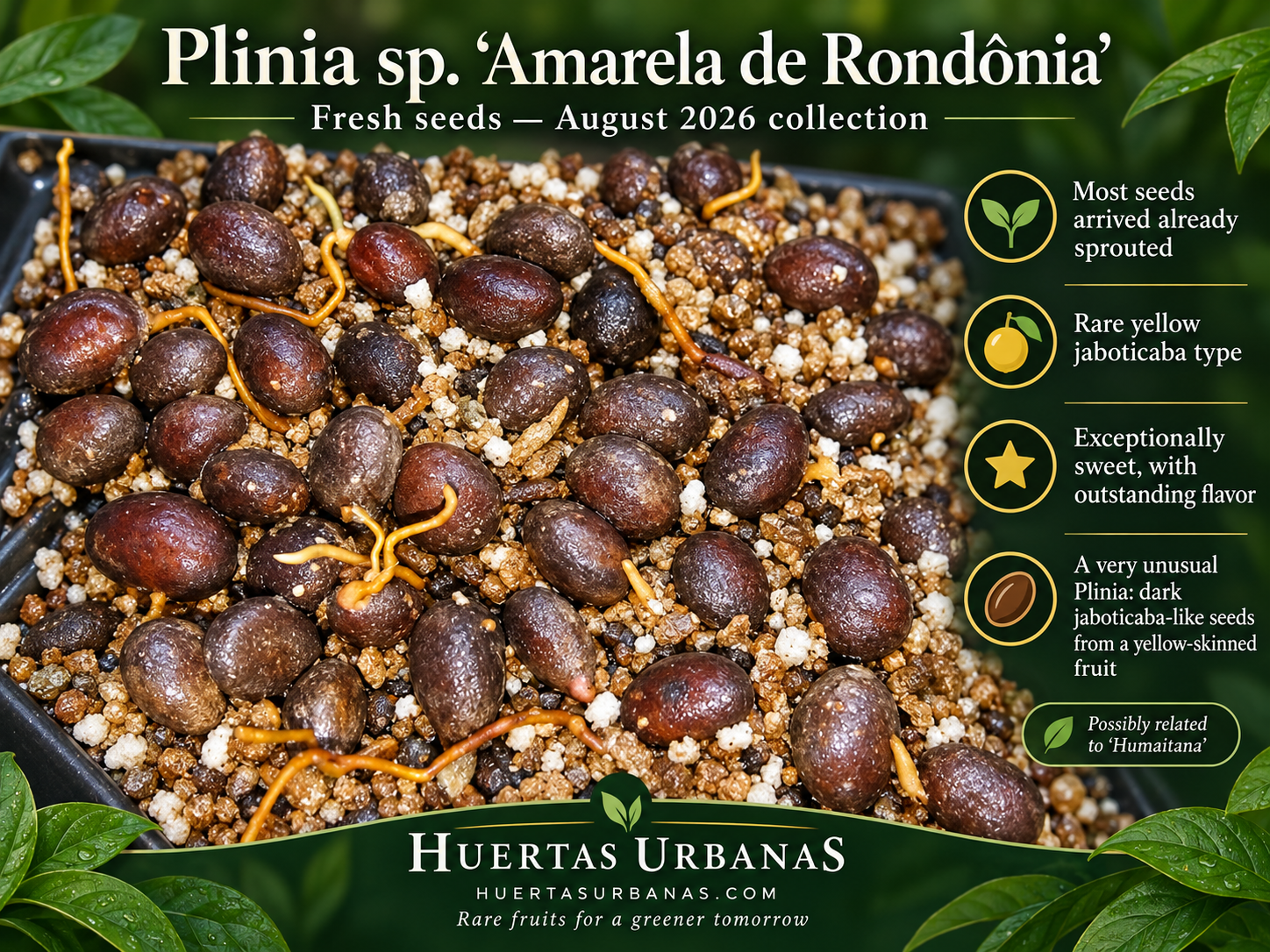
A remarkable proportion of the seeds from this form arrived already germinating, with healthy roots emerging.
For recalcitrant Myrtaceae such as Plinia, this is an especially encouraging sign of freshness and active viability.
The material is still being offered as an August Pre-Sale while the batch is prepared for its corresponding shipment to the USA.
Direct Field Information — Two Distinct Forms
According to the collector who knows these plants in the wild, the yellow Plinia population shows noticeable variation.
He reports plants producing:
A larger-fruited form with larger seeds
A smaller-fruited form with smaller, more oval or elongated seeds
Differences in fruit surface and rind characteristics
Differences in leaf shape between plants
The seeds offered in this listing correspond to the smaller-seeded / smaller-fruited form.
The collector has observed this variation directly in the native population and compares it to the type of natural variation sometimes seen among different forms of cabeludinha.
Importantly, he does not claim to know whether these plants represent two species or variation within one species.
We therefore preserve them as separate field forms rather than assigning unsupported botanical names.
A rare yellow jaboticaba-type Plinia from Rondônia
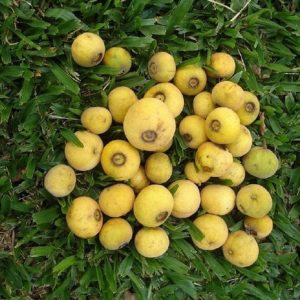
The fruits of this material are reported to be yellow and exceptionally sweet.
This alone makes the accession highly unusual.
Within Plinia, most famous cultivated jaboticaba-type fruits are dark purple to black when mature. A wild Amazonian accession producing beautiful yellow fruits with excellent sweet flavor is therefore unusual from several different perspectives.
Even the seeds look remarkably like those of a conventional dark-fruited jaboticaba, despite coming from a yellow-skinned fruit.
For collectors of Plinia and Myrciaria relatives, this combination is particularly attractive:
Yellow fruit
Excellent sweet flavor
Wild Amazonian origin
Distinct field forms
Unresolved botanical identity
Extremely limited cultivation history
Collector-Reported Characteristics
Working identification: Plinia sp. “Amarela de Rondônia”
Form offered here: Small-fruited / smaller-seeded form
Origin: Rondônia, Brazil
Region: Brazilian Amazon
Fruit color: Yellow
Flavor: Very sweet / excellent
Seed form: Somewhat smaller, more oval or elongated
Genus: Plinia
Taxonomic status: Unresolved
Field status: One of at least two distinguishable forms reported from the source population
These characteristics are based on direct information supplied by the collector and on the seed material received from the source population.
What the Collector Observed in the Wild
The collector reports substantial natural variation among these plants.
Some individuals produce much larger fruits and larger seeds, while others produce smaller fruits and smaller, more elongated seeds.
He also reports differences in fruit texture, rind appearance, and leaf shape between plants.
At this stage, it is not possible to determine whether this represents:
Natural variation within one species
Distinct local forms
Possible hybrid influence
Or two closely related taxa occurring together
Rather than hiding this uncertainty, we consider the field information itself extremely valuable.
For serious collectors, preserving these forms separately may eventually help clarify their true botanical relationship once mature plants are grown and compared.
A True Collector Accession
The genus Plinia contains some of the most desirable fruiting Myrtaceae in cultivation, yet many Amazonian populations remain poorly studied and almost completely absent from international collections.
This accession is especially exciting because it combines:
A yellow-skinned jaboticaba-type fruit
Excellent sweetness
Rare Amazonian provenance
Documented variation within the source population
An unresolved botanical identity
Fresh, actively germinating seed material
This is exactly the kind of material that makes growing rare Plinia from seed so interesting.
Why We Are Using a Working Name
This material is maintained as Plinia sp. “Amarela de Rondônia” because there is currently insufficient evidence to assign a definitive species name.
The collector himself reports uncertainty about whether the observed differences represent variation within one species or more than one closely related taxon.
For this reason, we consider it more scientifically responsible to preserve the geographic working name and distinguish the two materials simply as field forms.
This listing represents the Small-Fruited Form.
Fruit and Seed Documentation
The source population produces yellow fruits reported to have outstanding sweet flavor.
The smaller-fruited form represented here produces correspondingly smaller and generally more oval or elongated seeds than the larger-fruited form.
The current batch also showed particularly encouraging viability, with many seeds beginning germination before planting.
Because documentation of wild Amazonian accessions is often incomplete, we will continue updating this listing as additional field photographs and observations become available.
Botanical Information
Scientific / field identification: Plinia sp. “Amarela de Rondônia”
Form: Small-Fruited Form
Family: Myrtaceae
Genus: Plinia
Origin: Rondônia, Brazil
Region: Amazon
Fruit color: Yellow
Fruit flavor: Very sweet / excellent
Seed morphology: Smaller and generally more oval or elongated than the Large-Fruited Form
Taxonomic status: Unresolved
Collector interest: Very high
Why This Accession Is Commercially Exciting
Collectors of jaboticabas and related Plinia species are constantly looking for material combining excellent fruit quality, unusual appearance, and genuinely rare genetics.
This accession checks all three boxes.
It is a yellow-fruited Amazonian Plinia with excellent sweet flavor, coming from a wild population that apparently contains more than one distinguishable fruit and seed form.
The fact that the two forms can already be differentiated at seed level makes preserving them independently particularly interesting for future comparison.
For collectors interested not only in named cultivars but also in unusual wild Plinia genetics, this is an outstanding accession.
August Pre-Sale
⚠️ AUGUST PRE-SALE ITEM
This listing is part of our August 2026 rare seed collection.
The seeds have arrived safely in Argentina, and many are already actively germinating.
They remain part of the August Pre-Sale while the corresponding batch is prepared for shipment to the USA.
The August Pre-Sale is separate from our July Pre-Sale.
Orders containing August pre-sale items will be prepared with the corresponding August rare seed batch.
Because this is wild, uncommon collector material, future availability cannot be guaranteed.
Germination & Care
Fresh Plinia seeds should be planted as soon as possible after arrival.
Use a moist, organic, loose and well-aerated growing medium with excellent drainage.
Keep the medium consistently moist but never permanently waterlogged.
Do not allow Plinia seeds to dry completely.
Warm conditions and bright indirect light or partial shade are recommended during early development.
Fresh Myrtaceae seeds may begin germinating during storage or transportation.
In fact, many seeds from this particular batch were already producing roots when inspected after arrival in Argentina.
A seed arriving with an emerging root is alive and should be planted immediately.
Handle emerging roots carefully and avoid unnecessary manipulation.
Important Collector Note
This is not a standard named jaboticaba cultivar.
It is a rare, wild-collected Amazonian Plinia maintained under a working identification because its final botanical identity remains unresolved.
The collector reports at least two distinguishable forms in the source population.
This listing corresponds specifically to the Small-Fruited / Smaller-Seeded Form.
Its combination of yellow fruits, outstanding sweetness, unusual seed morphology, Amazonian origin, active germination, and unresolved genetics makes it an especially compelling accession for advanced collectors of Plinia and rare Brazilian Myrtaceae.
Reviews
There are no reviews yet.