
Description
Fresh seeds in our hands — and many are already germinating!
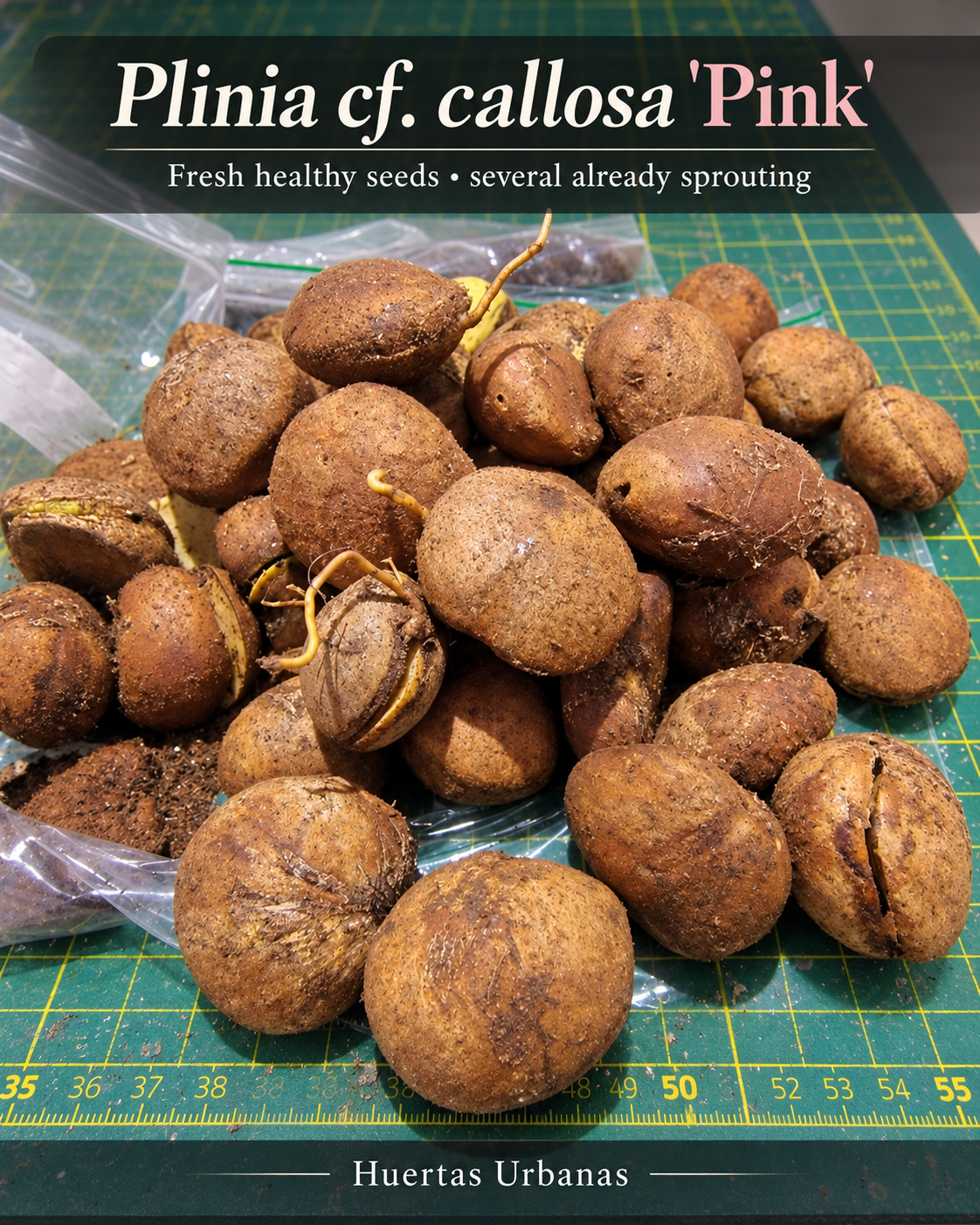
The new seed batch has arrived in excellent condition.
All of the seeds look healthy, and approximately half are already showing roots or active germination.
For a fresh recalcitrant Plinia seed, this is exactly what we like to see: living material already beginning its growth cycle.
This also gives buyers something especially valuable — real documentation of the actual seed lot being offered.
A spectacular pink-fruited Plinia from Bahia
Plinia cf. callosa “Pink” is an extraordinary Brazilian Myrtaceae accession originating from Itacaré, Bahia.
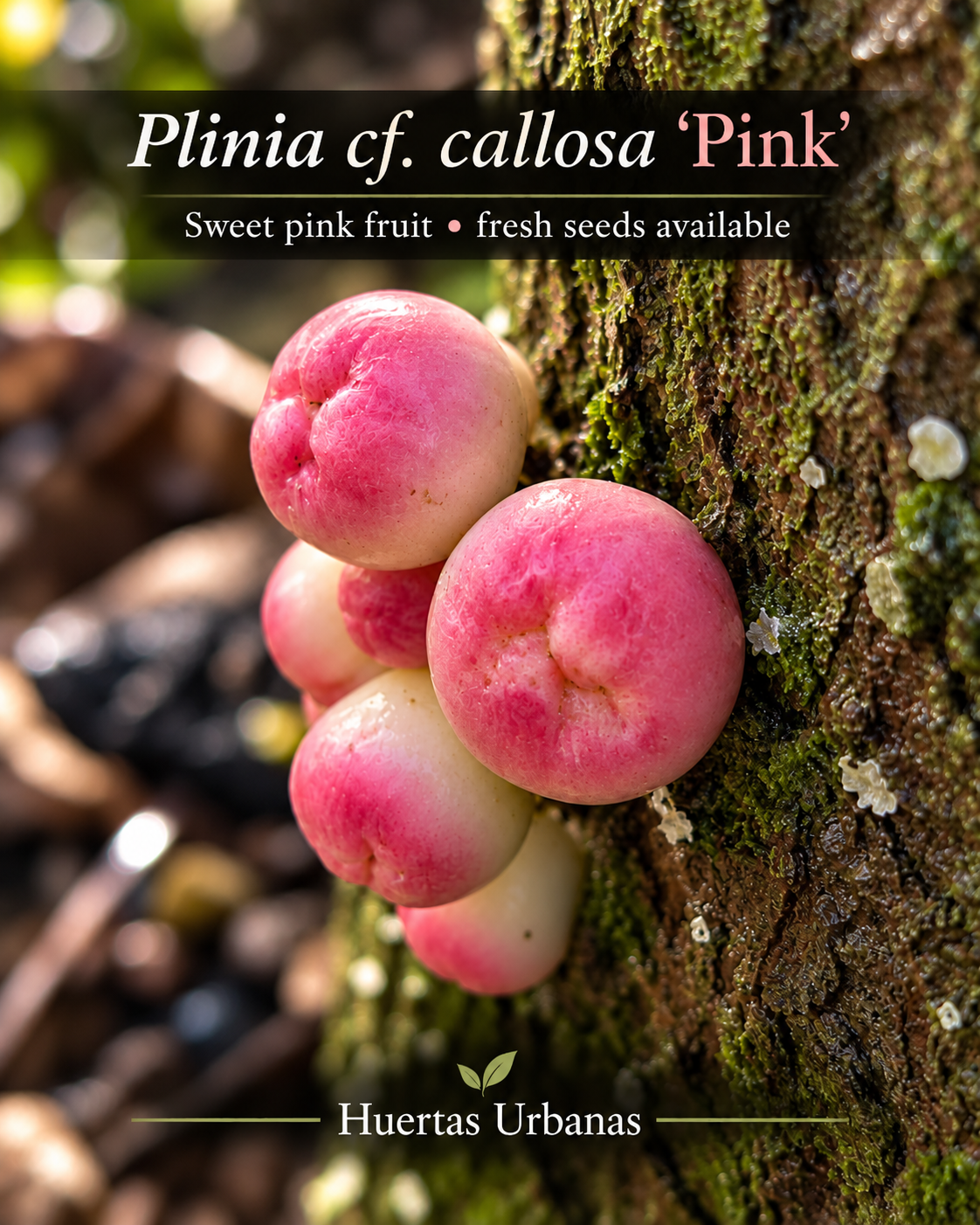
The seed-source material produces striking pale pink to rosy-pink fruits directly on older wood and trunk tissue.
But the color is only part of the story.
The Brazilian collector who directly tasted the seed-source fruit described its flavor as reminiscent of apple, with tasty, pleasant pulp and a sweet edible skin.
Pink fruit + apple-like flavor + sweet edible skin.
That is an exceptionally unusual combination in a rare Plinia.
Among the unusual materials related to Plinia cf. callosa, Plinia aff. rara and Plinia longiacuminata, this accession is also regarded as one of the best-tasting forms reported to us.
Pink cauliflorous fruits
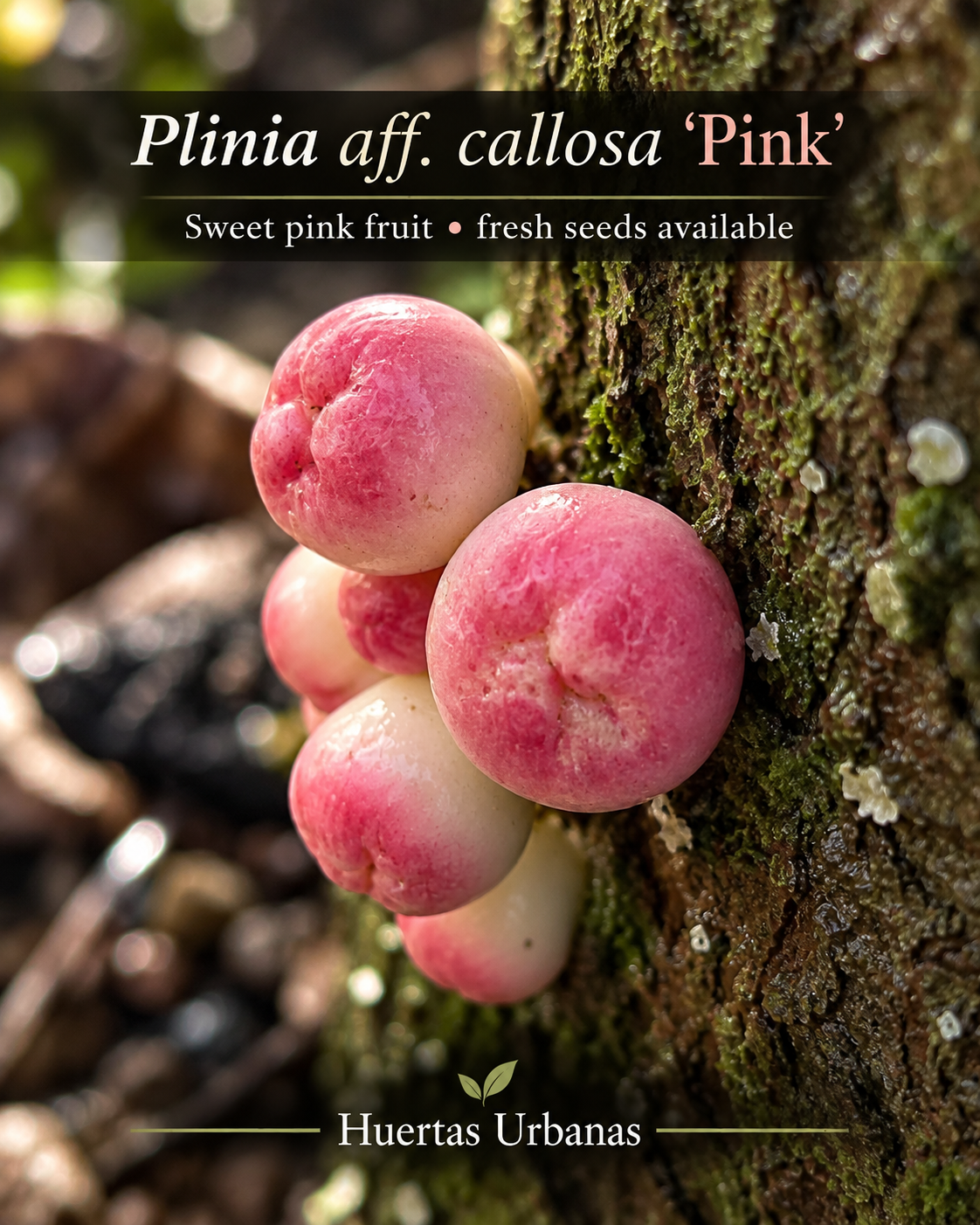
The seed-source photographs associated with this accession document a remarkable pink-fruited cauliflorous form.
The fruits develop directly on older woody tissue, producing the spectacular trunk-fruiting appearance for which some of the most unusual Brazilian Plinia species are prized.
The documented mature fruits develop a beautiful soft pink to deeper rosy-pink coloration.
This unusual color is one of the most visually distinctive characteristics of the accession offered here.
Apple-like flavor and sweet edible skin
The direct tasting description of this material is particularly interesting.
The seed-source fruit was described as having:
• Pleasant apple-like flavor
• Tasty, enjoyable pulp
• Sweet edible skin
Flavor comparisons are naturally subjective, but these observations come from direct tasting of the actual fruit associated with the seed-source accession.
The sweet edible skin is especially noteworthy.
Many jaboticaba relatives can have noticeably tannic, astringent or strongly flavored skins, while this material was specifically described as having a skin pleasant enough to eat together with the pulp.
An extraordinary cauliflorous flowering structure
Brazilian horticultural documentation for Plinia callosa describes an especially unusual flowering and fruiting structure.
Characteristic callus-like swellings can form directly on the trunk, and from these structures may emerge:
• Pink flower buds
• White flowers
• Large cauliflorous fruits
The Brazilian common name “cambucá-caloso” refers to these characteristic callus-like trunk structures.
Because the material offered here is maintained conservatively as Plinia cf. callosa, these published characteristics should be treated as important horticultural context for comparison with P. callosa, rather than as a guarantee that every seedling from this accession will express exactly the same morphology.
How large can a Plinia callosa fruit be?
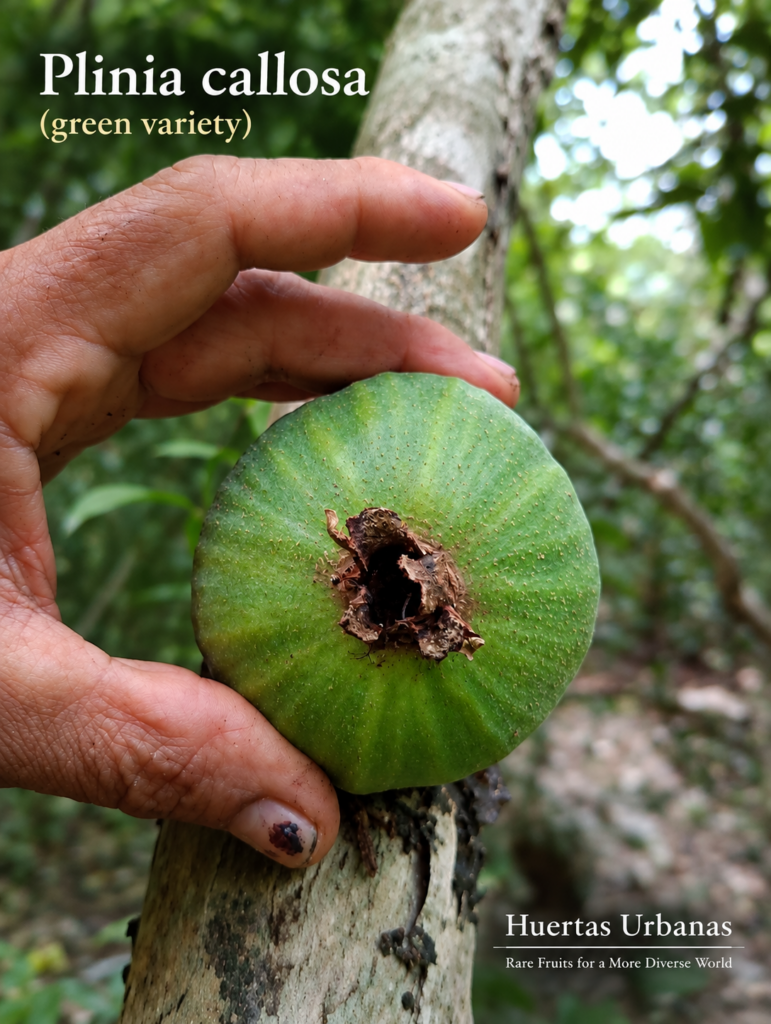
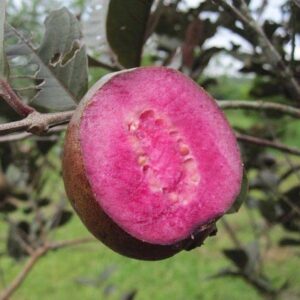
Green-fruited Plinia callosa shown beside a hand for scale. This is not the pink-fruited accession offered here; we include this image only because it is the clearest photo we have showing the impressive potential fruit size of P. callosa.
This photograph is particularly useful because the fruit is shown directly beside a human hand.
It should not be interpreted as representing the fruit color of our Pink accession.
The material offered on this page is the pink-fruited form documented in the photographs above.
Why “cf. callosa”?
The abbreviation cf. comes from the Latin confer, meaning “compare with”.
In botanical usage, it indicates that a specimen or accession appears comparable to a particular species, but that the exact identification is not considered fully resolved.
That distinction matters here.
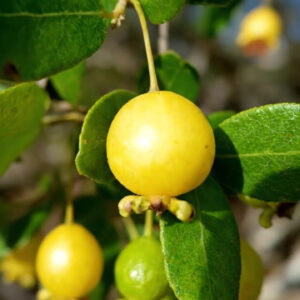
Published horticultural material associated with Plinia callosa includes large pale or greenish-yellow fruits, while the accession offered here has a striking and well-documented pink-fruited phenotype.
For that reason, we prefer to distribute it conservatively as:
Plinia cf. callosa “Pink”
rather than force a definitive species identification that the available evidence does not yet justify.
For serious collectors, keeping this material correctly labeled and separate from other Plinia callosa, P. aff. rara, P. longiacuminata and related accessions is strongly recommended.
Rare material from Itacaré, Bahia
This accession originates from Itacaré, Bahia, Brazil.
Southern Bahia and its Atlantic Forest environments contain extraordinary Myrtaceae diversity and numerous highly localized edible-fruit forms.
The plant associated with this material has been described as a small tree, adding further horticultural interest for collectors maintaining multiple rare Plinia accessions in limited growing space.
Additional horticultural context
Brazilian horticultural observations published for Plinia callosa describe:
• Large cauliflorous fruits
• Fruiting directly from characteristic trunk swellings
• Pink flower buds followed by flowers and fruit
• Relatively compact tree development under cultivation
Cultivated material has also been reported flowering while still container-grown at approximately five years of age.
These observations concern documented Plinia callosa cultivation and are included as horticultural context for the comparison.
They should not be interpreted as a guaranteed fruiting age, growth rate or identical morphology for seedlings from this accession.
Fruit characteristics of our accession
Fruit color: Pale pink to rosy pink
Fruiting habit: Cauliflorous; directly on older woody tissue
Flavor: Pleasant, reminiscent of apple
Pulp: Tasty and pleasant
Skin: Sweet and edible
Tree habit: Described as a small tree
Origin: Itacaré, Bahia, Brazil
The fruit color and appearance are documented in photographs associated with the seed-source material.
The flavor, pulp and skin descriptions are based on direct tasting of the seed-source fruit by the Brazilian collector.
Botanical Information
Identification: Plinia cf. callosa “Pink”
Family: Myrtaceae
Genus: Plinia
Origin: Itacaré, Bahia, Brazil
Fruit color: Pink / pale pink in documented seed-source material
Flavor: Apple-like
Skin: Sweet and edible
Fruiting habit: Cauliflorous
Tree habit: Small tree according to collector observations
Taxonomic status: Provisional comparison with Plinia callosa; exact species unresolved
Collector interest: Extremely high
Why this accession is exceptional
The attraction of this material comes from an unusually strong combination of characteristics:
• Pink cauliflorous fruits
• Apple-like flavor
• Sweet edible skin
• Tasty pulp
• Rare Itacaré origin
• Comparison with the unusual trunk-callus-forming Plinia callosa
• Fresh seed lot in excellent condition
• Many seeds already showing active germination
For collectors of rare jaboticaba relatives and Brazilian Myrtaceae, this is one of the most visually unusual Plinia materials in our August collection.
The fruit alone makes it remarkable.
The combination of attractive fruit, reported eating quality and unusual cauliflorous development makes it even more interesting.
August Pre-Sale
⚠️ AUGUST PRE-SALE ITEM
This listing is part of our August 2026 rare seed collection.
The seeds have already arrived and are currently being processed.
This does not yet mean that the stock is physically in the USA.
The August Pre-Sale is separate from our July Pre-Sale, and orders containing August items will be prepared with the corresponding August rare-seed batch.
This is limited collector material and future availability cannot be guaranteed.
Germination & Care
Fresh Plinia seeds should be planted as soon as possible after arrival.
Several seeds from this lot are already beginning to germinate, which is a very positive indication of freshness and viability.
If your seed arrives with an emerging root:
plant it immediately and handle the root as little as possible.
Place the seed approximately at soil level or only very lightly covered.
Do not bury an actively germinating seed deeply.
Use a moist, organic, loose and well-aerated growing medium with good drainage.
The basic principle is:
constant moisture without waterlogging.
The substrate should never be allowed to dry completely, but excessive irrigation and permanently saturated conditions should also be avoided.
Fresh tropical Myrtaceae roots need both moisture and oxygen.
Use good-quality water whenever possible.
Warm conditions and bright indirect light or partial shade are recommended during early development.
Never allow a fresh or germinating Plinia seed to dry out completely.

Reviews
There are no reviews yet.