Description
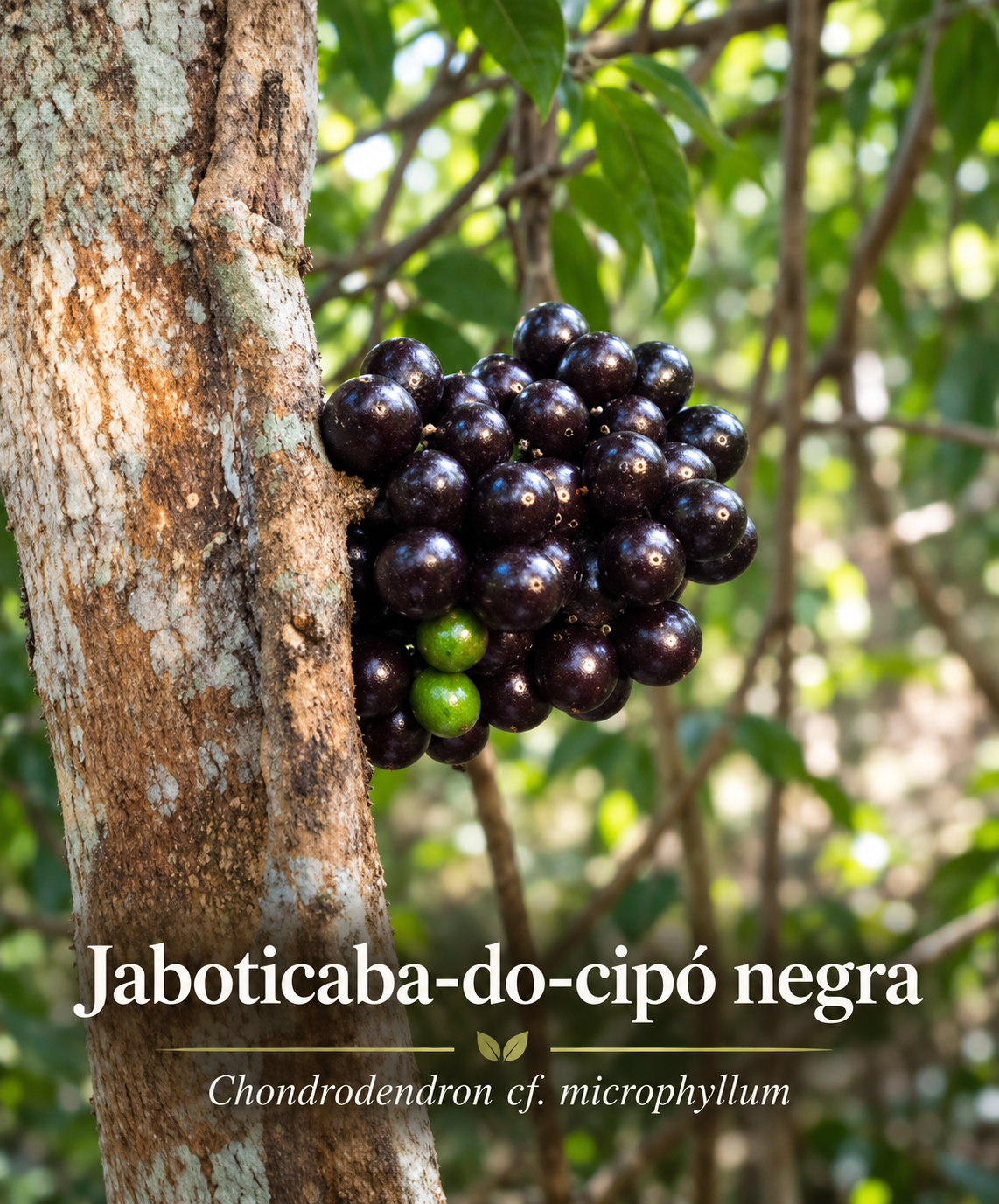
Jaboticaba-do-cipó Negra is an unusual Brazilian vine producing dense clusters of dark, almost black fruits directly on older woody stems. Its striking fruiting habit, glossy black fruits and vivid red pulp make it a remarkable collector plant.
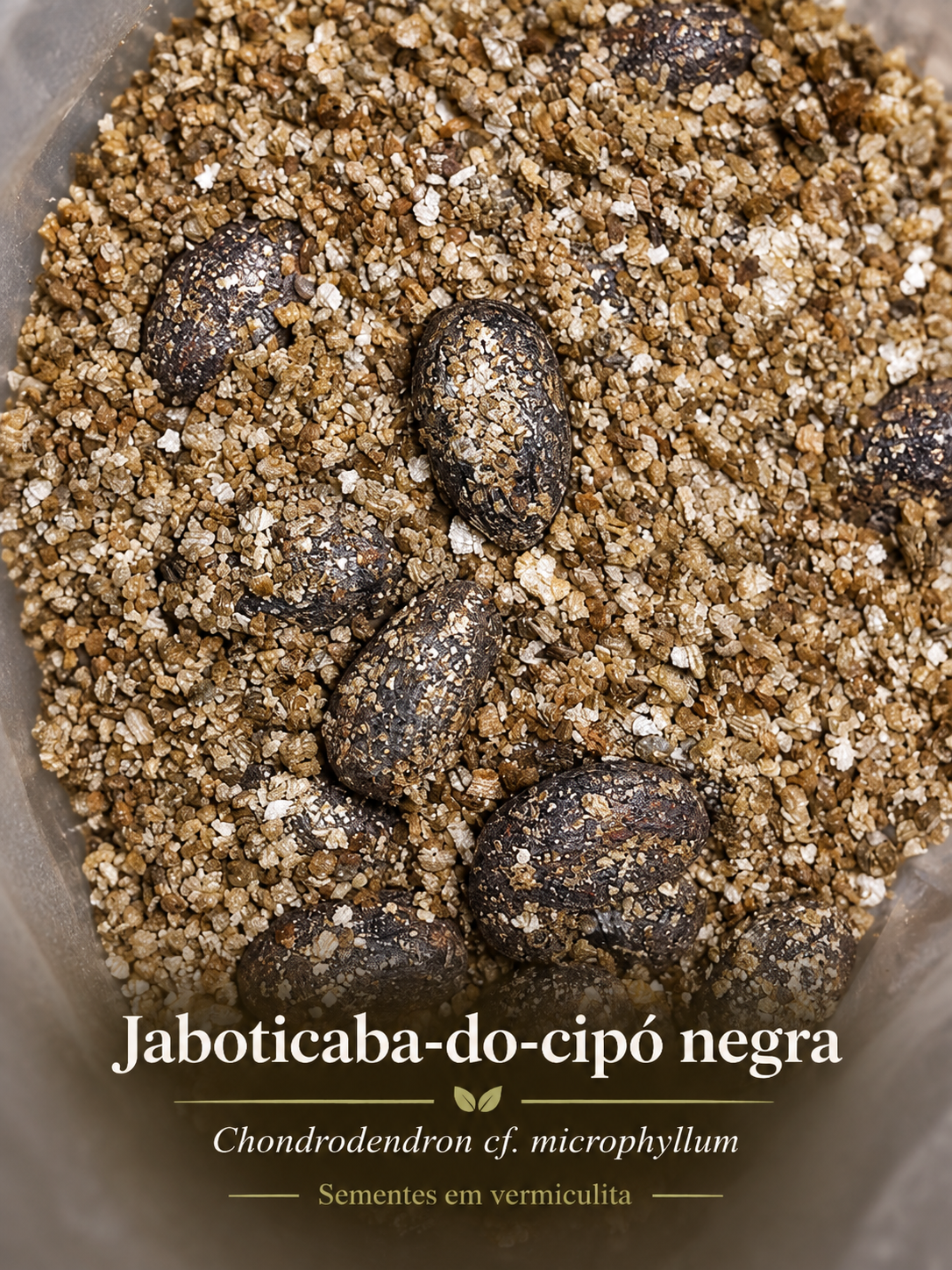
Seeds from our August 2026 collection have now arrived and are in our hands.
Important identification and safety update
After reviewing additional photographs of the fruits, leaves and fruiting habit, we now believe this accession is more consistent with Chondrodendron microphyllum than with Chondrodendron platiphyllum.
For this reason, we are currently listing it as:
Chondrodendron cf. microphyllum
The abbreviation “cf.” indicates that the material closely resembles C. microphyllum, but that the identification has not yet been definitively confirmed.
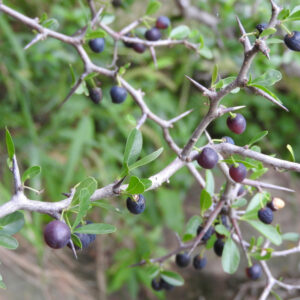
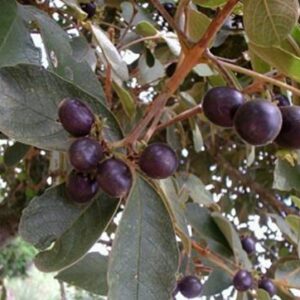
Several visible characteristics of our accession appear consistent with this hypothesis, particularly the very dark to black mature fruits, the compact fruit clusters and the entire leaf margins visible in photographs of the plant.
Earlier versions of this listing provisionally identified the plant as Chondrodendron platiphyllum. A published ethnobotanical review lists C. platiphyllum as poisonous. Because our material now appears more likely to represent C. microphyllum, that reference should not be interpreted as evidence that this accession itself is poisonous.
However, the new identification also does not establish that the fruit is safe to eat.
Until the botanical identity and traditional use of this accession are better established, we cannot confirm its safety for consumption.
We are currently seeking further information from the original collector and from people living in the region where the plant occurs, including any local knowledge regarding toxicity, traditional use or consumption of the fruits.
A useful direct field observation from the collector: he told us that he personally sucked/ate the pulp from all the fruits he found and had no apparent adverse effects. That is encouraging firsthand information for this accession, although of course it is still anecdotal and does not prove general food safety or tell us anything about the seeds, leaves, stems or roots.
For the time being, these seeds are offered for botanical cultivation and collection. We recommend not consuming the plant or fruit until its identity and safety are better documented.
Earlier descriptions included the collector’s report of a sweet, jaboticaba-like flavor. We retain that information only as a record of the collector’s observation; it should not be interpreted as confirmation of food safety.
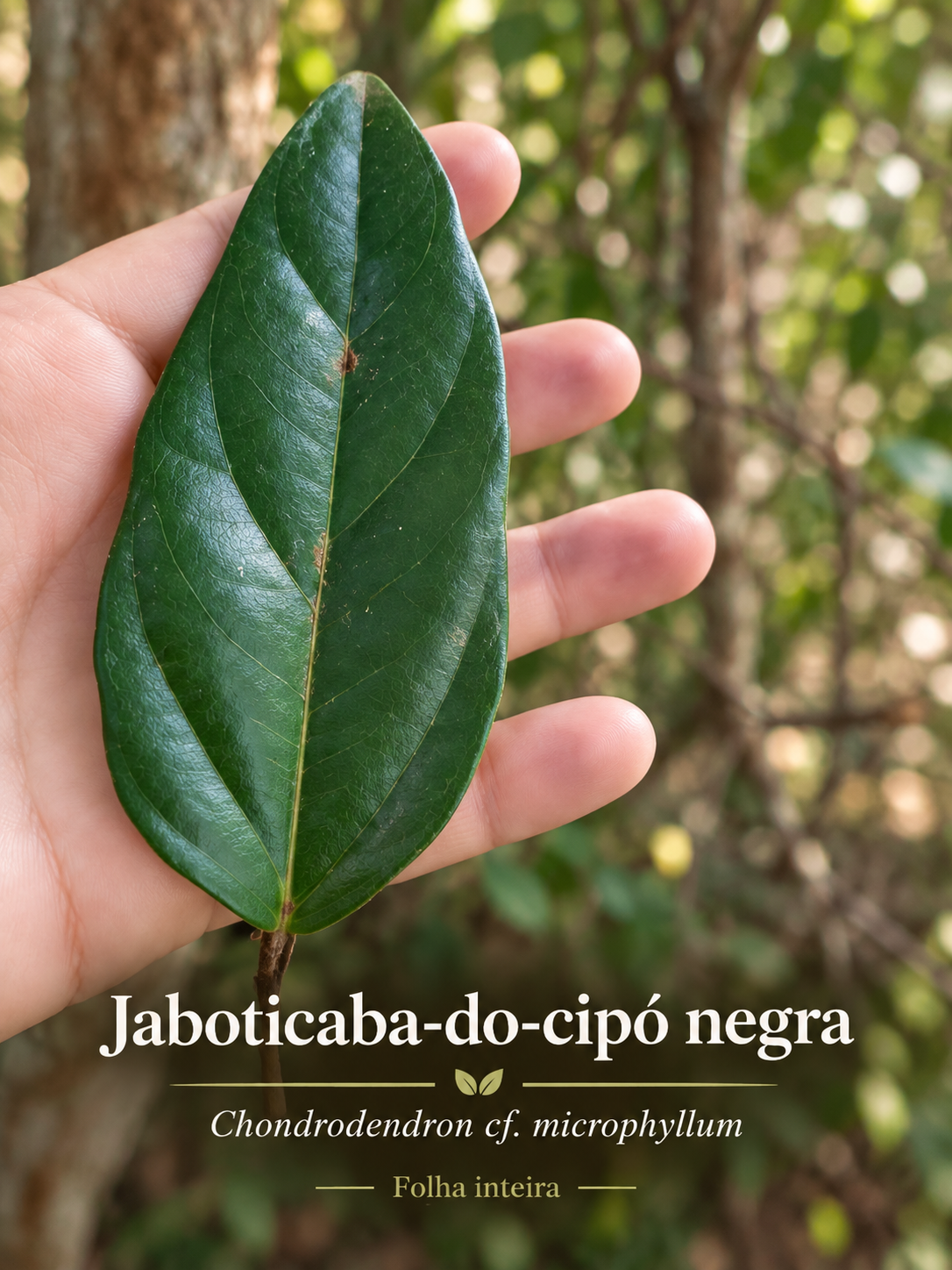
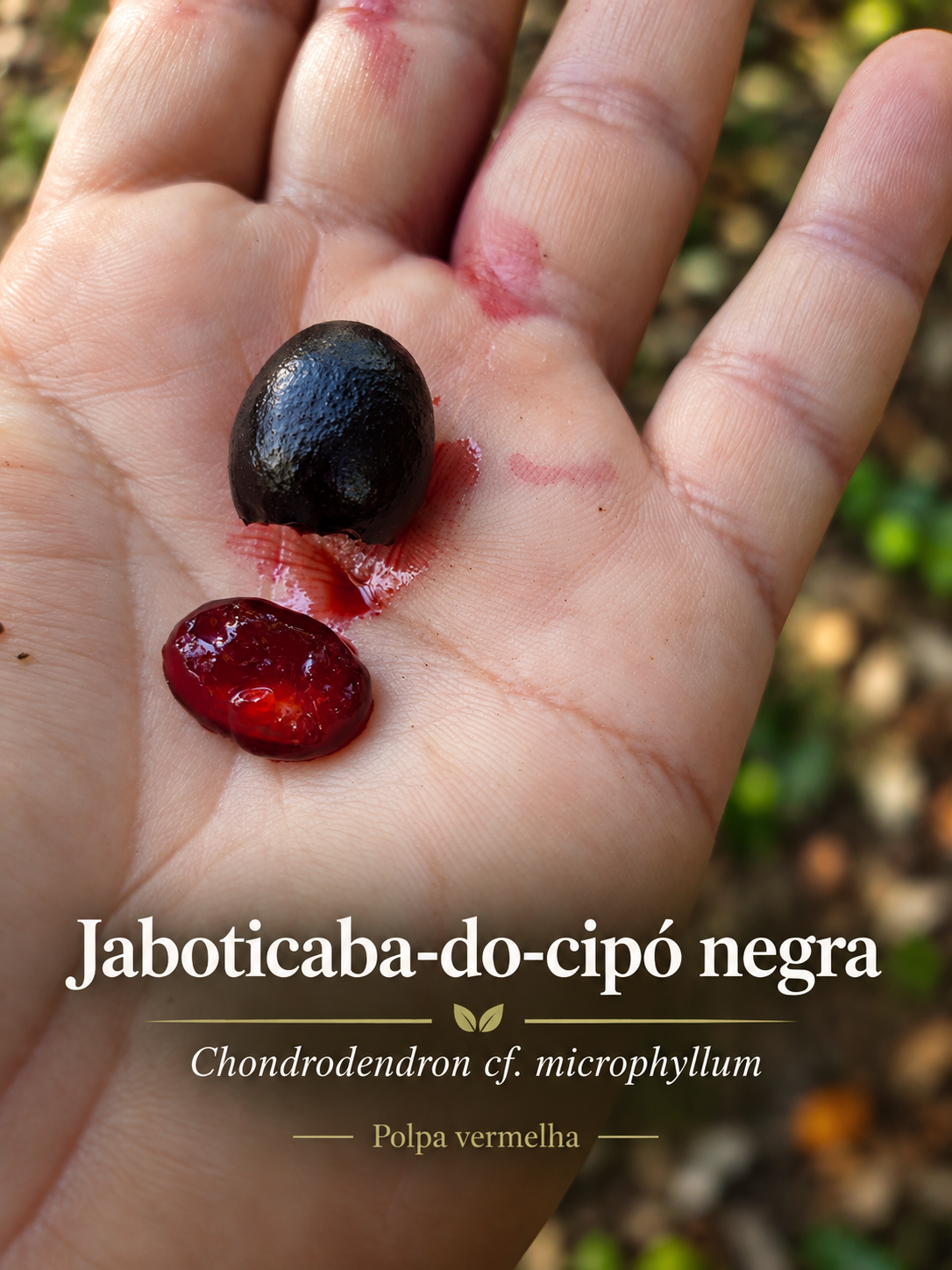
Fruit and plant photographs are included for botanical documentation. The red pulp shown in the photographs is a characteristic reported and documented by the collector, not a confirmation of edibility.
Identification status
This material is offered under the local name Jaboticaba-do-cipó Negra, with Chondrodendron cf. microphyllum as our current provisional identification.
Please treat it as an ID-pending collector accession.
The common name “Jaboticaba-do-cipó” does not establish botanical identity or edibility. Despite the resemblance suggested by its name and dark fruits, this vine is not a true Plinia/Myrciaria jaboticaba.
Our identification may be revised again if additional botanical material, flowers, herbarium comparisons or reliable field information become available.
Botanical interest
- Unusual Brazilian tropical vine rarely encountered in cultivation.
- Currently identified as Chondrodendron cf. microphyllum.
- Dense clusters of very dark to black fruits borne on older woody stems.
- Striking stem-fruiting appearance.
- Glossy dark-green leaves with apparently entire margins.
- Intense red, translucent and liquid pulp documented by the collector.
- Particularly interesting for botanical collectors and growers of unusual tropical species.
Availability and shipping
The seeds have arrived and are currently in our possession.
They belong to our August 2026 collection; earlier statements that they were still in transit to us are no longer applicable.
International dispatch remains subject to shipment arrangements and applicable import requirements. The collection month is not a guaranteed dispatch or delivery date.
Growing notes
Accession-specific germination information is still limited. The following are general starting guidelines for tropical vine seeds rather than a validated germination protocol for this accession:
- Sow promptly after arrival.
- Use a well-draining but moisture-retentive substrate.
- Maintain warm conditions and even moisture without waterlogging.
- Provide sheltered conditions and partial shade for young seedlings.
- As the plant develops, provide suitable support for its climbing habit.
- Keep the accession clearly labelled as Chondrodendron cf. microphyllum until identification is confirmed.
Further updates
We are actively seeking additional information about this accession, especially its botanical identity, local names, traditional uses and whether people living in its native region have any knowledge regarding the fruits.
The identification has already evolved as better photographs became available, and we will continue updating this listing whenever reliable new information is obtained.
Current identification: Chondrodendron cf. microphyllum — identification pending confirmation.
Reviews
There are no reviews yet.