Description
Plinia cf. spiritosantensis — Exceptionally Sweet, Precocious & Heavy-Fruiting Jaboticaba
A remarkable and botanically intriguing jaboticaba from Espírito Santo, Brazil.
This rare Plinia accession combines three highly desirable characteristics reported from its source tree: exceptionally sweet fruits, spectacular cauliflorous production and promising precocity.
Collected from the Santa Teresa region of Espírito Santo, this unusual jaboticaba is particularly interesting because its precise botanical identity remains unresolved.
Information from the Brazilian collecting network also connects this accession with a reported preliminary opinion from Marcos Sobral, a prominent Brazilian botanist and specialist in Myrtaceae taxonomy.
For collectors and enthusiasts, this is an opportunity to cultivate a remarkable fruit tree while contributing to the long-term documentation of an insufficiently studied botanical accession.
Watch This Remarkable Jaboticaba!
See the source plant and its extraordinary fruit production in our video:
▶ Watch the original video on YouTube
Spectacular Cauliflorous Fruiting
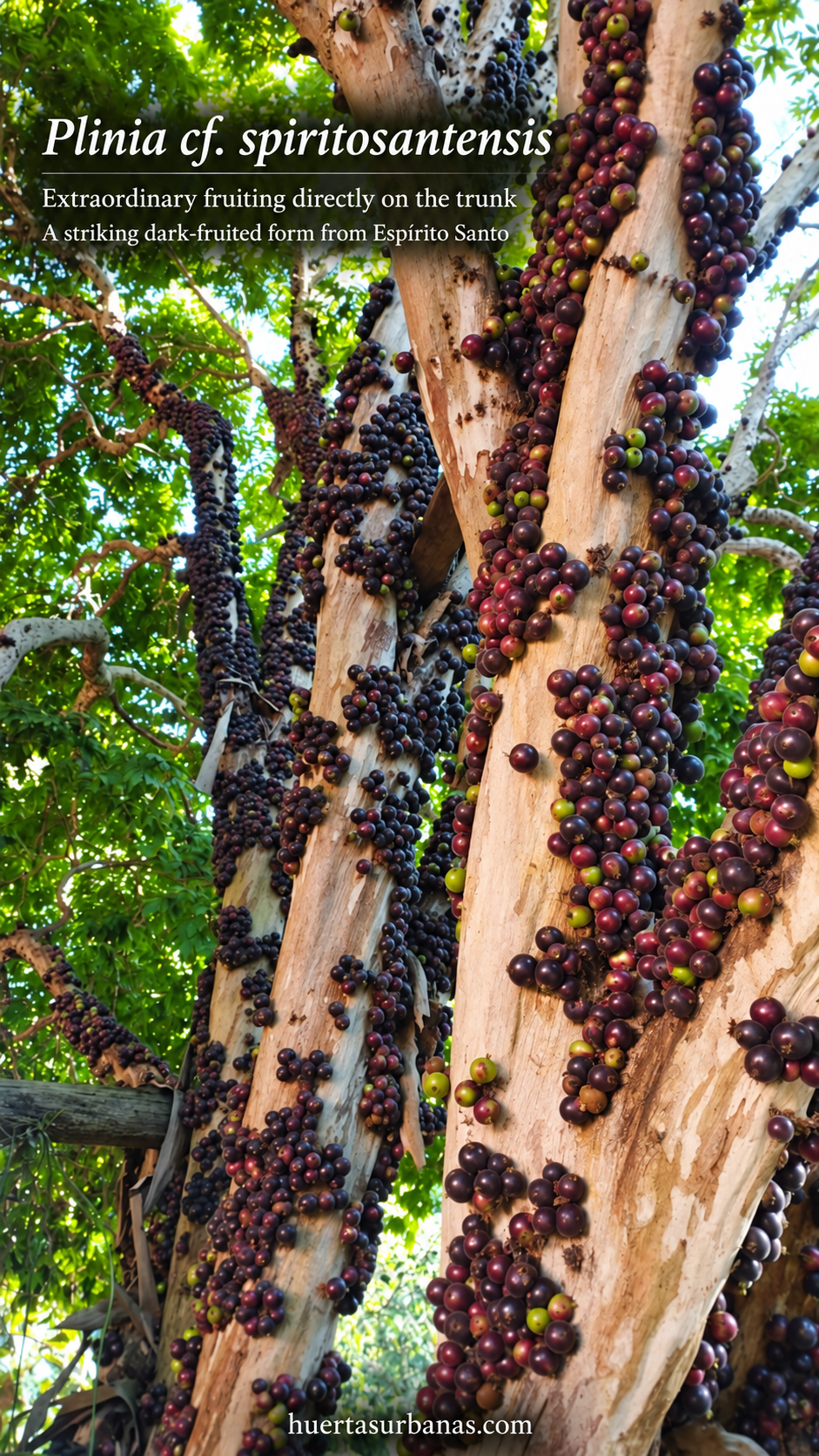
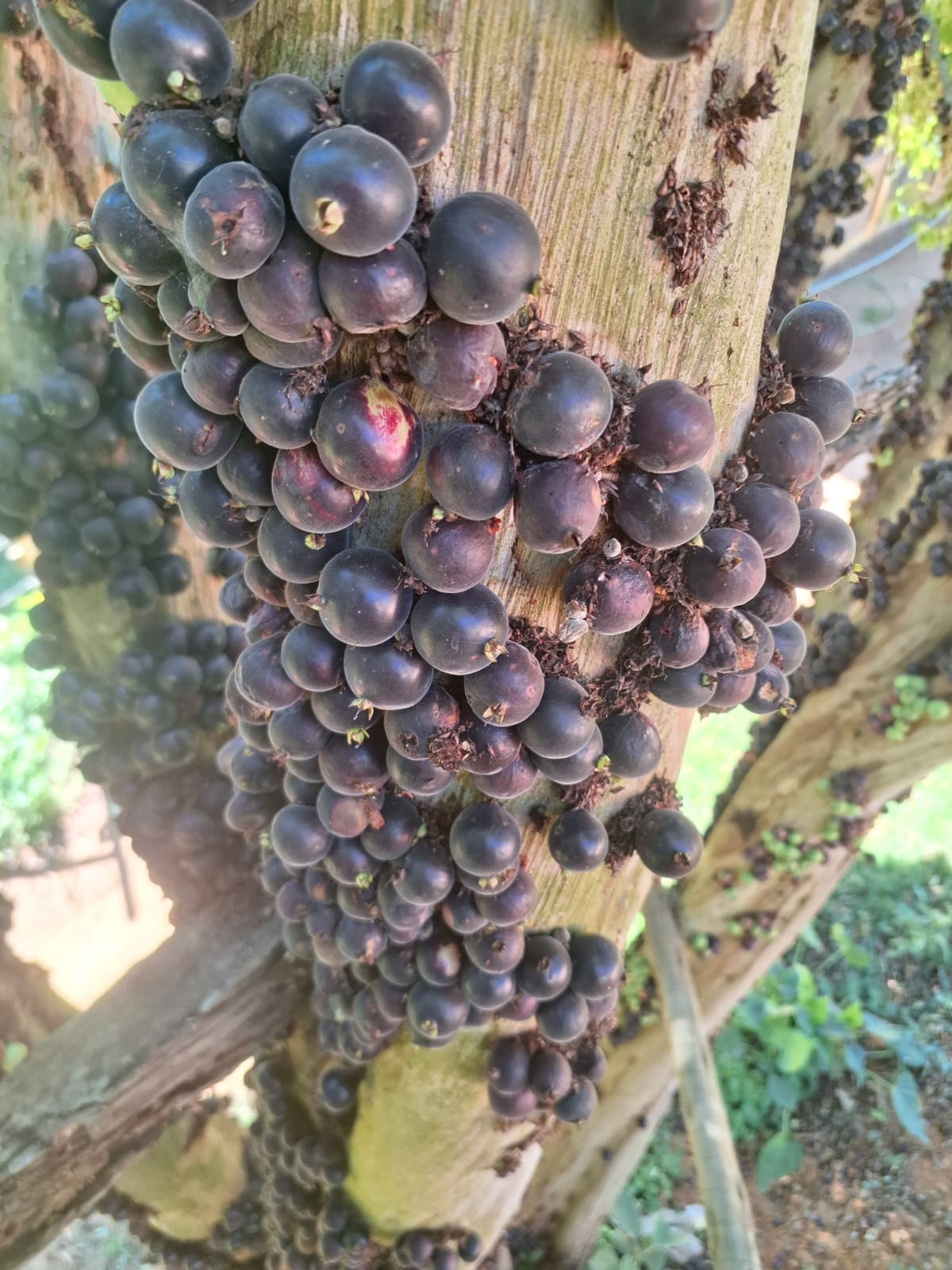
One of the most impressive features of this accession is its extraordinary ability to produce fruits directly along the trunk and mature branches.
As shown in the source photographs, the tree develops dense clusters of rounded jaboticabas, with numerous fruits appearing on older wood.
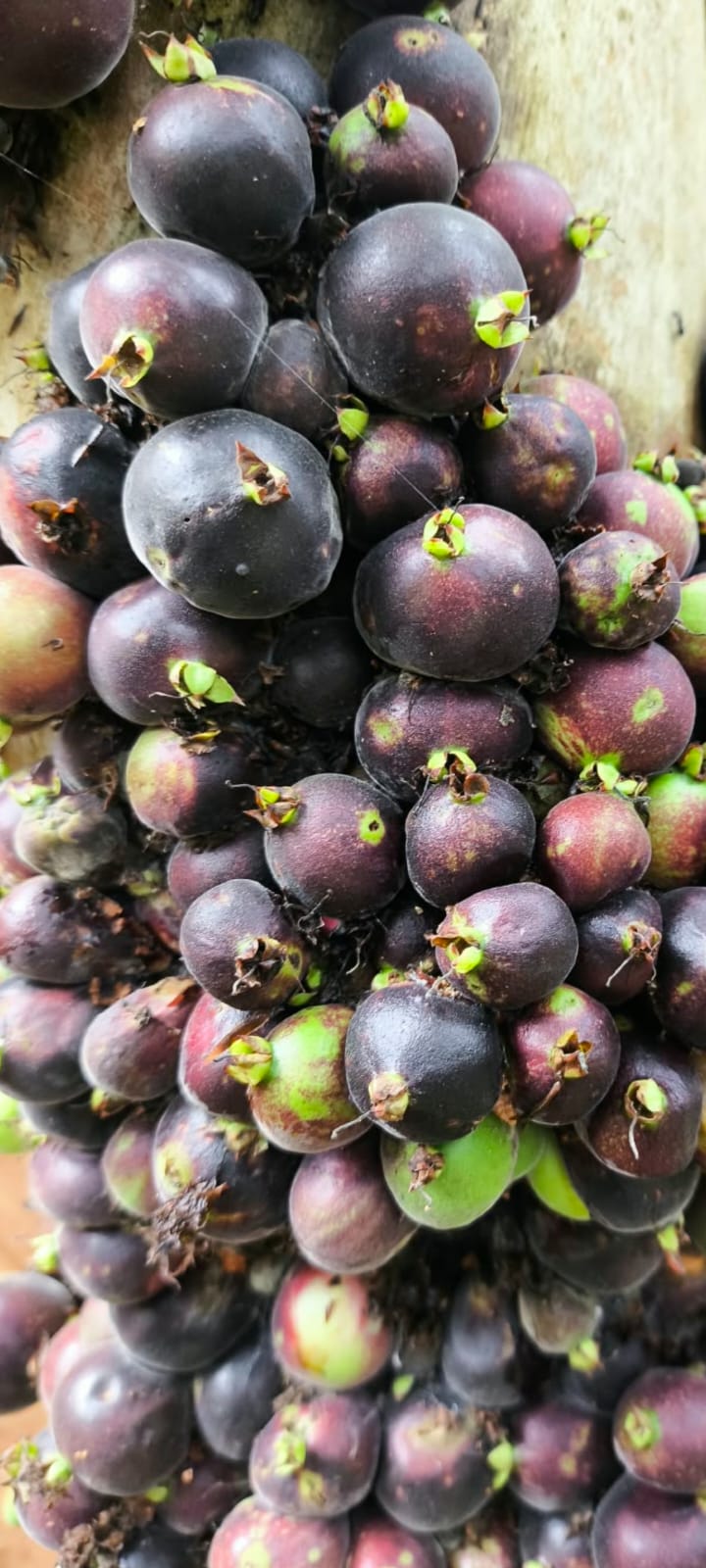
These fruits mature from green to deep purple or almost black, creating a beautiful contrast against the trunk.
The abundance of fruits is visually remarkable and represents one of the most attractive characteristics of this particular source tree.
Fruit and Plant Characteristics
- Reported origin: Santa Teresa region, Espírito Santo, Brazil.
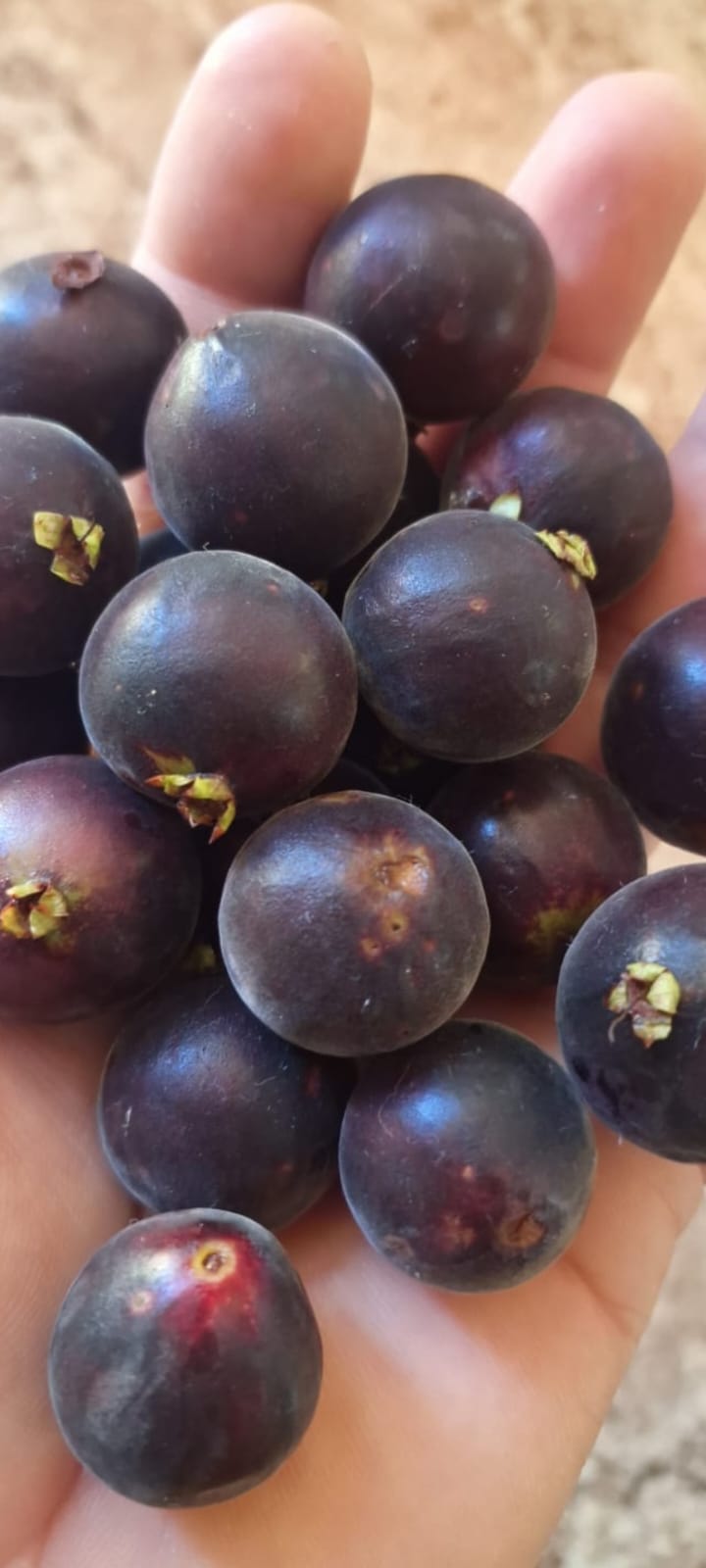
- Fruit shape: rounded, typical of jaboticaba-type fruits.
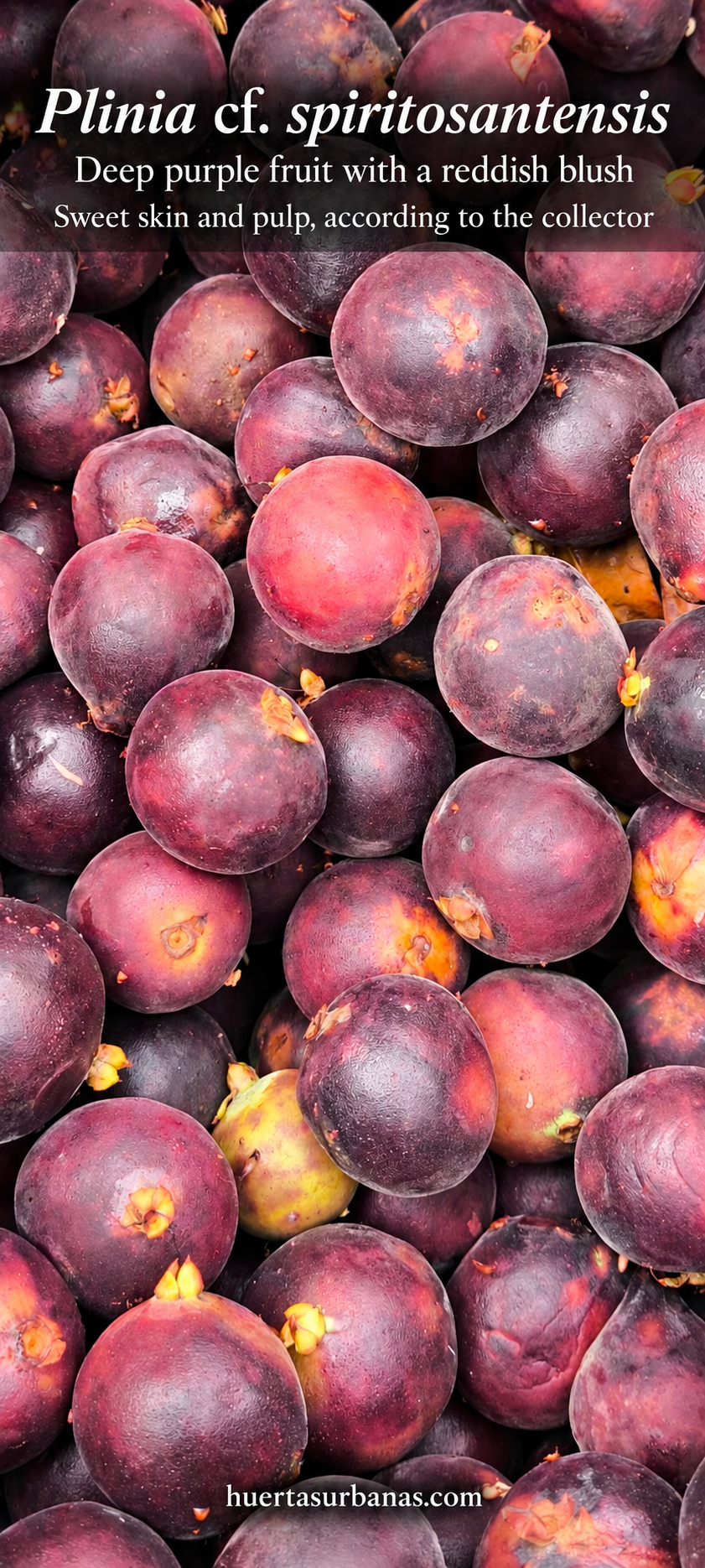
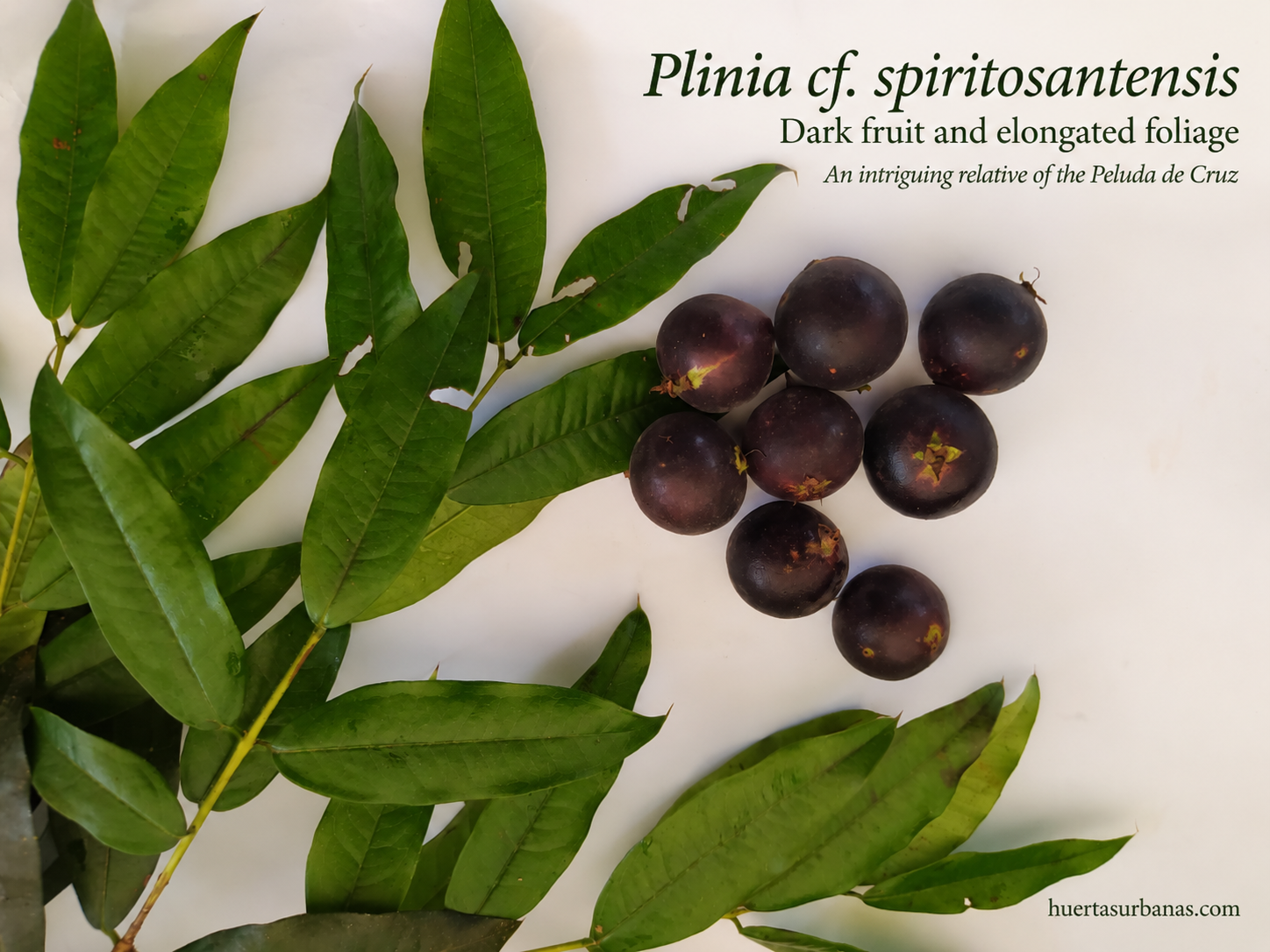
- Fruit color: deep purple to nearly black when mature.
- Fruit diameter: approximately 2 cm, according to the source.
- Seeds: generally one seed per fruit, according to the source.
- Flavor: exceptionally sweet pulp, with unusually sweet skin also reported.
- Fruiting habit: abundant cauliflory, with fruits borne directly on the trunk and older branches.
- Precocity: reportedly earlier-bearing than a similar Plinia used for comparison.
- Botanical identification: provisionally maintained as Plinia cf. spiritosantensis.
Exceptional Sweetness — Including the Skin
Perhaps the most exciting characteristic of this accession is its reported flavor.
According to direct observations from the Brazilian source, both the fruit pulp and its skin are remarkably sweet.
This is particularly noteworthy among jaboticabas, where the pulp is often sweet but the skin may contribute acidity, bitterness or astringency.
The exceptionally sweet flavor is considered one of the defining qualities of this source plant.
These descriptions are based on practical tasting experience. Laboratory sugar measurements, Brix readings and controlled comparative evaluations have not yet been performed.
A Promising Early-Bearing Jaboticaba
Another especially attractive characteristic is its reported precocity.
According to observations communicated from Brazil, this accession appears to begin fruiting considerably earlier than a similar form used for comparison.
Early fruiting is highly desirable among jaboticaba enthusiasts, since some species may take many years to produce their first harvest.
However, the precise age at first fruiting has not yet been documented for this accession.
The observation refers to the source material and should not be interpreted as a guarantee that every seed-grown plant will exhibit identical precocity.
Nevertheless, the combination of reported early bearing, remarkable sweetness and heavy fruit production makes this accession particularly promising for further horticultural evaluation.
Botanical Identity — An Interesting Connection with Marcos Sobral
The botanical identity of this accession is one of its most intriguing aspects.
Our material is currently designated Plinia cf. spiritosantensis, indicating a provisional comparison with the Brazilian species Plinia spiritosantensis.
A Reported Opinion from a Myrtaceae Specialist
According to information communicated through the Brazilian collecting network, Marcos Sobral, a recognized Brazilian botanist specializing in the taxonomy of Myrtaceae, reportedly referred to this material simply as Plinia sp..
Sobral has contributed extensively to the scientific study and classification of Brazilian Myrtaceae, including the description and taxonomic treatment of several species belonging to Plinia.
This reported genus-level assessment is noteworthy because it leaves the precise species identity open rather than assigning the accession definitively to an already described species.
Important clarification: this information represents a botanical opinion communicated indirectly through the collecting network. It is not a published determination, and we have no confirmation that Sobral is currently conducting a formal taxonomic study of this particular accession.
Nevertheless, the reference highlights the importance of maintaining a cautious identification and preserving the available documentation.
For an example of Sobral’s published taxonomic work, see:
How Does This Accession Compare with Plinia spiritosantensis?
Field comparisons indicate similarities in fruit size and vegetative development between our accession and plants identified as Plinia spiritosantensis.
However, potentially relevant differences have also been reported:
- Distinctive morphology: the source reports that this accession lacks a cross-shaped feature observed in the comparison material. The precise structure and its taxonomic significance have not yet been established.
- Fruit quality: exceptionally sweet pulp and skin, described as particularly remarkable in this accession.
- Precocity: earlier fruit production has been reported in comparison with another form.
- Provenance: our source material is reported from the Santa Teresa region of Espírito Santo.
Brazilian botanical conservation records document Plinia spiritosantensis from the Linhares region of Espírito Santo. Although geographic origin is useful for understanding an accession, locality alone cannot establish its identity.
The characteristics described here are valuable observations, but a definitive identification would require detailed taxonomic examination, ideally including reproductive structures and comparison with authenticated botanical material.
Why We Use the Name Plinia cf. spiritosantensis
The abbreviation cf., derived from the Latin confer (“compare with”), indicates that a plant resembles a particular species but has not been conclusively identified as belonging to it.
For this reason, we continue to use Plinia cf. spiritosantensis as a provisional catalogue designation.
The more conservative identification remains Plinia sp., acknowledging that the exact species has not yet been determined.
We consider accurate documentation more valuable than assigning a premature scientific name.
Preserving its provenance, fruit photographs, morphological observations and future cultivation records will help clarify the identity of this remarkable Brazilian jaboticaba over time.
Additional Photographs of the Source Tree
The following photographs document the original accession and its distinctive fruiting habit.

New Photographic Documentation — October 2026
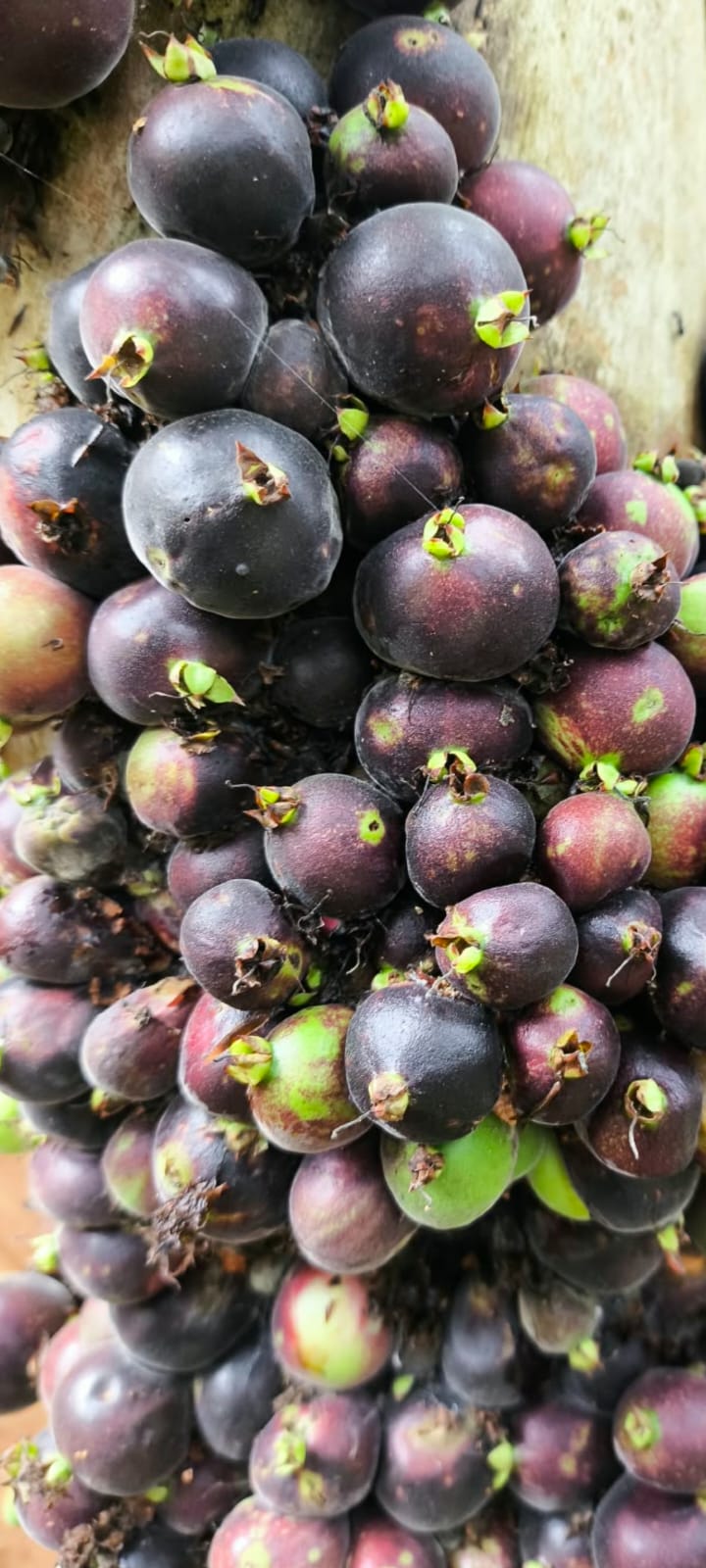
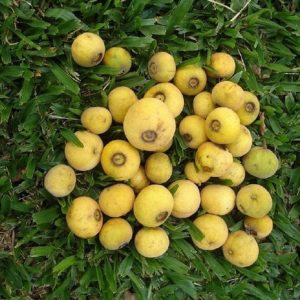
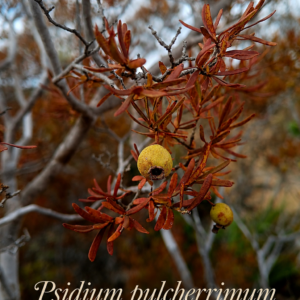
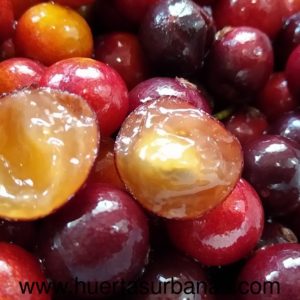
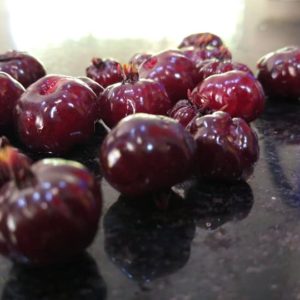
Additional photographs recently received from Brazil provide a closer look at the fruits, their development and the remarkable appearance of this accession.
These images form part of our ongoing effort to document rare Brazilian fruit trees and preserve useful information for collectors and future botanical investigation.

November 2026 Pre-Sale — Limited Collector Seeds
⚠️ NOVEMBER 2026 PRE-SALE ITEM.
Fresh collector seeds from an unusual Brazilian jaboticaba accession with exceptional reported fruit quality.
One fresh seed per unit purchased.
This is a pre-sale item. Seeds are not yet physically in our possession, and fulfillment will begin only after receipt and inspection.
Availability is limited and subject to the final number of seeds received in suitable condition. Any unavailable units will be refunded.
Germination and Cultivation
As with other fresh jaboticaba seeds, prompt sowing and careful moisture management are recommended.
- Seed freshness: sow promptly after receipt and avoid intentional desiccation.
- Growing medium: use a loose, well-draining substrate with good aeration and organic matter.
- Moisture: keep evenly moist without allowing waterlogging.
- Temperature: maintain suitable warm growing conditions and protect young seedlings from temperature extremes.
- Light: bright, indirect light is recommended during early development.
- Germination time: not yet specifically documented for this accession.
- Cold tolerance: exact hardiness limits have not been established.
Seed-grown individuals may vary in growth rate, fruit characteristics and age at first fruiting.
More Than a Rare Jaboticaba — A Living Botanical Exploration
Some of the most remarkable edible plants of South America remain poorly documented, even when they possess exceptional horticultural qualities.
This accession is a fascinating example: a heavily fruiting Brazilian jaboticaba with remarkably sweet fruits, reported precocity and an unresolved botanical identity.
By cultivating and documenting rare accessions like this one, growers can contribute valuable observations about their development, adaptation, reproductive characteristics and possible taxonomic relationships.
Its true potential will become clearer as more plants are grown, studied and eventually brought into fruit.
At Huertas Urbanas, we believe that responsible cultivation, careful documentation and honest communication are essential parts of preserving and sharing the extraordinary botanical diversity of South America.
HuertasUrbanas.com — Rare Fruit Seeds from South America.
Reviews
There are no reviews yet.