Description
Eugenia sp. “Pitanga-acerola” — an exceptionally rare Atlantic Forest fruit with vivid crimson flesh
This extraordinary unidentified Brazilian Eugenia is one of the most visually dramatic and intriguing accessions in our September 2026 collection.
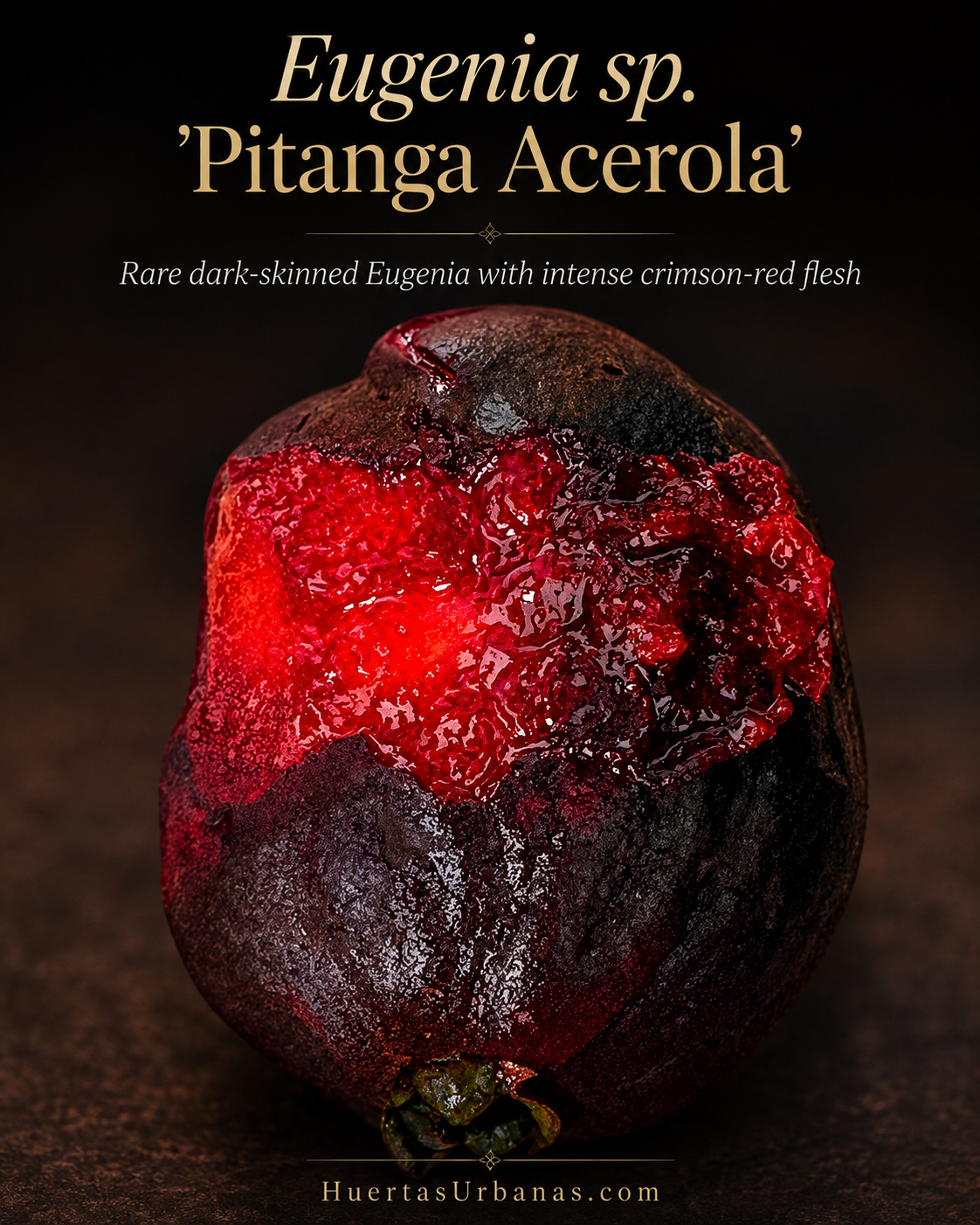
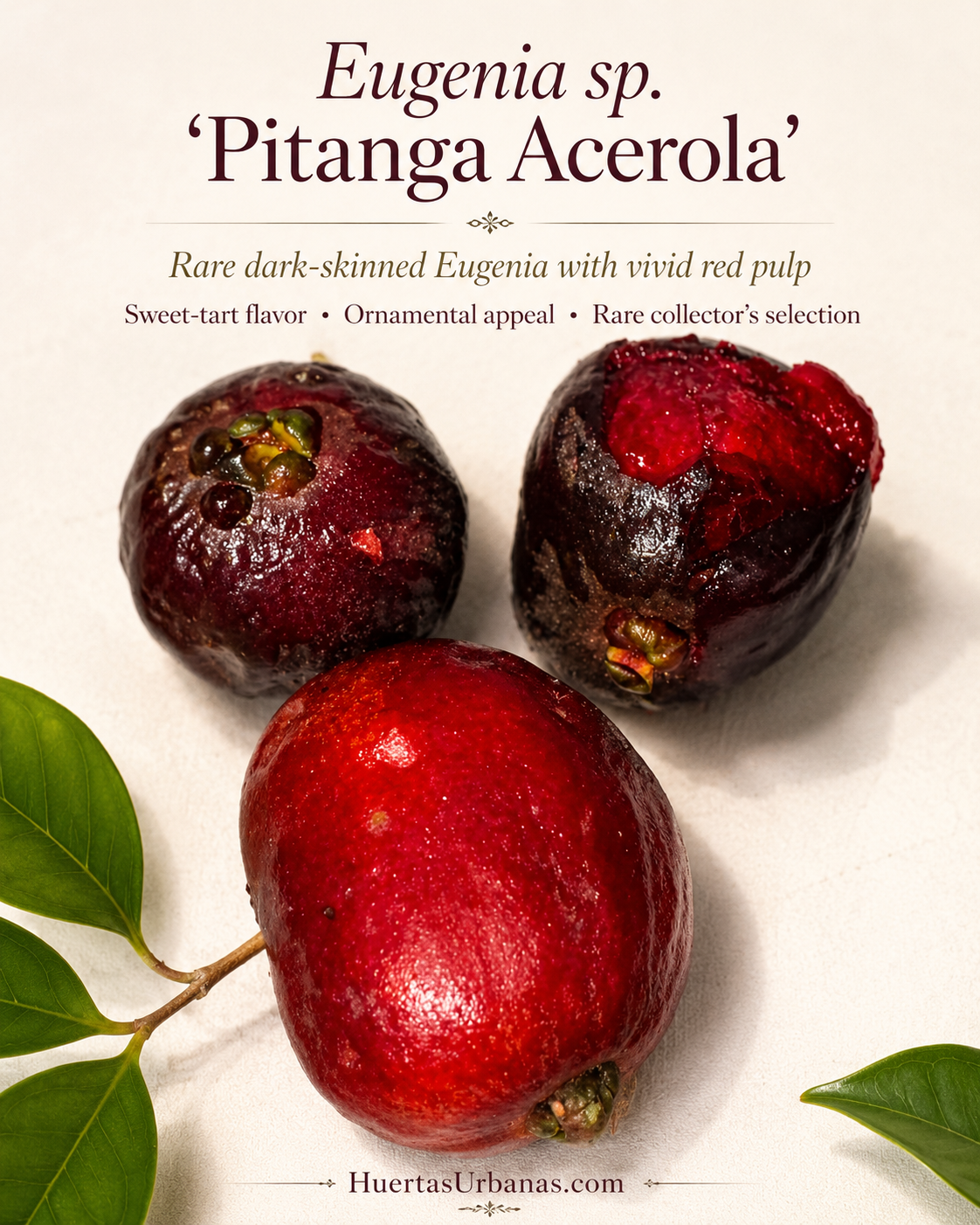
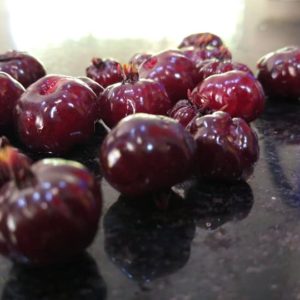
The ripe fruit develops a deep burgundy coloration that may become nearly black, concealing an unexpectedly vivid red to crimson interior.
The contrast is remarkable: a dark, almost mysterious exterior opening to reveal intensely colored flesh with a flavor described by our Brazilian network of collectors and field contacts as reminiscent of a combination of pitanga and acerola.
This comparison suggests a highly aromatic tropical Myrtaceae profile, combining the distinctive perfume of pitanga with the bright, lively character associated with ripe acerola.
“Pitanga and acerola” is a flavor description only. We are not claiming that this accession is a hybrid between those species.
A rare discovery from the Brazilian Atlantic Forest
The material originates from the Brazilian Atlantic Forest, one of the richest and most threatened centers of plant diversity in the world.
According to the available field information, this accession is considered rare even within its native region and is not known to be circulating through the ordinary international seed market.
Both shrub-sized and tree-sized individuals were observed in the source population, suggesting some natural variation in plant architecture.
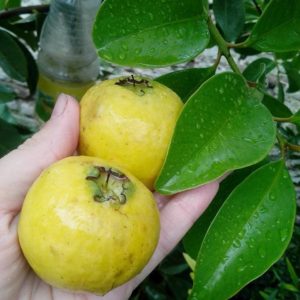
The fruit itself is reported to reach approximately 4 to 6 cm, an impressive size for a Eugenia with a flavor profile compared with pitanga.
The combination of substantial fruit size, intense coloration, unusual flavor and restricted origin gives this material exceptional value for collectors and future selection.
Fruit characteristics
- Fruit size: Approximately 4–6 cm according to field observations.
- Ripe skin: Dark burgundy developing toward nearly black.
- Pulp: Naturally vivid red to intense crimson.
- Reported flavor: Aromatic, recalling a combination of pitanga and acerola.
- Origin: Brazilian Atlantic Forest.
- Observed plant habit: Both shrub-sized and tree-sized individuals were found.
- Rarity: Considered rare within the documented source material.
- International availability: Extremely limited.
Why the flavor description matters
Pitanga and acerola are two of the most recognizable aromatic fruits among Brazilian Myrtaceae and tropical fruit collections.
A flavor comparison involving both suggests an accession with far more personality than a merely sweet or mildly pleasant fruit.
The collectors’ description points toward a combination of:
- Strong tropical fruit aroma.
- Bright and lively flavor.
- The distinctive resinous or spicy complexity associated with good pitanga selections.
- The fresh, vibrant character commonly associated with acerola.
The precise balance of sweetness, acidity and aroma may vary naturally between individual fruits and future seed-grown plants. Nevertheless, the flavor report is one of the strongest reasons this accession deserves serious attention.
A fruit with an unforgettable appearance
The exterior and interior colors create a contrast rarely seen among edible Eugenias.
From the outside, the fruit appears dark, glossy and almost black when fully colored. Once opened, the vivid crimson pulp produces an unexpectedly brilliant interior.
This gives the accession considerable potential not only as an edible fruit, but also for:
- Rare-fruit collections.
- Ornamental and landscape use.
- Future selection for fruit color and size.
- Breeding projects involving unusual pigmentation.
- Specialty nursery production.
Identification status
The exact botanical species has not yet been confirmed.
It is therefore being offered honestly and conservatively under the accession name Eugenia sp. “Red Pulp”.
The informal expression “Pitanga-Acerola” may occasionally be used to describe the reported flavor, but it should not be interpreted as:
- A formally recognized botanical name.
- A confirmed hybrid identity.
- Proof that the plant belongs to either Eugenia uniflora or Malpighia emarginata.
A more precise identification will require further examination of:
- Flowers and flowering structures.
- Mature leaves and new growth.
- Seeds and fruit morphology.
- Bark and plant architecture.
- Multiple seed-grown plants cultivated to maturity.
Growers should preserve the complete accession name Eugenia sp. “Red Pulp” in cultivation records.
Seed-grown plants may show natural variation in fruit size, skin color, pulp intensity, flavor, productivity and growth habit.
Why this accession is especially valuable
- Exceptionally rare Atlantic Forest Eugenia material.
- Large fruits reported at approximately 4–6 cm.
- Remarkable nearly black skin and vivid crimson pulp.
- Strong flavor comparison involving pitanga and acerola.
- Both shrub and tree forms observed in the source population.
- Extremely limited international availability.
- Outstanding ornamental and collector appeal.
- High potential for future selection based on color, fruit size and flavor.
This accession is valuable not simply because it is unidentified or difficult to obtain. It combines rarity, substantial fruit size, spectacular natural pigmentation and an unusually expressive flavor report.
September 2026 pre-sale
SEPTEMBER 2026 PRE-SALE ITEM
This listing belongs to our September 2026 Brazilian rare-seed collection. Orders containing September pre-sale items will be prepared with the corresponding September batch.
Final availability and shipping timing depend on fruit maturation, the number and condition of seeds actually collected, transport to Argentina, phytosanitary preparation, inspection and international logistics.
Only a limited initial quantity is being released.
If the final number of viable seeds is lower than expected, orders will be fulfilled according to payment date and any unfulfilled portion will be refunded.
Because this accession is rare, seasonally collected and scarcely represented in cultivation, future availability cannot be assumed.
Germination and early care
Fresh tropical Myrtaceae seeds should be planted promptly and should not be intentionally dried.
- Sow shallowly in a loose, organic and well-draining medium.
- Keep the substrate consistently moist, but never stagnant or waterlogged.
- Maintain warm conditions, ideally around 24–28°C / 75–82°F.
- Provide bright shade or filtered light during germination and early growth.
- If a seed arrives already rooted, position the root carefully downward without bending or breaking it.
- Protect young seedlings from intense afternoon sun, cold wind and frost.
- Increase direct sunlight gradually after the plants become established.
Fresh Eugenia seeds are recalcitrant and may lose viability if allowed to dry excessively. Early root development during transit is natural and should not automatically be considered a defect.
Germination cannot be guaranteed because viability is affected by natural variation, fruit maturity, handling, transit time and the buyer’s growing conditions.
Rare even within its Atlantic Forest origin, with fruits reaching approximately 4–6 cm, nearly black skin, brilliant crimson flesh and an aromatic pitanga-and-acerola flavor profile, Eugenia sp. “Red Pulp” is one of the most visually unforgettable and flavorful discoveries in our September 2026 collection.

Reviews
There are no reviews yet.