Description
PLINIA DARIENENSIS — THE LOST TREASURE OF DARIÉN
Some fruit trees are famous. Others survive as legends in herbarium cabinets, field notes, and the memories of those who have seen them.
Chapter I — April 2, 1971: Deep in the forest
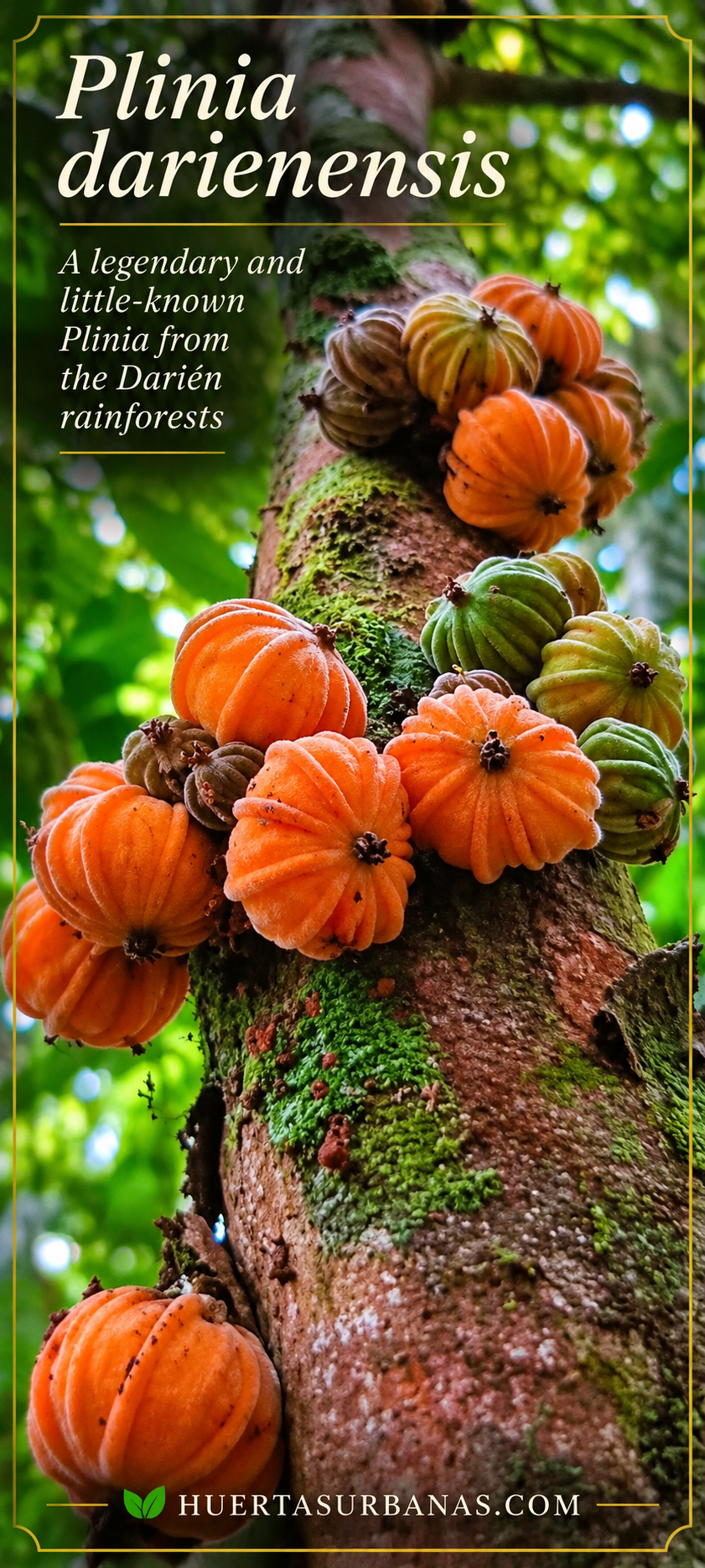
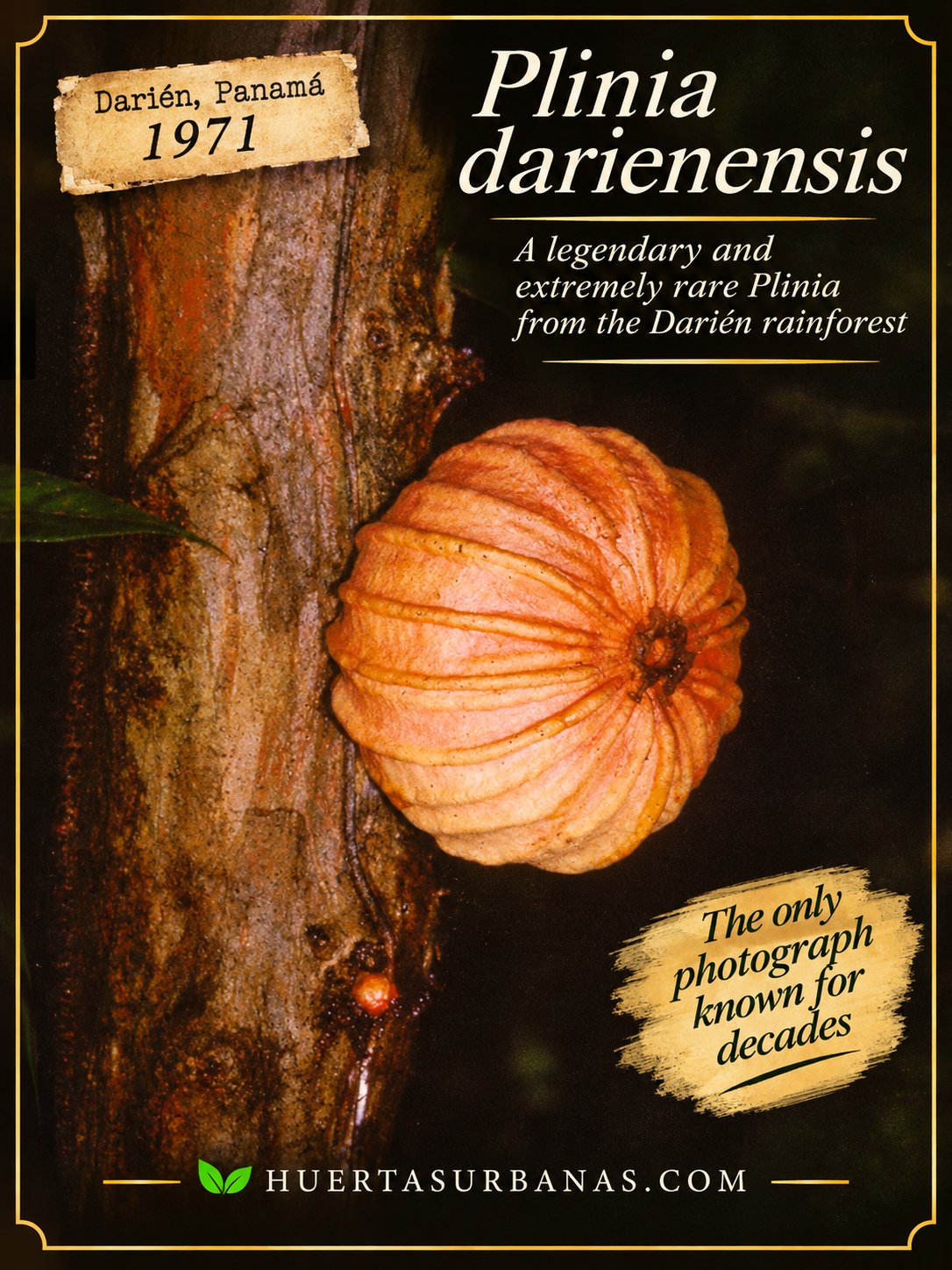
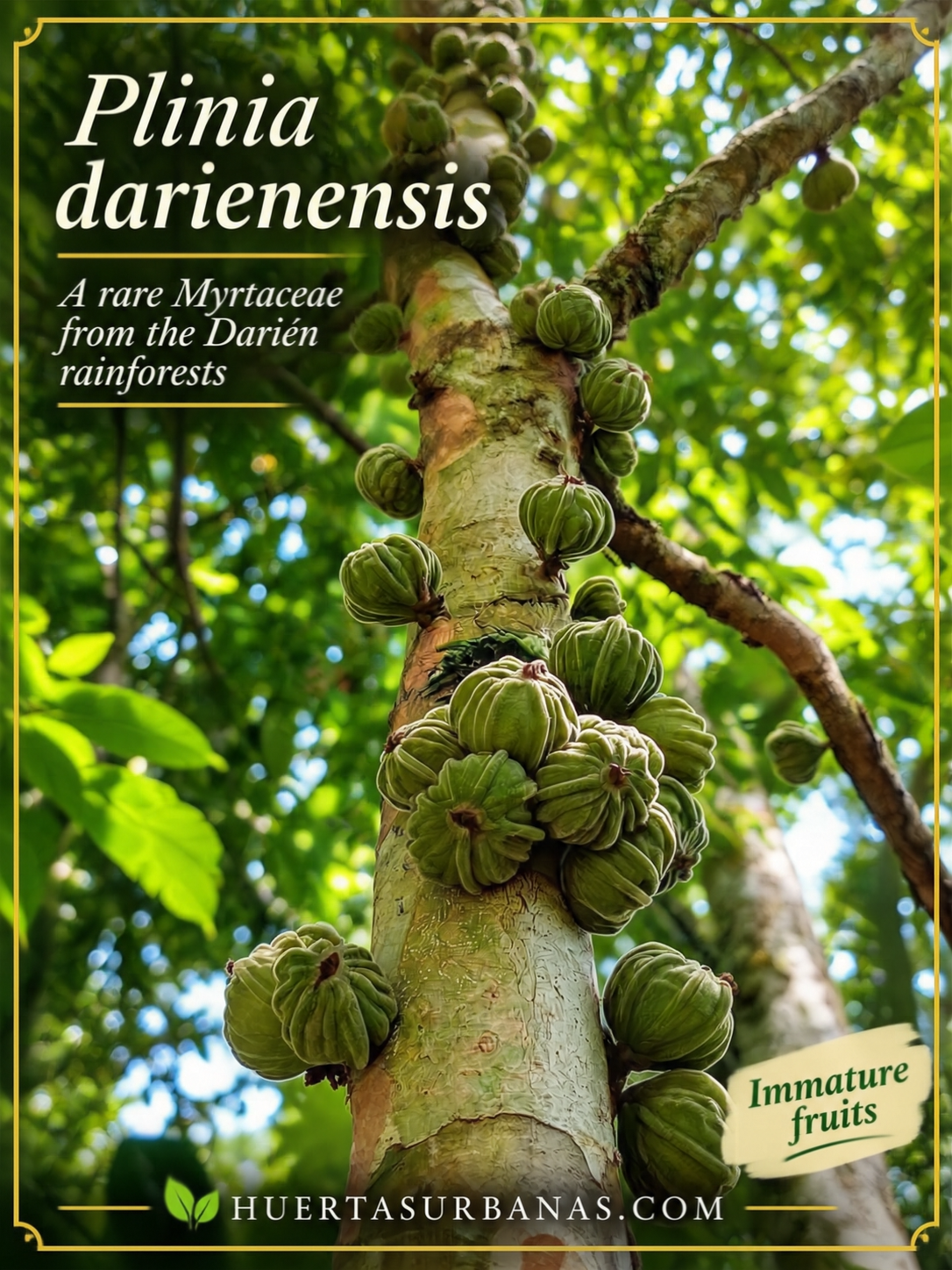
Picture the tropical forest of Darién, Panama: tall trees, tangled vegetation and a botanist looking at something almost impossible to mistake for an ordinary berry. On a tree trunk, not at the ends of its branches, appeared spectacular orange fruits with deep, sculpted ribs — and striking pink flower buds.
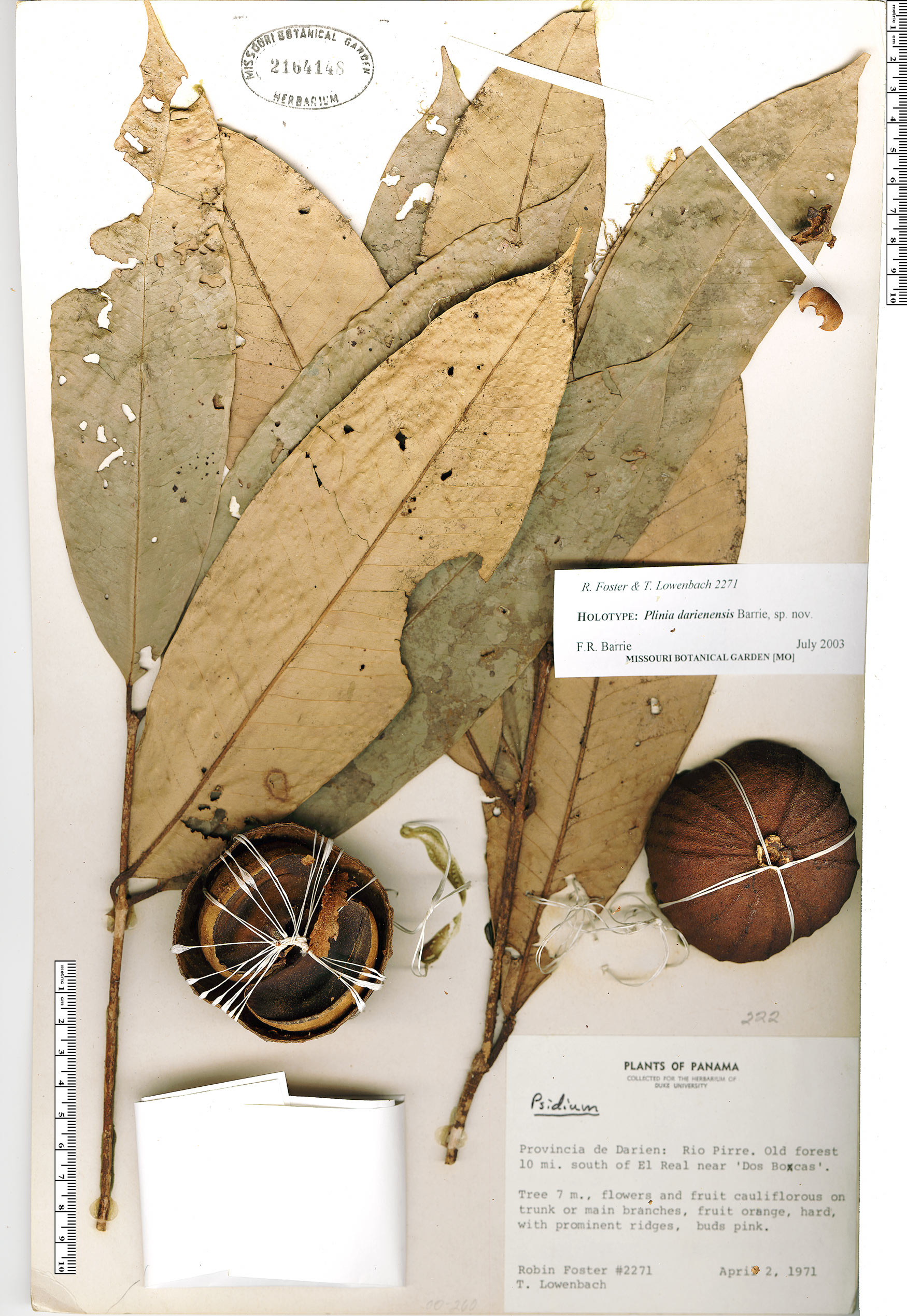
That day, R. B. Foster and T. Lowenbach collected specimen 2271 in old forest near the Río Pirre, south of El Real, in the vicinity of Dos Bocas. Their field notes recorded a tree about 7 meters tall, orange, hard, prominently ribbed fruits and pink flower buds. These are not embellished details: they are recorded on the original botanical specimen.
Chapter II — A botanical identity waiting to be written
For decades, this remarkable fruit remained little known beyond specialized botanical records. The original specimen was eventually studied under the name Plinia darienensis Barrie and the species was formally published in the journal Novon on December 20, 2004 — more than three decades after the 1971 collection.
An archival field photograph preserved by the Field Museum became a precious visual reference for this extraordinary fruit. Although other botanical specimens are documented, field images available to enthusiasts have been remarkably scarce. The historical record and herbarium materials offer an exceptional glimpse into its scientific story.
Chapter III — The fruit that looks like a forest jewel
Imagine a large, orange, pumpkin-like fruit — deeply fluted, attached directly to an old rainforest trunk. The published botanical description gives fruits of around 6.5 cm or more; a recent source connected to this collection reports fruits reaching approximately 6–7.2 cm. Individual fruit size can vary.
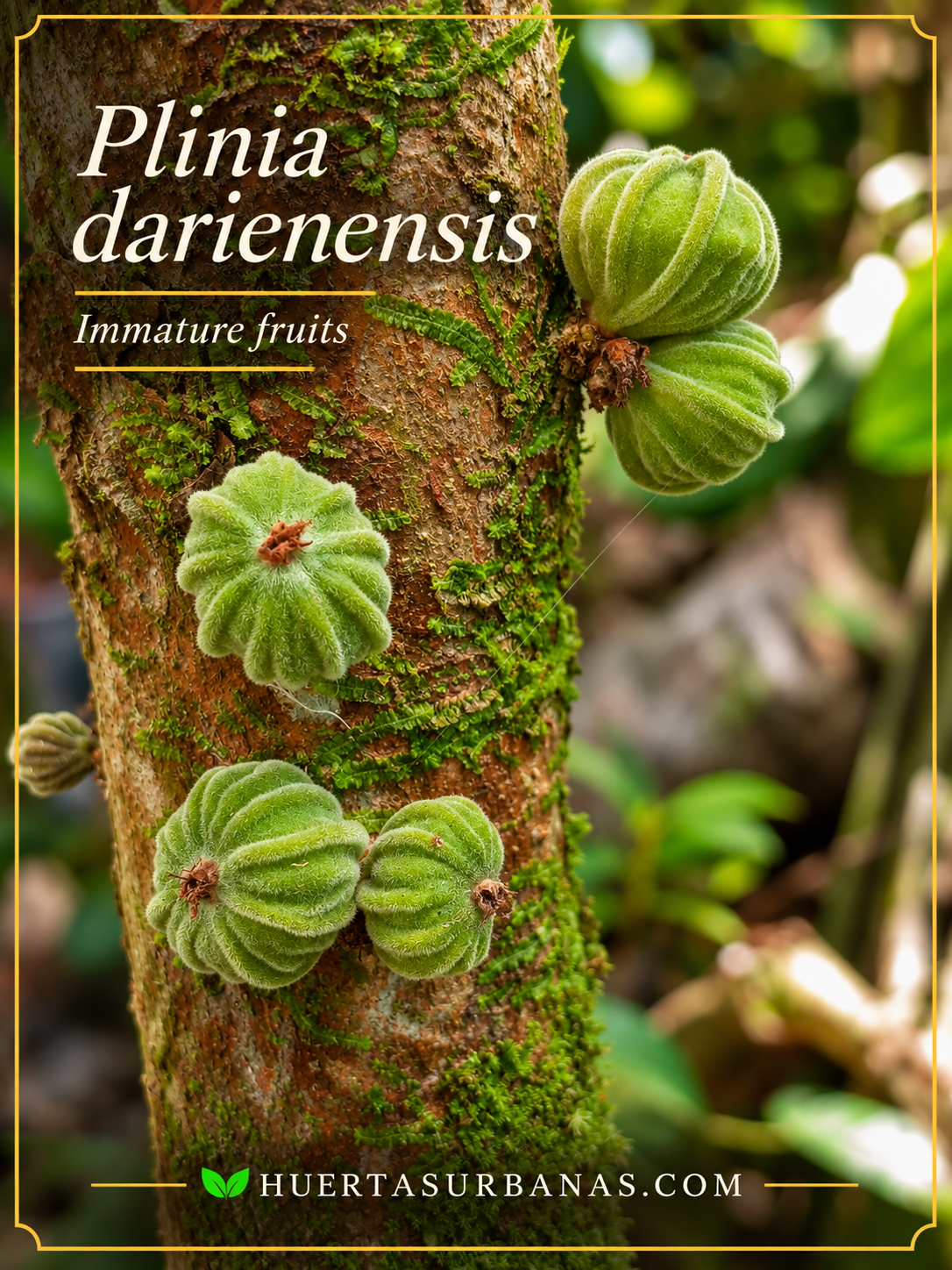
Its young fruits are green and deeply ribbed; mature fruits are described as yellow to orange. The fruits grow in the unusual cauliflorous fashion, directly on the trunk and major branches. Its recorded pink flower buds add another beautiful and unexpected detail.
Chapter IV — And what does it taste like?
This is one of the most intriguing unanswered questions. According to a recent firsthand tasting account relayed to us, the flavor is caramel-like, with notes reminiscent of jaboticaba. This is a collector report, not an independently verified botanical or sensory description. For a species this poorly represented in cultivation, the taste remains part of its mystery.
Chapter V — 2026: New photographs, a rare opportunity
More than fifty years after the original 1971 collection, we can finally share remarkable recent photographs of trees bearing numerous ribbed fruits. This is the moment rare-Plinia enthusiasts dream about: the possibility of growing a species that many collectors have encountered only in scientific descriptions or archival images.
Important: Botanical records establish the name and the historical occurrence in Panama. The identification and provenance of the current seed material are based on information from our supply chain; they have not yet been independently confirmed by a taxonomist.
Exclusive pre-sale information
- Product: Fresh seeds of Plinia darienensis Barrie (Myrtaceae), extremely limited collector offering.
- Introductory price: US$175 per seed, while this pre-sale offer is available.
- Estimated USA availability: December 2026 or January 2027, subject to actual delivery, documentation, phytosanitary procedures, inspections and clearance. Not guaranteed.
- Dispatch: Seeds are intended to be shipped from the United States once the material is physically received and cleared; they are not yet US stock.
- Growing advice: As with many tropical Myrtaceae, sow fresh seeds promptly in a moist, well-draining medium; protect from desiccation and cold. Germination time and viability are not guaranteed.
The evidence: original records and a modern chapter
The product gallery includes our recent collection photographs, plus historical botanical references for context. For the original Field Museum archive, visit the Field Museum Plinia darienensis field photograph; credit: Robin B. Foster / Field Museum of Natural History. Archival materials are historical references, not photographs of our current seed stock.
Scientific references: International Plant Names Index — Plinia darienensis (2004) · University of Panama Herbarium — 1971 field record · World Flora Online — botanical description.
A living mystery from Darién. An extraordinary chapter for the rare-fruit collector.
Reviews
There are no reviews yet.