Description
Anacardium humile (C) — Cajuzinho do Cerrado, the dwarf wild Brazilian cashew
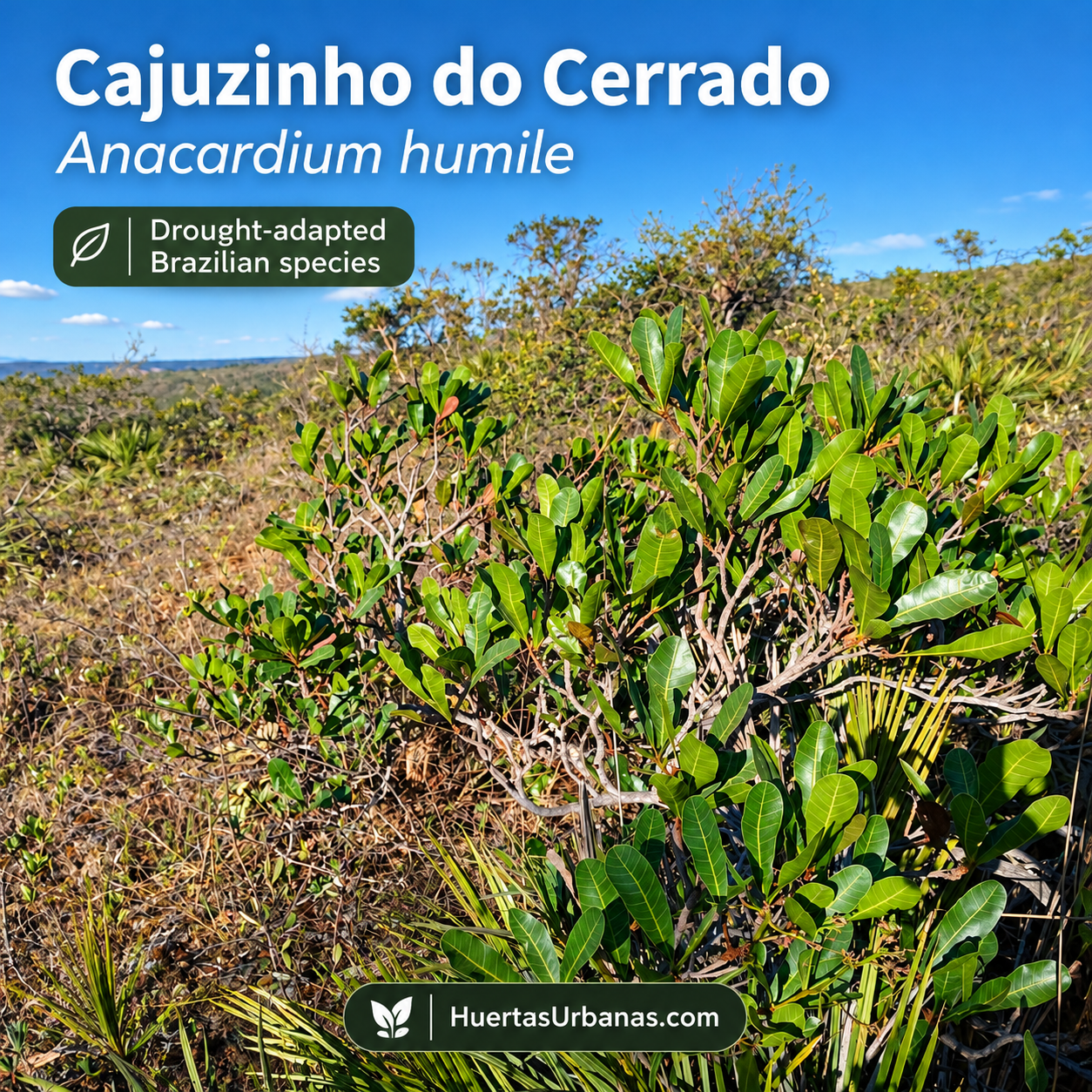
If you love cashews, here is a very different member of the same genus. Cajuzinho do Cerrado (Anacardium humile A.St.-Hil.) is a native Brazilian dwarf cashew, usually growing as a low shrub rather than a tall tree. Its compact aboveground form is supported by extensive underground stems and roots, allowing it to persist through the strongly seasonal conditions of the Cerrado.
Tiny cashew apples with a distinctive flavor
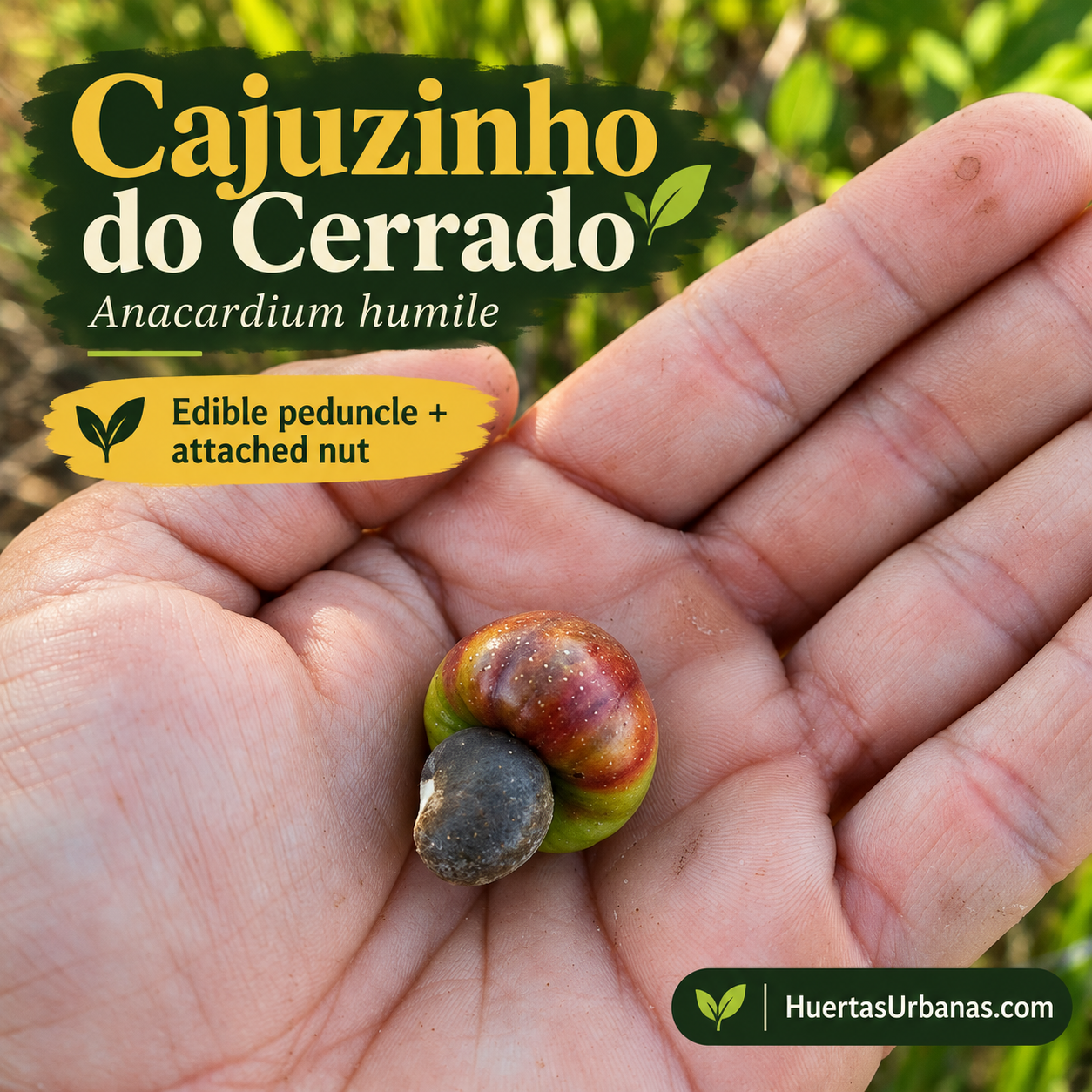
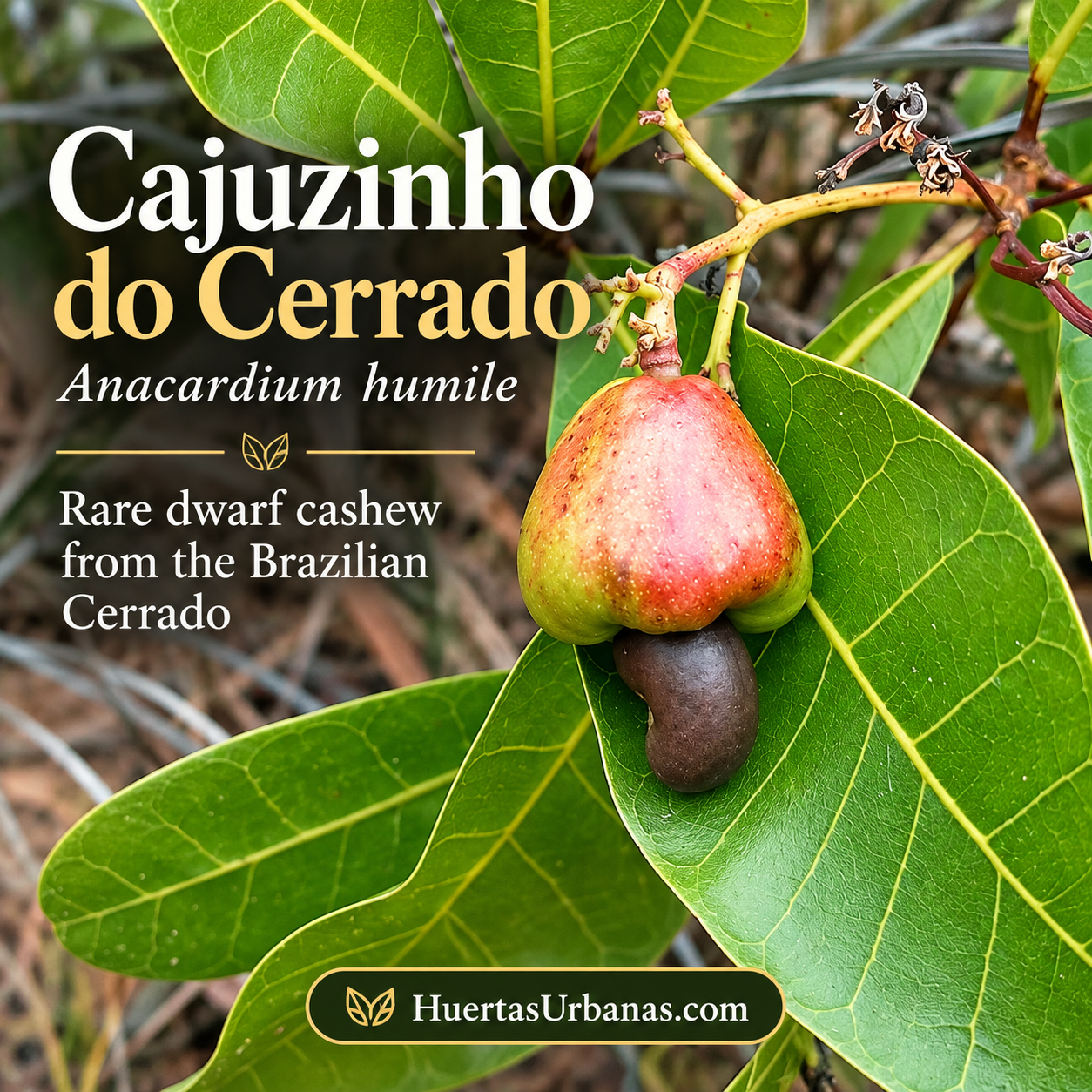
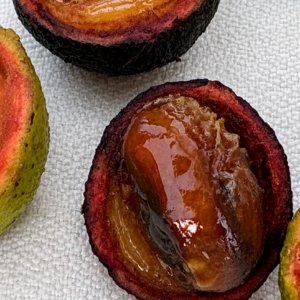
Its small cashew apples are aromatic, juicy, and typically tart, and may be yellow, orange or red according to the plant and stage of maturity. They are eaten locally and are also used to make juice, preserves, sweets and other products. As in common cashew, the kidney-shaped true fruit — the familiar cashew “nut” — hangs outside the swollen fleshy stalk (the edible cashew apple).
What makes it interesting
- Species: Anacardium humile — an accepted species in the cashew family, Anacardiaceae.
- Growth: a naturally low shrub, often approximately 0.5–1.5 m tall in botanical descriptions.
- Habitat: Brazilian Cerrado, including open savannas and grassier formations.
- Fruit: miniature, aromatic cashew apples, smaller than the common cultivated cashew.
- Adaptation: extensive underground structures associated with survival under dry-season conditions and resprouting.
- For collectors: a wonderful way to grow a distinctive wild Anacardium rather than the usual A. occidentale.
Seeds and cultivation
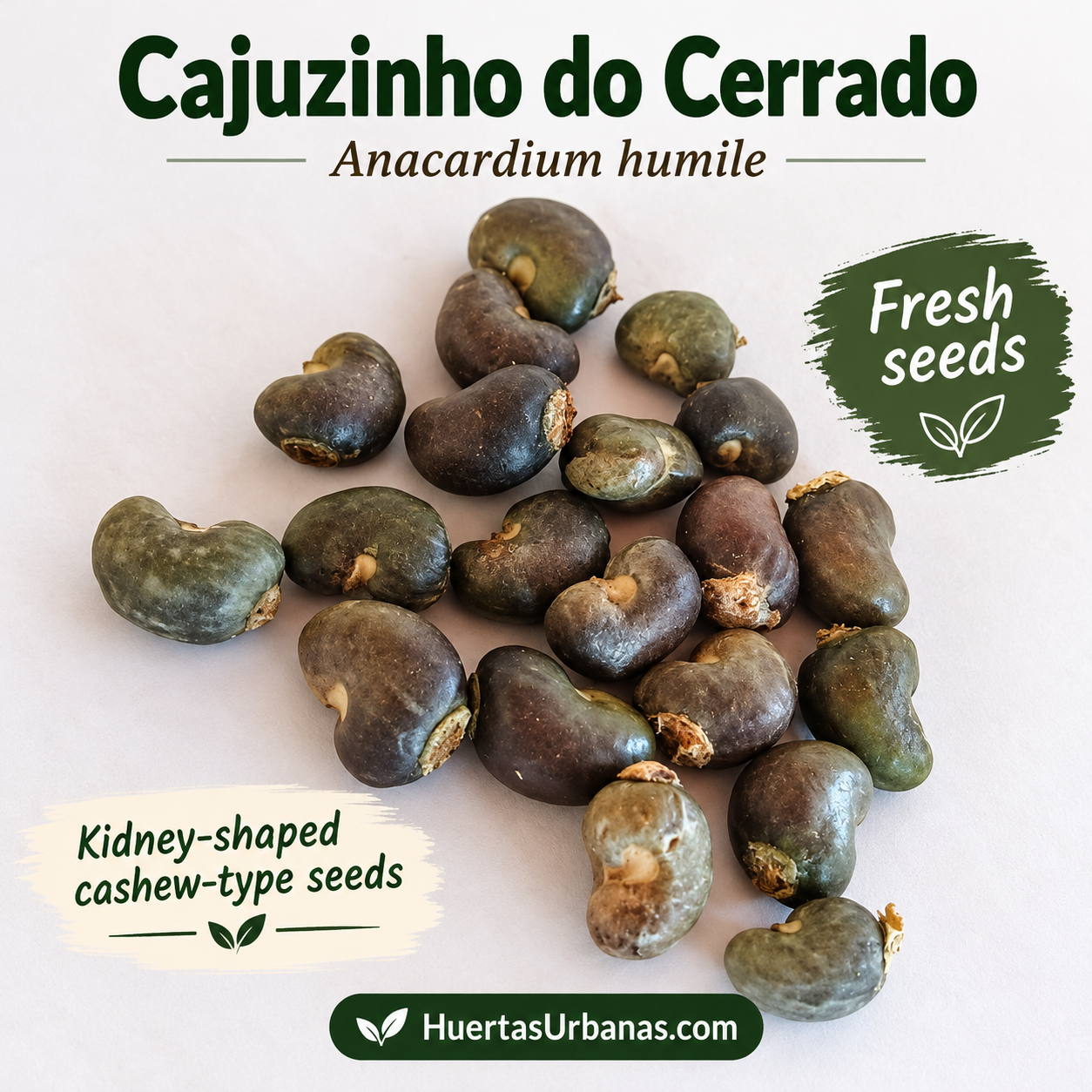
Sow each intact cashew nut on its side in a free-draining substrate, with the nut only lightly covered. An Embrapa nursery manual recommends sowing the cleaned nut approximately 0.5–1 cm deep. The young root can be sensitive to disturbance, so direct sowing into an appropriately deep container is preferable to repeated transplanting. Warm temperatures, bright light, and careful moisture management are helpful for establishment.
Important safety note: as with commercial cashew nuts, the raw nut shell contains irritating compounds. The attached nut is a planting seed, not a ready-to-eat food; do not eat raw or unprocessed cashew nuts.
Seed pre-sale and dispatch
Purchase unit: 1 unit = 1 seed (unless otherwise specified). We supply planting seeds, not edible nuts or ready-grown plants.
November 2026 Pre-Sale: this is a future-arrival seed lot, not stock currently in the USA. We may ship earlier if the lot reaches us ahead of schedule, passes physical and viability inspection, and can join an earlier shipment; however, earlier shipment is not guaranteed. Actual availability depends on receipt and seed condition. If any purchased quantity cannot be fulfilled, we will contact you and arrange a refund or an agreed alternative.
Botanical and cultivation references: Embrapa Pantanal — Anacardium humile; Embrapa native-seed nursery manual. Fruit colors and flavors vary with individual plants; the listing photographs document the source material.
Reviews
There are no reviews yet.