Description
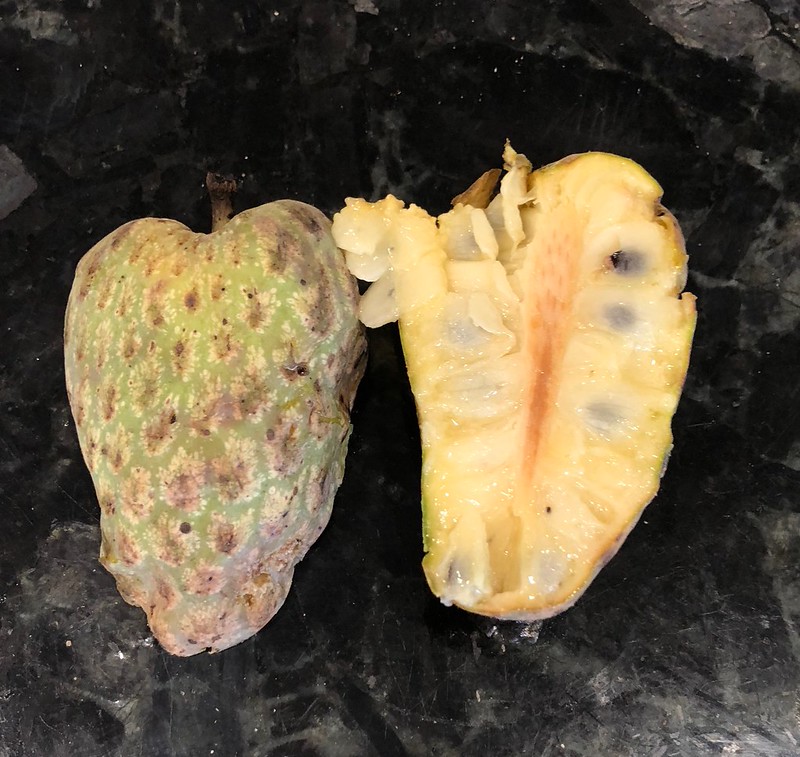
A rare understory Annona prized for exotic, creamy pulp and early fruiting in cultivation — limited availability.
Pre-Sale (important)
This item is part of our March / April Pre-Sale. Seeds will be harvested and shipped to buyers approximately in late March. Because these seeds are shipped fresh, we strongly recommend combining them with other pre-sale items in the same order.
NOMENCLATURE & MEANING
The common name Araticum-Guiné comes from Tupi — “araticum” meaning “soft fruit”; the “Guiné” element historically refers to a perceived link with Guinea in Africa. The species is also called araticum da floresta and araticum de flor pontuda.
OBSERVATIONS & PROVENANCE
This rare Atlantic-Forest species was actively sought by the Projeto Colecionando Frutas team; cultivated material was secured around 2017 and reportedly began fruiting by 2020 at small stature. Provenance from established collection projects increases value and confidence for collectors and conservation growers.
KEY FACTS
• Scientific name: Annona acutiflora Mart.
• Endemic to the dense ombrophilous Atlantic Forest in Brazil (occurs in Bahia, Espírito Santo and Rio de Janeiro). Atlantic Forest Bahia Espírito Santo Rio de Janeiro
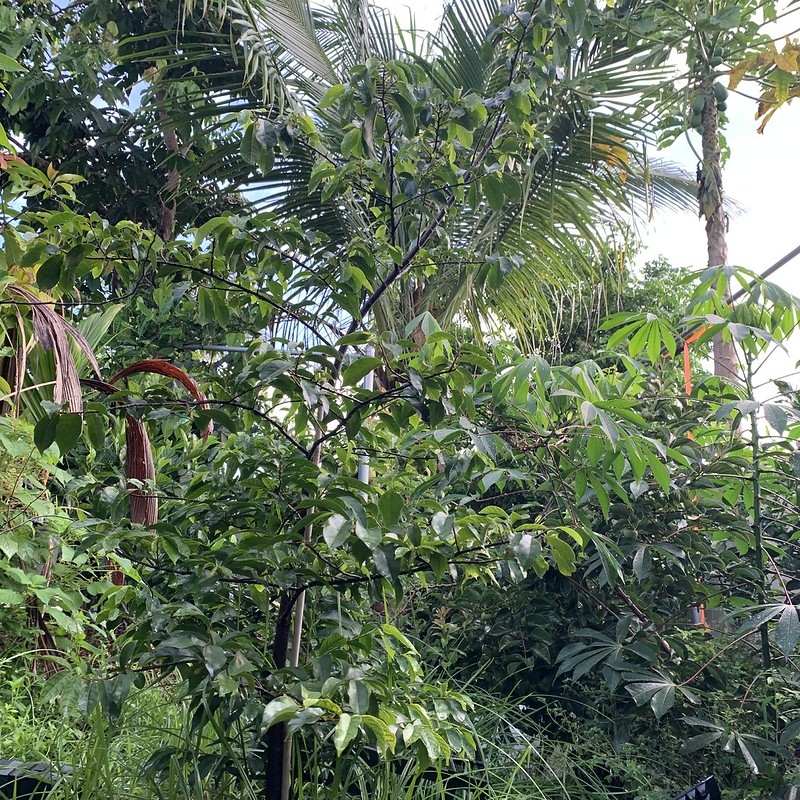
• Tree size: typically 2–6 m tall; trunk slender (usually ≤15 cm DBH).
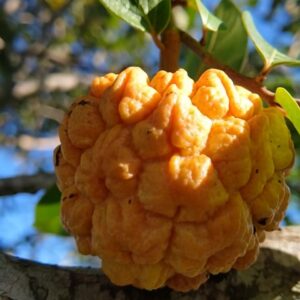
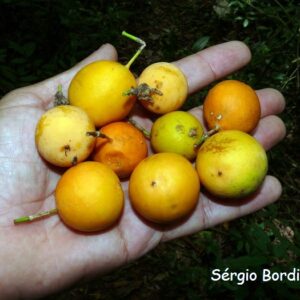
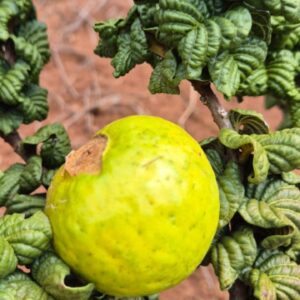
• Flowers: pyramidal; Fruits: 5.5–7 cm diameter, creamy gelatinous pulp with many small seeds.
• Fruit season: typically February–March in native range.
DESCRIPTION
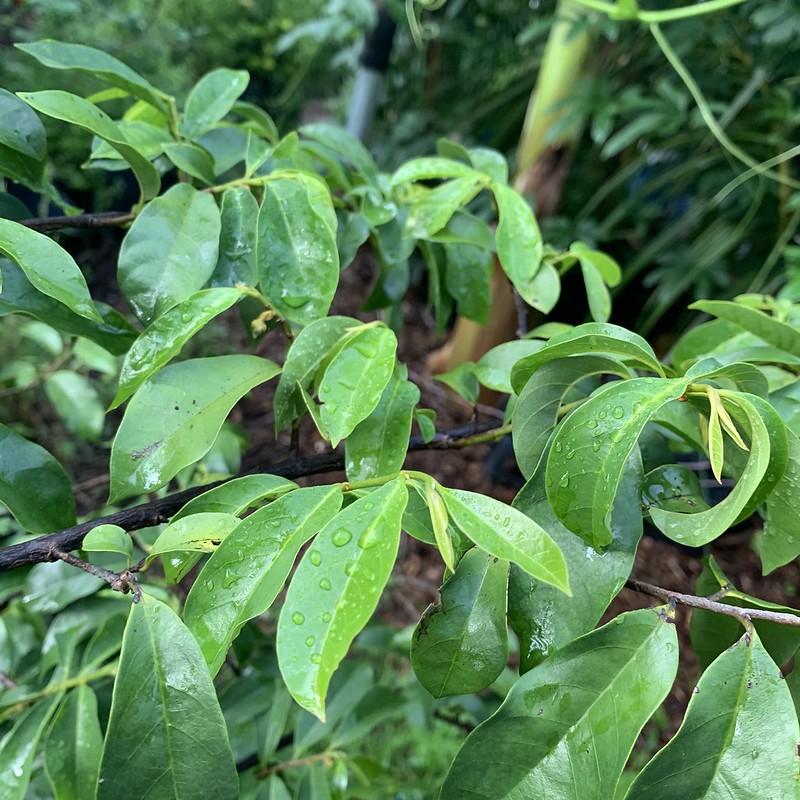
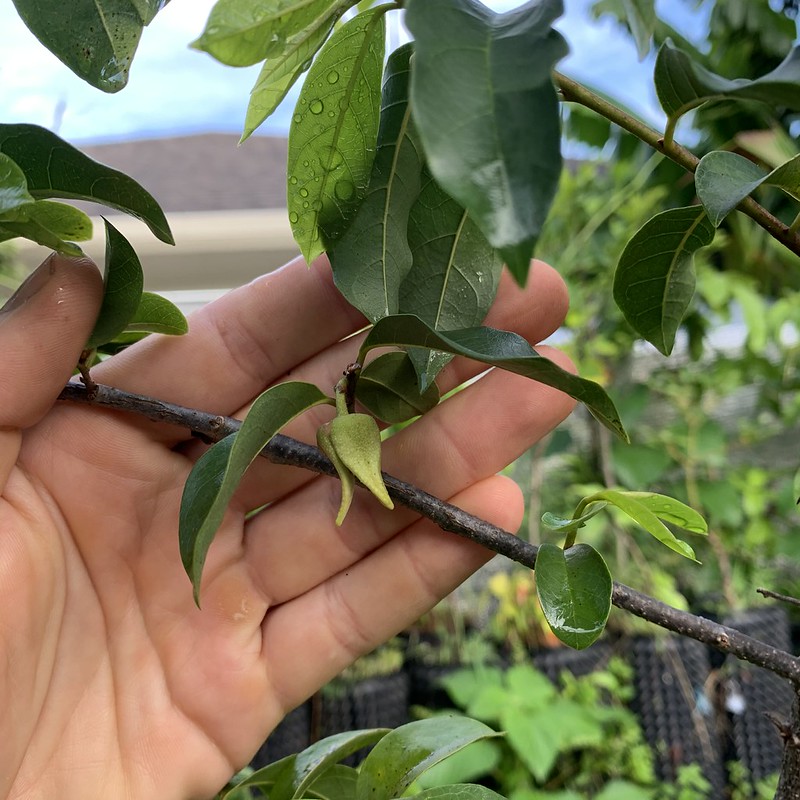
Annona acutiflora is a small tree or large shrub with a narrow, cylindrical crown and thin trunk. Leaves are oblong (7–16 × 2–4.5 cm) with domatia between secondary veins. Flowers are pyramidal with lanceolate petals covered in fine hairs. Fruits are aggregate syncarps ~5.5–7 cm across, with a reticulated rind and creamy, gelatinous pulp — flavor noted as exotic, sweet-acid with a subtle peppery note.
ORIGIN & HABITAT
Native to the understory of the dense Atlantic Forest and on nearby sandy coastal soils; it thrives in humid forest conditions with filtered light and well-drained but moisture-retentive soils.
CULTIVATION TIPS
• Climate: warm-humid to warm-subtropical; some tolerance to light frost down to about −3 °C reported.
• Soil: adapts to sandy, clay or deep red soils with good organic matter; pH acid to neutral.
• Water: young plants need regular moisture and some shade; avoid waterlogging.
• Light: full sun to partial shade; seedlings prefer filtered light during establishment.
• Pot culture: large containers (~40 × 40 cm) with 40% native/topsoil, 20% river sand, 40% well-rotted organic matter work well.
• Pruning & fertilization: formative pruning only; organic compost and annual spring feeding recommended.
SEEDS & GERMINATION
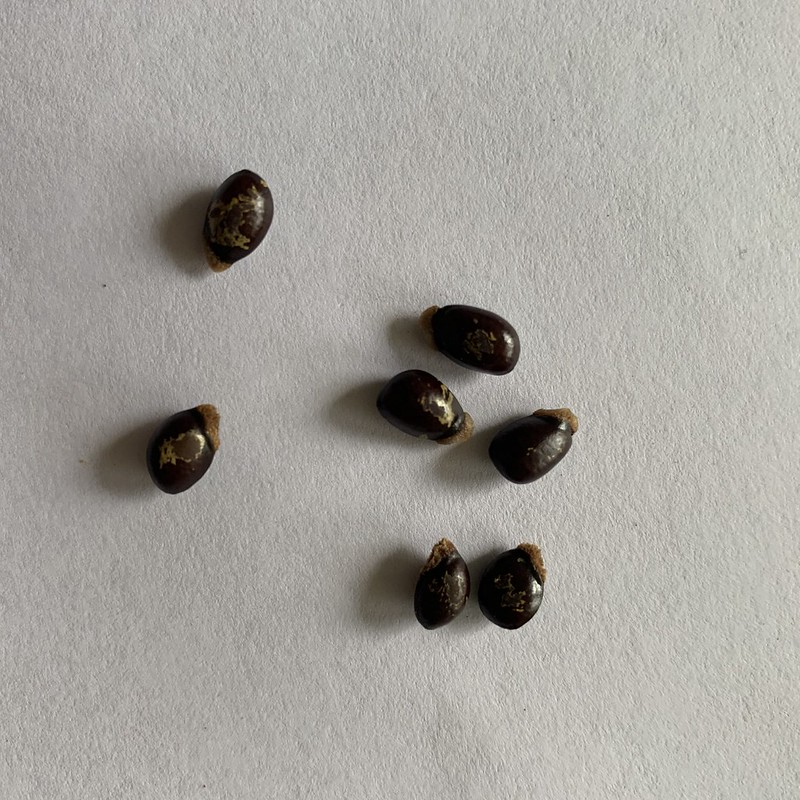
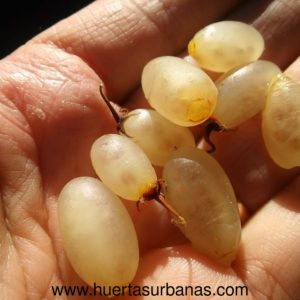
• Seeds small (~0.5 cm); stored dark/cool they may retain viability ~1 year.
• Sow fresh for best results; germination commonly 60–120 days under warm, moist conditions.
• Seedlings can reach ~30 cm in 8–9 months; fruiting may begin in 2–3 years under good care.
PLANTING & ORCHARD NOTES
• Spacing: ~4 × 4 m.
• Planting hole: 50 × 50 × 50 cm; mix backfill with river sand, compost and an organic mineral amendment; allow pit to “cure” where possible.
• Establishment irrigation: ~10 L/week per plant for first two months, then taper.
USES & PHENOLOGY
• Fruit season: February–March.
• Best used for fresh eating, juices, jams, ice creams, or pulping and freezing.
• Ecological role: fruits feed birds and wildlife; useful in forest restoration and small agroforestry plots.
AVAILABILITY
Limited seed/seedling run from verified collection projects. Pre-sale stock sells fast; ordering in the March/April Pre-Sale is the recommended way to secure material and receive fresh seed/seedlings shipped in late March.
• Rare Atlantic-Forest Annona with exotic, creamy pulp.
• Proven cultivated material — early fruiting reported.
• March/April Pre-Sale — ships in late March; combine with other pre-sale items.
Reviews
There are no reviews yet.