Description
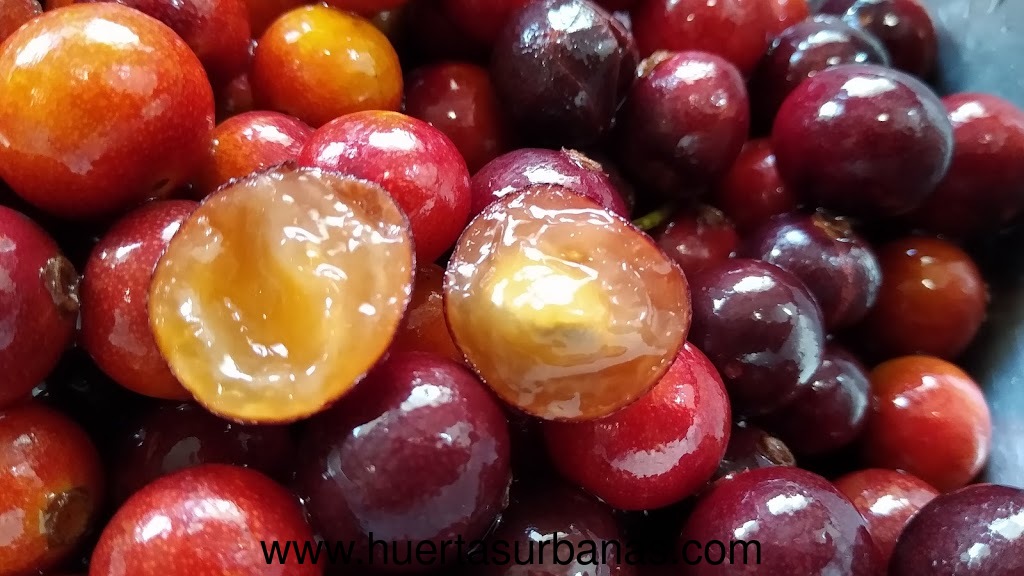
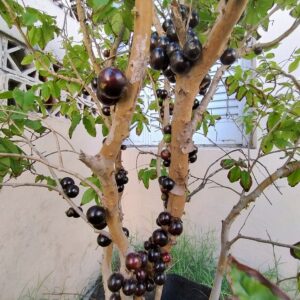
Description and Use Plinia rivularis is an evergreen tree from the jaboticaba family, native to the Atlantic region and jungles of South America (Brazil, Paraguay, Argentina, and neighboring countries). It produces small, round berry-like fruits (~1.5–2 cm), ranging from reddish-orange to purple depending on the variety, with juicy, sweet pulp, ideal for fresh consumption, desserts, or beverages. The tree grows to ~6–11 m in ideal conditions but can be kept smaller in pots with pruning.
Origin and Distribution Native to jungles and coastal/temperate forests of South America — recorded in Brazil, Paraguay, Argentina, Uruguay, and Caribbean islands; found in riparian forests and Atlantic rainforest areas.
Fruit Characteristics Small fruit (≈1.5–2 cm diameter), sweet and aromatic pulp, juicy texture — flavor described as a mix of jaboticaba, peach, and tropical notes; color and size vary by lineage. Excellent eaten fresh, in jams, or beverages.
Technical Data Sheet
- Scientific Name: Plinia rivularis (Cambess.) Rotman.
- Common Names: Guaporetí, Guaburiti, Jabúriti, Baporeti, etc.
- Origin: Brazil / Paraguay / Argentina (subtropical regions).
- Mature Size: 6–11 m (can remain smaller in domestic cultivation).
- Time to Fruit from Seed: Approx. 5–7 years (varies: conditions, grafting, and care).
- Fruit: 1.5–2 cm diameter, juicy, sweet pulp.
- Pack: Suggested options — 1 seed / 5 seeds / 10 seeds (your choice).
- Estimated Germination: 2–8 weeks if sown fresh and in proper conditions; some batches may include pre-germinated seeds.
- Hardiness / USDA: Best in zones 9–11; limited frost tolerance (protect in marginal zones). Adjust for microclimate.
Preparation and Germination Protocol
- Fresh Seeds = Best Success. These seeds are largely recalcitrant: they lose viability when dried; we recommend sowing as soon as possible after receipt. If the batch includes pre-germinated seeds, indicate this to the buyer.
- Soaking (Optional): Soak for 12–24 hours in room-temperature water to speed up imbibition. Do not exceed 24 hours to avoid fermentation.
- Substrate: Loose, well-draining, moisture-retaining mix — suggested: 70% peat or fiber / 30% perlite or coarse sand. Slightly acidic to neutral pH.
- Sowing: Cover lightly (0.5–1 cm) or place on the surface and press gently. Keep in a tray or small pot.
- Temperature: 24–28 °C is ideal; avoid cold temperatures.
- Humidity and Shade: Keep substrate moist but not waterlogged; cover with a plastic bag or mini-greenhouse for high relative humidity until the first sprout. Indirect/moderate light until 2–3 true leaves appear.
- Germination Time: Typically 2–8 weeks; may vary (some reports of 2–12 weeks under variable conditions).
- Transplanting: When seedlings have 3–4 pairs of leaves, move to a larger container with nutrient-rich mix; maintain regular watering and light fertilization (balanced NPK, preferably for fruit trees).
- Young Plant Care: Protect from frost; provide partial shade during the hottest hours in extreme summer; avoid waterlogging roots.
Tree Care and Cultivation (Summary for Product Listing and Growing Guide)
- Exposure: Full sun to partial shade (in very hot climates, partial afternoon shade is beneficial).
- Soil: Fertile, well-drained, with good moisture retention. Tolerates varied soils (sandy to clay) if not waterlogged.
- Watering: Keep soil moist, especially for young plants; reduce only for well-established specimens.
- Fertilization: Organic compost and balanced fertilizer every 2–3 months in cultivation; more frequent in pots.
- Pruning: Aesthetic and to control size; tolerates pruning well.
- Risks: Sensitive to heavy frost in young plants; watch for typical tropical fruit pests/diseases (fruit flies, fungi) and treat per local practices.
- Uses: Ornamental tree, fresh consumption, jams, juices, and regional cuisine.
Reviews
There are no reviews yet.