Context: Subtropical Junín, Buenos Aires (roughly USDA Zone 9a) is a valuable analogue for many subtropical and warm-temperate regions worldwide. Its climate features warm summers, mild winters with occasional frosts, moderate rainfall, and generally fertile but well-drained soils. The species below are described based on Junín field experience and are grouped by practical cold tolerance. Hardiness is shown as the approximate minimum temperature tolerated (°C and °F) for established trees; seedlings and young plants are more sensitive and benefit from shelter, mulch, and frost protection.
Regions outside South America with climates and soils similar to Junín, where these species can potentially thrive, include:
- South Florida, USA (Miami, Fort Lauderdale, USDA Zones 9b–10a) – Hot, humid summers, mild winters, sandy to loamy soils.
- Southern Texas, USA (Rio Grande Valley, USDA Zones 9a–9b) – Warm subtropical climate, fertile alluvial soils, occasional winter frosts.
- Coastal Georgia, USA (Savannah area, USDA Zones 8b–9a) – Humid subtropical, well-drained loam soils, moderate winter frosts.
- Southeast Queensland, Australia (Brisbane area, Zone 9–10) – Humid subtropical with mild frost, sandy-loam soils suitable for subtropical fruits.
- Eastern New South Wales, Australia (Coffs Harbour, Zone 9–10) – Subtropical climate, rich loamy soils, warm summers, mild winters.
- Northern New Zealand (Auckland region, Zone 9–10) – Mild, humid climate, fertile volcanic and alluvial soils, limited frost risk.
- Canary Islands, Spain (Tenerife lowlands, Zone 9–10) – Subtropical Mediterranean climate, volcanic well-drained soils, mild winters.
- Southern Portugal (Algarve, Zone 9a–9b) – Warm Mediterranean-subtropical climate, sandy-loam soils, occasional frost.
- Southern Italy (Sicily, Zone 9a–9b) – Warm temperate-subtropical, well-drained soils, mild winters, hot summers.
- Southern Japan (Kyushu, Zone 9a) – Humid subtropical, rich volcanic soils, occasional light frost, long warm summers.
This makes Junín a practical reference for growers in USDA Zones 8–9b in the United States and comparable subtropical regions in Europe, Asia, and Australia, providing guidance for cold-hardiness, cultivation, and soil adaptability for underutilized South American fruit trees.
USDA Zone 8 — Coldest survivors (approx. −8 to −12 °C / 17 to 10 °F for established plants)
- Acca sellowiana (Feijoa / Pineapple guava)
Min survival: ~−9 to −12 °C / 16 to 10 °F (established).
Compact evergreen shrub/tree (2–4 m). Sweet aromatic fruit, easy to grow in well-drained soil and full sun. Good for hedges or small orchards. - Celtis tala (Tala / Tala hackberry)
Min survival: ~−10 °C / 14 °F (established).
Medium deciduous tree (6–10 m). Small sweet drupes; very drought-tolerant and useful as a shade/field tree. - Prosopis alba (Algarrobo blanco / Argentine mesquite)
Min survival: ~−12 to −9 °C / 10 to 15 °F.
Thorny, leguminous tree producing sweet pods used as food/animal forage; extremely drought-resistant. - Geoffroea decorticans (Chañar)
Min survival: ~−10 °C / 14 °F.
Small deciduous tree producing very sweet yellow-orange fruit; tolerant of arid soils once established. - Condalia microphylla (Piquillín grande)
Min survival: ~−8 °C / 17 °F (established).
Xerophytic shrub/small tree — very drought and cold tolerant. Small drupes that sweeten when ripe; excellent for low-input hedges and windbreaks. - Myrcianthes pungens (Guabiyú / Guabiju)
Min survival: ~−9 °C / 16 °F (established Junín provenances).
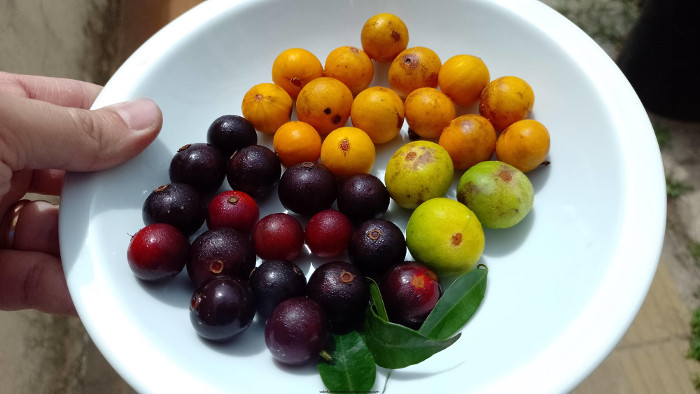
Evergreen tree (6–10 m) that produces dark purple, sweet berries. One of the best “zone-pushing” Myrtaceae — proven in Junín to survive hard winters and fruit reliably. Plant in full sun and good drainage; use clonal Junín-tested material for Zone 8 plantings. - Eugenia involucrata (Cherry of the Rio Grande — black, red, orange forms)
Min survival: ~−7 to −9 °C / 19 to 16 °F (proven clones).
Sweet cherry-like fruits; the orange forms are rare and aromatic. Clone local survivors for reproducible cold tolerance. - Large-Fruit Ubajay — Eugenia myrcianthes — Zone 8 (also Zone 9).
Cold tolerance: reliably to about −10 °C / 14 °F when established (Junín provenances). Large-fruit ubajay is a vigorous Myrtaceae that fruits reliably in our climate and is one of the most winter-tolerant Eugenia species we grow. Plant in full sun on loamy, well-drained soil and give regular summer water until established. For growers in Zone 8, use clonal material from Junín-tested trees or local survivors and site plants in protected microclimates for best results.
USDA Zone 9a — Moderate cold tolerance (approx. −6 to −8 °C / 21 to 17 °F)
- Ziziphus mistol (Mistol)
Min survival: ~−6 °C / 21 °F.
Hardy thorny tree with caramel-sweet drupes; heat, drought and poor-soil tolerant. Once established, very tough. - Acanthosyris spinescens (Quebrachillo)
Min survival: ~−7 to −8 °C / 19 to 17 °F.
Native multi-use shrub/tree — edible drupes, nectar for bees, robust in poor soils. Valuable for agroforestry. - Psidium longipetiolatum (Araçá serrano / mountain araçá)
Min survival: ~−7 °C / 19 °F (established).
Small–medium evergreen with citrusy, aromatic fruit stronger than common red araçá; more vigorous and generally hardier than many araçá cultivars. Suitable for Zone 8 (with good microsite) and Zones 9a/9b. - Eugenia uniflora (Pitanga / Surinam cherry — cold-tested lines)
Min survival: ~−6 to −7 °C / 21 to 19 °F (best selections).
Extremely productive, multiple selections exist — choose Junín-tested clones for Zone 9a and marginal Zone 8. - Psidium cattleianum (red strawberry guava)
Min survival: ~−5 to −6.6 °C / 23 to 20 °F.
Vigorous shrub/tree with sweet fruits; better cold tolerance than many Psidium species. - Plinia rivularis (Guaporetí jaboticaba)
Min survival: tolerant of occasional mild frost (~−5 °C / 23 °F).
Semi-evergreen jaboticaba relative — fragrant, sweet trunk fruits. Performs well in Junín when sheltered. - Plinia oblongata (Jabuticaba-Phonema / “agachada”)
Min survival: best above ~−5 °C / 23 °F (tender but ornamental).
Small tree that fruits on trunk; excellent flavor and ornamental value. Protect from hard frosts. - Campomanesia guazumifolia (Sete capotes)
Min survival: ~−6 to −7 °C / 21 to 19 °F.
Aromatic fruit; productive shrub/tree for mild winters. - Chrysophyllum viride (Aguaí dulce / Abiu-mirim)
Min survival: ~−6 °C / 21 °F (established and sheltered).
Sweet, soft fruit — prefers humus-rich soils and winter shelter when young. - Eugenia pyriformis / E. lutescens (Uvaia)
Min survival: ~−7 °C / 19 °F (established).
Fragrant tart-sweet fruit; adapts to heavier soils. - Eugenia repanda (Black ñangapiré)
Min survival: ~−5 to −6 °C / 23 to 21 °F.
Small dark fruits; good for jams and small-scale markets. - Annona neosalicifolia / A. sylvatica / A. rugulosa (Araticú — hardy Annona types)
Min survival: ~−7 °C / 19 °F (established Junín provenances).
Custardy, aromatic pulp — more citrusy/firm than red araçá. Good for Zone 8 (sited well) and Zones 9a/9b. - Eugenia florida
Min survival: ~−6 to −7 °C / 21 to 19 °F (Junín-tested lines).
Compact evergreen — sweet-tart fruit, good for jams and fresh eating. Clone cold-proven material for best results. - Jaboticaba serrana (Plinia spp., high-altitude / “serrana” types)
Min survival: ~−6 to −7 °C / 21 to 19 °F (established, clonal serrana material).
Classic cauliflorous jaboticaba fruit — intensely sweet, winey. Serrana provenances are among the few jaboticabas suited to marginal Zone 8/9 plantings; clone survivors for reproducible results. - Small-leaf / Sabará-type Jaboticabas (Plinia spp.)
Min survival: ~−6 to −7 °C / 21 to 19 °F (for cold-adapted selections).
Outstanding flavor; use clonal propagation to preserve cold tolerance and reduce time to fruit. - Arazá Johvy — Psidium aff. (Arazá Johvy) — Zone 9b.
Cold tolerance: approx −5 °C / 22 °F (tender to light frosts). Arazá johvy produces highly aromatic, tangy fruits prized for fresh use and processing; it performs well in warm subtropical pockets but suffers damage under hard freezes. Favor fertile, well-drained soil and moderate water during the growth season. Best for Zone 9b; in cooler sites grow in protected microclimates or containers. - Hardy Corrientes Jaboticaba — Plinia spp. (Corrientes selections) — Zone 9a (marginal Zone 8 with clones & shelter).
Cold tolerance: ~−6 °C / 21 °F for proven Corrientes selections (established, clonal trees). These “hardy Corrientes” jaboticabas were selected for better winter survival and fruit quality; they bear the classic cauliflorous clusters and are excellent for fresh markets. Clone survivors (grafting or cuttings) to secure the trait and plant in deep, humus-rich soil with mulch for root protection. In marginal Zone 8, plant in the warmest microspots and expect better survival with proven clones. - Scarlet Myrcia — Myrcia selloi (scarlet / yellow guava relatives) — Zone 9a.
Cold tolerance: estimated ~−5 °C / 23 °F (established). Scarlet Myrcia produces attractive, flavorful fruits and adapts to garden conditions when given decent soil and shelter. It’s a good fit for 9a plantings and for growers who want a tasty native with ornamental value; in colder sites treat as borderline and protect young stock. - Peach Cherry (local cultivar) — Eugenia aff. involucrata (Peach-cherry type) — Zone 8 / 9a.
Cold tolerance: approximately −7 °C / 19 °F when using Junín-tested clones. This local “peach cherry” selection combines a stone-fruit aroma with Eugenia sweetness and has shown good survival in our colder microclimates. Plant as you would other Eugenia: full sun, good drainage, and clone the best performers to reproduce the hardiness and flavor consistently. - Campomanesia xanthocarpa — Guabiroba / Guabirá (orange guabiroba) Cold tolerance: ~−6 to −8 °C °F / Flavor: citrusy, tangy, very aromatic (the “orange” forms stand out).Notes: prefers fertile and moist but well-drained soil; fruits reliably in milder winters. Zone: Zone 9a (best); Zone 8 only with protection.
USDA Zone 9b — Warmest subtropical (approx. −3 to −4 °C / 27 to 25 °F)
- Campomanesia neriiflora (Guavirá Johvy)
Min survival: ~−3 °C / 27 °F. Tender relative — best in 9b climates. - Myrciaria glazioviana (Cabeludona — special selection)
Min survival: ~−4 to −5 °C / 25 to 23 °F (protected). Sweet and palatable; treat as somewhat tender. - Garcinia guacopary (Guacopary)
Min survival: ~−4 to −5 °C / 25 to 23 °F. Tropical fruit; best in 9b with strong shelter. - Vitex megapotamica
Min survival: ~−4 °C / 25 °F. Edible/ornamental tree for mild subtropics. - Melicoccus lepidopetalus (or similar Melicoccus)
Min survival: ~−2 to −3 °C / 28 to 27 °F. Lychee-like — treat as warm-climate. - Euterpe edulis (Palmito / heart-of-palm)
Min survival: ~−3 °C / 27 °F (young sensitive). Prefers humus and partial shade when young. - Psidium sartorianum
Min survival: ~−3 to −4 °C / 27 to 25 °F. Woodland guava relative — pleasant fruit in mild winters. - Annona cherimola / Annona montana (Cherimoya / mountain soursop)
Min survival: ~−2 to −3 °C / 28 to 27 °F. Sensitive; best in warm 9b sites. - Black Hybrid Jaboticaba / Plinia hybrids
Min survival: ~−4 °C / 25 °F (some hybrids show improved tolerance). Best in warm 9b, some hybrids may suit protected 9a. - Maclura tinctoria (Taiúva)
Min survival: ~−3 °C / 27 °F. Structural tree used in agroforestry; fruit secondary. - Eugenia florida (Guamirim / Brazilian cherry relative) — USDA Zones 9a–9b, marginal Zone 8 with shelter
Cold tolerance: reliably to about −5 °C / 23 °F (established Junín-tested trees).
Description & Flavor: A compact evergreen tree (4–7 m) producing small to medium round fruits (~1–2 cm) with sweet-tart, aromatic pulp. Flavor is more intense than many typical red araçá cultivars, with a subtle citrusy note. Fruits are excellent fresh and can be used for jams or preserves.
Cultivation Notes: Prefers full sun for best fruiting, tolerates moderately poor soils, and withstands some drought once established. Plant in well-drained soil; mulch young plants to improve survival in cooler spots. Propagation via seeds or cuttings works, though clonal selections from proven Junín trees ensure more reliable fruiting and cold hardiness.
Practical notes (apply to all species)
- Provenance matters more than species name. For borderline cold tolerance, use clonal material from Junín-tested survivors or from higher-altitude provenances.
- Microclimate is decisive. Sheltered sites, thermal mass (walls, rocks), and windbreaks can raise the local minimum several degrees.
- Root protection. Mulch heavily (10–20 cm) around roots to blunt radiative cooling and insulate soil.
- Propagation. Seed is useful for variation; use cuttings/grafting/air-layering to reproduce proven cold-hardy individuals.
- Soil & water. Most Myrtaceae and Psidium prefer fertile, well-drained soil with organic matter; many natives (piquillín, mistol, algarrobo) tolerate poorer soils and drought.
- Pests. Fruit fly and scale are common in warm climates; orchard hygiene, netting at harvest and targeted controls reduce losses.
References (citations placed only here — no vendor sales links)
- HuertasUrbanas — Junín species pages, field notes and pre-sale profiles. — https://www.huertasurbanas.com/
- Tropical Fruit Forum — grower threads and provenance reports. — https://tropicalfruitforum.com/
- GrowingFruit — cold-hardiness discussions for subtropical species (feijoa, guabiju, pitanga threads). — https://growingfruit.org/
- Dave’s Garden / PlantFiles — grower reports and plant descriptions. — https://davesgarden.com/
- GardenOracle — pitanga / Eugenia general cultivation notes. — https://gardenoracle.com/
- PanamFrucht (informational blog about guava/jaboticaba cold tolerance and cultivation). — https://www.panamfrucht.com/